

KH (Carbonate Hardness): What It Is and Why It Matters for Shrimp
KH is the invisible foundation of a stable shrimp tank. Understanding how it works — and how to control it — is the difference between a tank that crashes and one that thrives for years.
What Is KH?
KH — carbonate hardness — measures the concentration of carbonate (CO₃²⁻) and bicarbonate (HCO₃⁻) ions dissolved in your aquarium water. It is sometimes called "alkalinity" in water chemistry contexts, though the two terms are not perfectly interchangeable. KH is measured in degrees of hardness (dKH) or parts per million (ppm), with 1 dKH equal to 17.8 ppm.
It is distinct from GH (general hardness), which measures calcium and magnesium ions. A tank can have high GH and low KH, or vice versa — they measure different things. KH's primary role in an aquarium is acting as a pH buffer: the carbonate and bicarbonate ions chemically neutralize acids before they can lower pH, giving the water resistance to sudden pH drops.
💧 KH vs. GH — the key difference: GH measures the minerals shrimp use to build their exoskeleton (calcium and magnesium). KH measures the buffer that keeps pH stable. Both matter, but they do different jobs. A shrimp tank needs adequate GH for successful molting and adequate KH for pH stability — these are separate problems requiring separate solutions.
Why KH Matters in a Shrimp Tank
Shrimp — particularly Caridina and Neocaridina — are sensitive to pH fluctuations. Even a shift of 0.5 units over a short period can cause visible stress: shrimp become erratic, hide excessively, or stop eating. A shift of 1.0 or more in a short window can be fatal, especially during the vulnerable post-molt period when the new shell is forming.
KH prevents these crashes by acting as a chemical shock absorber. When acids enter the water — from CO₂, decomposing organic matter, or tannins in botanicals — the carbonate ions neutralize them before pH can drop. A tank with adequate KH will hold a stable pH for days between water changes. A tank with near-zero KH can crash overnight.
This is why KH matters most not as a target number in itself, but as the mechanism that keeps your pH target achievable and stable over time.
The KH–pH Relationship
KH and pH are linked but not the same thing. KH determines how resistant your water is to pH change; pH tells you where the water currently sits on the acid-alkaline scale. You can have two tanks at pH 7.0 — one with KH of 1 dKH (fragile, will crash easily) and one with KH of 6 dKH (stable, highly buffered). The pH reading looks identical; the stability is completely different.
How KH level affects pH stability
| KH Level | pH Stability | Risk | Typical Use Case |
|---|---|---|---|
| 0–1 dKH | Very unstable | High — pH can crash overnight | Caridina tanks on RO water with active substrate |
| 1–3 dKH | Moderately stable | Medium — monitor closely | Caridina upper range; soft-water Neocaridina |
| 3–6 dKH | Stable | Low | Standard Neocaridina tanks |
| 6–10 dKH | Very stable | Very low | Hard-water Neocaridina; community tanks |
| 10+ dKH | Extremely stable | May push pH too high for shrimp | Avoid for shrimp-only tanks |
⚠️ Low KH + CO₂ injection = pH crash risk. If you run a planted tank with CO₂ injection and low KH, pH can drop dramatically during the photoperiod and rebound at night. This daily swing is highly stressful for shrimp. Either raise KH, reduce CO₂, or run CO₂ only during lights-on with adequate aeration at night.
Ideal KH by Species
Caridina Shrimp
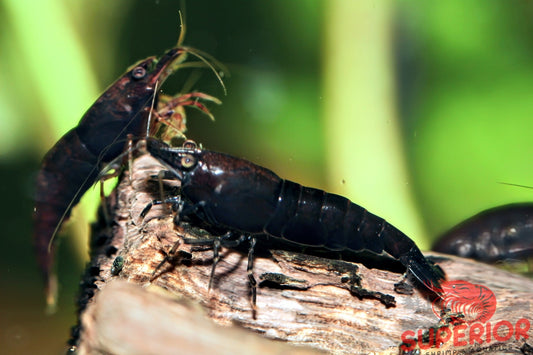
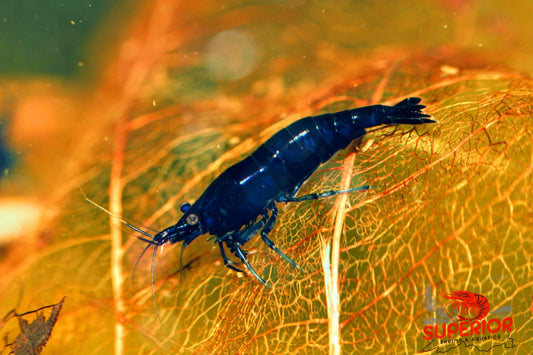
Caridina species — including Crystal Red, Crystal Black, Blue Bolt, and Fancy Tiger shrimp — are native to soft, acidic mountain streams in Asia. They require very low KH, typically 0–2 dKH, with pH held between 5.8 and 6.8. Most Caridina keepers use RO water remineralized with a Caridina-specific mineral supplement to achieve this — tap water almost always has too much KH for these species.
Active buffering substrates (such as ADA Amazonia or similar aqua soils) are essential in Caridina tanks. These substrates actively release hydrogen ions that bind carbonate, consuming KH and pulling pH down to the acidic range. This is why Caridina substrates need periodic replacement — once their buffering capacity is exhausted, KH rises and pH climbs, signaling it is time to replace the substrate.
Neocaridina Shrimp
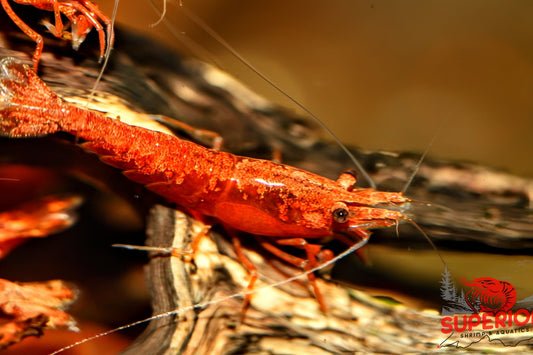
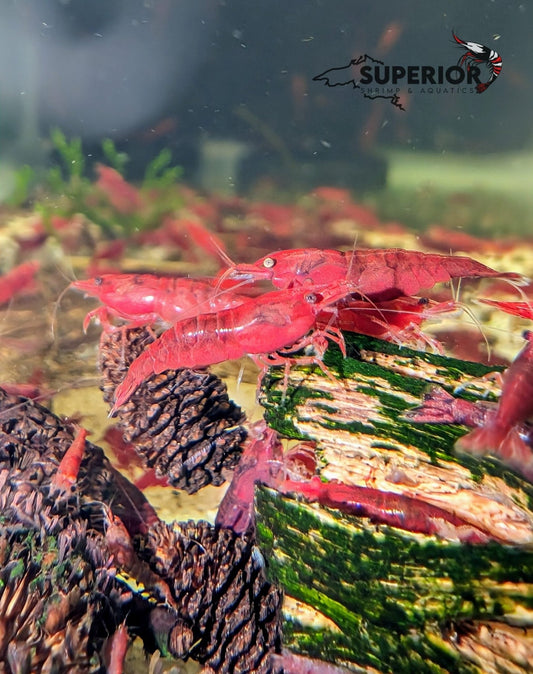
Neocaridina davidi and its color morphs are considerably more tolerant. A KH of 2–8 dKH suits them well, with the sweet spot for most keepers between 3–5 dKH. At this level, pH stays reliably stable between water changes, molting is consistent, and breeding is not suppressed. Many municipal tap water supplies fall naturally within this range, making Neocaridina far more accessible to beginners.
KH and water parameter quick reference by species group
| Species Group | KH Target | pH Range | Water Source |
|---|---|---|---|
| Caridina (Crystal, Bee, Tiger) | 0–2 dKH | 5.8–6.8 | RO + Caridina remineralizer |
| Neocaridina (Cherry, Blue Velvet, etc.) | 2–8 dKH | 6.5–7.8 | Tap (dechlorinated) or RO + Neocaridina remineralizer |
| Mixed community with snails | 4–8 dKH | 7.0–8.0 | Tap or supplemented RO |
Testing KH
KH testing uses a titration-based liquid test kit — drops of reagent are added to a water sample until the color changes, and the number of drops indicates the KH level. This is more accurate than strip tests, which are notoriously unreliable for carbonate hardness. Test weekly at minimum, and always test after water changes, substrate disturbance, or any chemical addition to the tank.
How to Raise KH
Low KH is the more common problem in soft-water areas or tanks using RO water. Several approaches work, each with different speed and precision.
How to Lower KH
Lowering KH is primarily a concern for Caridina keepers whose source water is too hard. The most effective approach is dilution with RO or distilled water.
The Golden Rule: Change Slowly
Shrimp cannot rapidly adjust their internal chemistry to match sudden changes in water parameters. A KH shift that would be harmless to a fish can be fatal to a shrimp — particularly during the molting cycle when the animal is already physiologically stressed. Never change KH by more than 1–2 dKH per day, and aim for changes of 0.5 dKH or less when adjusting a tank with shrimp already in it.
When setting up a new tank, establish target parameters before adding shrimp. Cycle the tank fully, stabilize KH and pH, and allow at least a week of stable readings before introducing animals. The same applies after a substrate replacement — active substrates can cause significant parameter swings in the first few weeks.
Troubleshooting KH Problems
Related Guides & Products
Build the Right Foundation for Your Shrimp
Stable KH means stable pH. Stable pH means healthy molts, consistent breeding, and shrimp that actually thrive rather than just survive.
Sources & Further Reading
- [1]Boyd, C.E. & Tucker, C.S. (1998). Pond Aquaculture Water Quality Management. Carbonate hardness and alkalinity buffering chemistry in aquatic systems.
- [2]Feria, T.P. & Faulkes, Z. (2016). Forecasting the distribution of Neocaridina davidi. Water parameter tolerances and species-specific hardness preferences.
- [3]Superior Shrimp & Aquatics — Neocaridina Environment Guide. KH, GH, and pH parameters for Cherry Shrimp and color morphs. superiorshrimpaquatics.com