


You will not be allowed to compare more than 4 products at a time
View compareSpider Wood
Spider Wood
<p>Earn%20[points_amount]%20when%20completing%20this%20purchase.</p>
Sub total:
$9.00Useful add-ons
Loading add-ons…

Description
Reviews
Description
Hardscape
Spider Wood
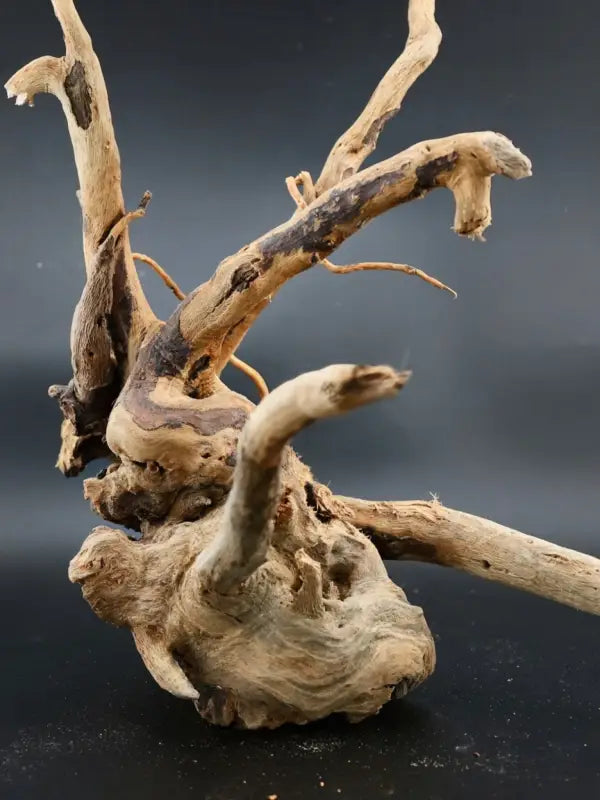
Densely branching, fine-tipped driftwood with a naturally sculptural form — the most structurally complex hardscape available for planted and shrimp tanks.
Dense Fine Branching
Naturally Sculptural Form
Sinks Without Soaking
Tannin Release
Shrimp & Plant Safe
Buce & Moss Ready
Spider Wood is a root-based driftwood prized for its exceptionally dense, fine-tipped branching structure — a naturally complex, multi-directional form that no other common aquarium hardscape replicates. Where larger driftwood types provide mass and horizontal presence, Spider Wood provides structure and intricacy: a web of progressively finer branches that creates depth, shadow, and visual complexity far beyond what the piece's overall size would suggest. It is the preferred attachment surface for Bucephalandra, Anubias, and mosses precisely because the fine branch network gives plants multiple anchor points at varied heights and angles, producing naturalistic overgrown layouts with minimal effort. The wood releases tannins gradually after submersion, darkening the water mildly and contributing to the soft, acidic water conditions that Caridina and blackwater species thrive in. Shrimp of all sizes explore and colonize the branch network thoroughly and continuously. Each piece is unique.
What to ExpectIn the Tank
Exceptionally dense, fine-tipped branching from a central root mass — Spider Wood branches radiate outward from a thicker central structure, dividing repeatedly into progressively finer tips that terminate in hair-like points. The total number of individual branch endpoints on a mid-sized piece can be in the dozens, creating a three-dimensional web of structure that fills visual space far more completely than its footprint suggests. No two pieces branch identically — the form of each piece is entirely unique.
Releases tannins gradually after submersion — like most driftwood, Spider Wood leaches tannins and humic acids into the water after submersion, producing a mild amber tint and contributing incrementally to softer, slightly more acidic water chemistry. The tannin output is heaviest in the first weeks and tapers progressively over months as the wood conditions. Running activated carbon removes the tint without affecting the wood's structural or functional value.
White fungal bloom is common and harmless — a white, cotton-like fungal or bacterial growth frequently appears on the surface of newly submerged Spider Wood within the first one to two weeks. This is a normal response to submersion — the bloom feeds on surface organics in the wood, is completely harmless to shrimp and fish, and disappears on its own within one to three weeks as the wood fully conditions. Shrimp actively graze the bloom throughout its duration.
Ideal attachment surface for epiphytic plants — the dense branch network of Spider Wood provides more total attachment surface and more varied positioning options for Bucephalandra, Anubias, Java Fern, Windelov Fern, and mosses than any other common driftwood type. Plants can be positioned at different heights and angles across the branch structure, creating a layered, overgrown appearance that develops naturally over months as roots and rhizomes establish.
Shrimp colonize the branch network immediately and thoroughly — Neocaridina, Caridina, and juveniles of all sizes explore and inhabit the branch network from the moment it enters the tank. The fine branches create countless microhabitats — perching spots, grazing surfaces, hiding positions during molts — that shrimp use differently depending on size and life stage. A heavily planted piece of Spider Wood with an active shrimp colony is one of the most engaging displays in the hobby.
May require weighting or soaking to sink initially — freshly acquired Spider Wood often floats or sits unevenly due to air trapped in the wood structure. A few days of soaking in a bucket of water typically waterloggs the piece sufficiently to sink reliably. Alternatively, anchoring with a flat stone placed across the base, or securing to a slate tile with stainless steel screws, holds the piece in position while it becomes fully waterlogged.
How to Set It Up
Getting Started
1
Soak before placing in the tank — submerge the piece in a bucket of water for two to seven days before adding to the aquarium. This waterloggs the wood so it sinks reliably, flushes the initial burst of tannins before they enter the tank, and begins softening the surface so biofilm establishes more quickly once the wood is in place. Change the soaking water once or twice during the process.
2
Position with the densest branching facing outward — orient the piece so the most complex, fine-tipped branching faces the front or primary viewing angle of the tank. The visual depth created by overlapping fine branches is most apparent when viewed from the front — placing the densest branching toward the back of the tank wastes the piece's most distinctive quality.
3
Attach plants before or immediately after placing — Spider Wood is easiest to plant-attach before it is in the tank. Secure Bucephalandra, Anubias, or moss to the branches with thread or a small amount of super glue gel while the piece is accessible outside the tank, distributing plants at varied heights across the branch structure. Attaching plants after the wood is in a heavily planted tank is possible but significantly more awkward.
4
Allow the fungal bloom to run its course — if a white fungal growth appears on the wood surface in the first one to two weeks, leave it undisturbed. Manual removal simply causes it to regrow. Shrimp will graze it actively throughout its duration, and it disappears on its own within weeks as the wood fully conditions. Increased surface flow across the wood accelerates the bloom's clearance without the need to disturb the piece.
💡 Bonus Tip
Spider Wood rewards the investment of attaching multiple Bucephalandra cultivars at varied positions across the branch structure before placing it in the tank — a single well-planted piece with three or four Buce cultivars at different heights, angles, and branch levels becomes the visual centerpiece of any nano or mid-sized tank and continues improving in appearance for months as the plants establish and grow outward along the branches. The time spent planting outside the tank pays back many times over once the piece is submerged.
Specific Piece Requests
Every piece of Spider Wood is unique in size, branching density, and overall form. If you have a specific preference -- a wider, more horizontal spread; a taller, more upright piece; denser fine-tip branching; a particular size range; or anything else -- leave a note at checkout and we will do our best to select a piece that matches your needs from current stock. We cannot guarantee an exact match, but we read every note and pull accordingly.
Browse more hardscape
→
Pair Spider Wood with stones, botanicals, or epiphytic plants for a complete naturalistic layout. Browse our full Hardscape collection.