Skip to content

Sign In

Cryptocoryne Pink Flamingo

Cryptocoryne Pink Flamingo

<p>Earn%20[points_amount]%20when%20completing%20this%20purchase.</p>
Amount: Rhizome

Sub total:

$12.00

Useful add-ons

Loading add-ons…

View full details
Description
Aquatic Plants

Cryptocoryne Pink Flamingo

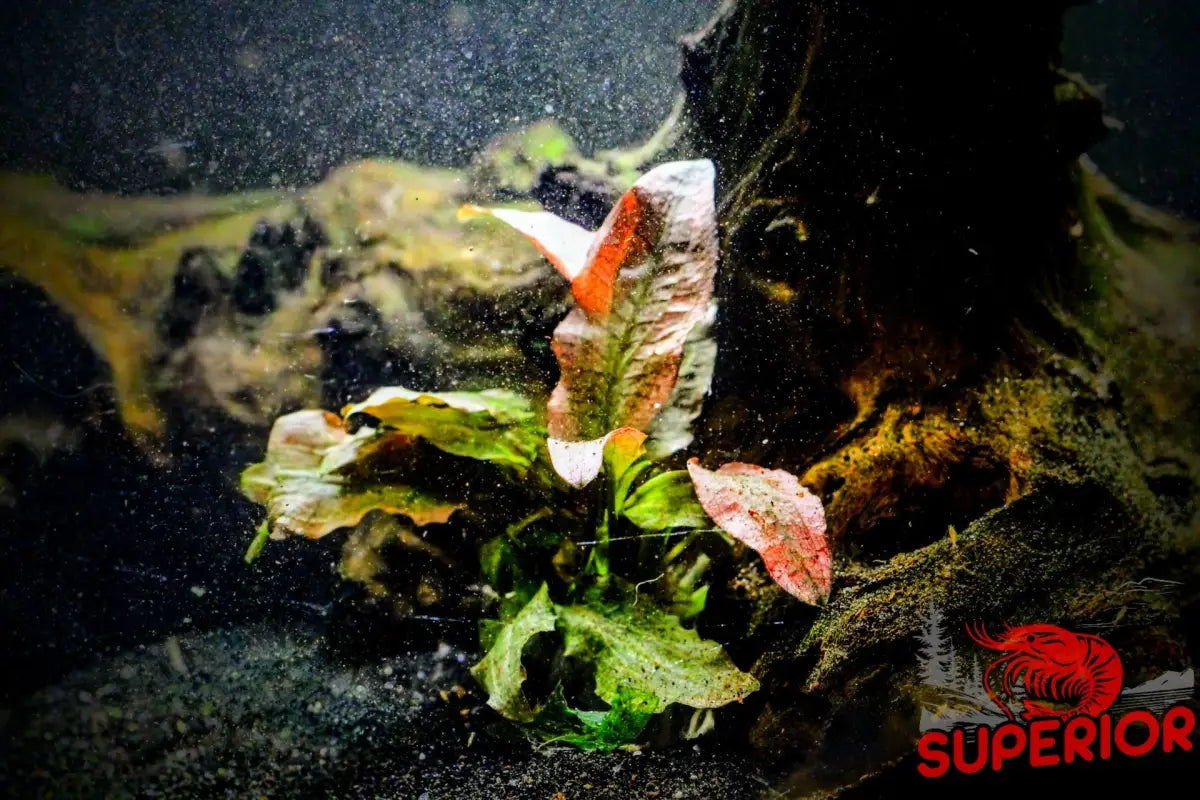
A tissue-culture Cryptocoryne cultivar with soft pink-to-rose leaves — the only warm-toned, genuinely pink Crypt in the catalog and a colour that no other substrate plant replicates without CO₂.

Soft Pink to Rose Leaves Tissue Culture — Snail & Pest Free Midground Substrate Plant CO₂ Enhances Color Low to Medium Light Shrimp Safe

Cryptocoryne Pink Flamingo is a cultivar that delivers something genuinely rare in low-tech planted tanks — a warm pink to rose leaf color that is present and real without CO₂ and without high light, produced by a compact, rosette-forming substrate plant that roots firmly, grows steadily, and asks very little in return. Where Cryptocoryne Bronze and Cryptocoryne Red sit in the brown-red-olive spectrum, Pink Flamingo occupies a distinctly different color territory — a soft, warm pink that reads clearly as pink rather than red or bronze and that provides a color accent no other plant in the catalog without CO₂ and high light can replicate. It is sold as a tissue culture specimen: grown in laboratory conditions free of algae, snails, pest invertebrates, and the pathogens that can enter a tank on conventionally grown plants — a significant advantage for shrimp keepers maintaining clean, controlled environments. Fully safe with all Neocaridina, Caridina shrimp, and snails.

EnhancesCO₂
72–82°FTemperature
Low–MedLighting

Color, Growth & Behavior

Soft pink to rose coloration distinct from every other Crypt in the catalog — Pink Flamingo leaves are a genuine warm pink — ranging from pale blush to deeper rose depending on light intensity, iron levels, and individual plant variation — entirely different in color temperature from the warm brown-reds of Cryptocoryne Bronze and Red. In a layout composed primarily of green plants, a single established Pink Flamingo reads immediately as a color event. Against the dark tones of Anubias or Bucephalandra in the midground behind it, the pink is particularly vivid and clear. Color intensity responds to light and iron — like most colored Cryptocorynes, Pink Flamingo's pink saturation deepens under higher light intensity and with consistent iron supplementation. Under low light the leaves may be paler — a soft blush rather than deep rose — and the color is still present and real but less saturated. Medium light with regular iron dosing produces the most vivid and consistently pink new growth. CO₂ injection improves both growth rate and color intensity but is not required for attractive coloration. Compact rosette form — midground to foreground scale — Pink Flamingo is a compact Cryptocoryne, producing a rosette of leaves that stays within midground scale — taller than a true foreground plant but not reaching the background height of larger Crypt species. The compact habit makes it appropriate for smaller tanks and nano setups where larger Crypts would overscale the layout. In tanks where the foreground is occupied by Monte Carlo or Staurogyne, Pink Flamingo sits naturally in the transition zone between foreground and midground. Tissue culture — genuinely pest and snail free — Pink Flamingo is supplied as a tissue culture plant: propagated and grown in sterile laboratory conditions, arriving free of algae, snails, bladder snails, pest planaria, hydra, and the range of pathogens that can travel on conventionally grown aquatic plants. For shrimp keepers who maintain strict biosecurity — particularly Caridina keepers where tank stability is paramount — tissue culture is the safest possible way to add new plants without risk of introducing unwanted hitchhikers. Crypt melt after introduction is common and temporary — Cryptocorynes typically melt — dropping existing leaves — when moved to a new tank as they adjust from emersed or tissue culture growth conditions to submersed life in your specific water parameters. This is normal and does not indicate a dying plant. The rhizome and root system survive the melt and produce new submersed-adapted leaves over the following weeks. Do not remove the plant during the melting period — leave it undisturbed in its planting position and new growth will emerge. Roots deeply into substrate and feeds primarily from roots — like all Cryptocorynes, Pink Flamingo roots strongly into substrate and draws the majority of its nutrition from there. Nutrient-rich substrate or root tabs placed near the planting site support faster establishment, fuller-sized leaves, and more vivid pink coloration than inert substrate without supplementation. Once rooted and established, the plant becomes increasingly stable and produces new leaves steadily.

Getting Started

1 Rinse away tissue culture gel before planting — tissue culture plants arrive in a clear agar gel that must be fully rinsed away before introducing the plant to the tank. Hold the plant under lukewarm running water and gently work the gel free from the roots with your fingers until all traces are removed. Agar gel left on roots can encourage bacterial growth in the tank and inhibit root contact with substrate.
2 Plant in substrate with crown just above the surface — push the roots gently into substrate, leaving the crown — the central growing point where roots meet leaves — at or fractionally above the substrate surface. Burying the crown causes rot; leaving roots entirely above substrate prevents anchoring and nutrient uptake. In soft aquasoil, roots will establish grip within the first week. Add a root tab within 5cm of the planting site if using inert substrate.
3 Leave undisturbed through the melt period — if existing leaves begin to melt after introduction, resist the urge to remove the plant, reposition it, or intervene. The rhizome is alive and adapting — moving it interrupts root establishment and resets the adjustment process. Remove only fully decomposed, mushy leaf material to prevent fouling the water. New submersed leaves will begin to emerge from the crown within two to four weeks of the melt settling.
4 Dose iron consistently for maximum color saturation — begin liquid fertilization with a balanced formula including iron at or shortly after planting. Iron is the most impactful single nutrient for maintaining and deepening the pink coloration of Pink Flamingo — plants grown without iron supplementation produce leaves that are paler and less distinctly pink than those grown under consistent iron availability. Dose two to three times weekly at the manufacturer's recommended rate.
💡 Bonus Tip

Pink Flamingo planted directly in front of a group of deep-green Anubias barteri or a dark-toned Bucephalandra on driftwood is the single most effective color contrast arrangement available to a low-tech planted tank without CO₂ — the soft warm pink of the Crypt against the deep cool green of the Anubias or the dark iridescence of the Buce creates an immediate, natural-looking warm-cool contrast that neither plant generates alone. The same principle that makes Rotala 'Orange Juice' work behind Anubias applies here at a warmer, softer register, and without the trim-and-replant maintenance that stem plants require.

🌿
Browse more aquatic plants

Pair Pink Flamingo with Cryptocoryne Bronze, Red, Anubias, or Bucephalandra for a complete planted midground. Browse our Aquatic Plants collection.

→
Before placing your order, please review our 📋 DOA Policy 🚚 Shipping Info
Reviews

Customer Reviews

Be the first to write a review
0%
(0)
0%
(0)
0%
(0)
0%
(0)
0%
(0)
Policies & Disclaimers
Aquatic plants

Policies & Disclaimers

Choosing your portions, using the plant promotion, and knowing what to expect when your plants arrive.

Buy 2 Get 1 Free: add all three

Choose three eligible plant items and add all three to your cart, including the plant you want free. The discount applies automatically at checkout; no code is needed. Adding only two items does not add a third plant for you.

Mix and match eligible varieties or choose multiple quantities of the same eligible plant. The least expensive eligible item is free. For example, with eligible items priced at $5, $8 and $10, the $5 item is discounted and the plant subtotal is $18 before shipping and tax.

The offer repeats for complete qualifying groups: three eligible items give one free, six give two free, and nine give three free. The current offer has no per-order use limit. Items must be included in the promotion; Plant Weights and other non-plant accessories do not qualify.

An item means the sale unit in your cart. One bunch, cup, portion or multipack counts as one item when purchased at quantity one, not one item for every stem, leaf or bulb inside it. Check the listing and selected option for what each unit contains.

Check the discount and quantities in your order summary before paying. Other promotions can affect the final discount; multiple product discounts do not stack on the same item. This is an online checkout offer, not an automatic in-store POS discount.

Portions, sizes & what you receive

Read this plant’s description and selected option for its sale format, portion size and any stated stem or plant count. A bunch, loose portion, rooted plant, bulb, cup and mounted plant are different products; there is no single size or count that applies to every plant we sell.

A mature height or spread describes potential growth in an aquarium, not the size shipped. Use the advertised purchase portion to plan your order. A full carpet, dense moss-covered surface or established group in a photograph may require several portions and time to grow.

Do not assume that a pot, planting weight, rock, wood, substrate or other display accessory is included unless the listing explicitly says it is. If the received portion appears different from the selected listing, photograph it with its packaging and contact us promptly.

Photos, color & natural variation

Photos illustrate the named plant or variety and its appearance. Living plants vary in leaf size, shape, root development, branching and fullness; a photo of an established specimen is not a measurement of each portion shipped. The product description and selected option remain the reference for your purchase.

Aquarium lighting, camera settings and the growing environment affect perceived color. Red or pink varieties can look different under different lighting and growing conditions. Do not use a photograph alone to select a plant’s care requirements or expect immediate mature coloration.

Above-water growth & the transition underwater

Some aquarium plants can grow with their leaves above water as well as submerged. These growth forms can have different leaf shapes and appearances. New underwater growth may look different from older leaves as the plant adjusts. This explanation does not mean every plant is supplied in the same growth form; follow any specific information in the listing.

Leaf loss or softening after a change of environment is often called melt. Look at the plant as a whole and its growing points rather than judging only one older leaf. Do not assume that a damaged plant is simply transitioning or wait for new growth before reporting an arrival problem.

This is background care information, not a new exclusion from the Live Arrival Guarantee. Arrival damage is assessed under the existing policy.

Planting: match the method to the plant

For stem plants, separate the stems and plant with room between them. For rosette plants, position the roots in the substrate without burying the crown. Remove transport bindings and growing material carefully where appropriate.

For Anubias and Java fern, keep the rhizome exposed rather than burying it. Moss can be divided into smaller portions and attached to suitable hardscape. Floating plants belong at the surface. Bulbs and tubers need species-specific planting depth; do not assume every type should be fully buried.

Keep plants damp while working. Follow the individual listing for placement and care, especially when a plant has unusual requirements. These are planting tips, not additional conditions for a claim.

Growth, tank conditions & choosing companions

Plan for the plant’s mature size, available light and the space it will occupy. A background stem plant, slow-growing rhizome plant and floating plant serve different roles; a purchase portion does not instantly create a finished aquascape.

Use the listing’s guidance on light, nutrients and carbon dioxide rather than assuming every plant needs the same setup. Growth rate and final appearance depend on aquarium conditions and maintenance. More light alone is not a substitute for a balanced setup.

Consider animals that dig, uproot or eat plants before choosing placement. Floating growth can shade plants below it, and fast-growing plants may need thinning. Observe new growth and make gradual, species-appropriate adjustments.

Hitchhikers & introducing plants

Our existing policy does not guarantee pest-free arrival. Plants can carry tiny organisms or eggs, including snail eggs, despite inspection. Inspect new plants before introduction, and consider separate observation or quarantine to protect an established aquarium.

Do not assume a plant is sterile, pesticide-free or safe for a particular treatment unless the listing explicitly provides that information. Sensitive leaves, mosses and roots can respond differently to dips. Research the exact plant and any treatment before using it; do not apply an animal medication or a strong dip by default.

Arrival problems: document and contact us promptly

For damaged or dead plants, email support@superiorshrimpaquatics.com within two hours of the carrier’s recorded delivery time. Use the email address on the order and include all arrival concerns in your first message.

Send clear photographs of the affected plants and their packaging, with the shipping label or invoice visible for identification. Photograph packaging damage before unpacking or discarding materials, and consult the full guarantee’s documentation instructions. Keep the original photos.

The current guarantee covers aquatic plants but excludes promotional or free items. That existing exclusion also matters when ordering a free promotional plant. Claims and available resolutions are assessed under the full policy; this tab does not expand or reduce coverage.

Shipping your plants

Plants ship Monday and Tuesday, with Wednesday shipping available for 2-day or overnight services. Orders remain subject to stock, fulfillment timing and weather holds under our shipping policy. A shipping-service estimate is not a guaranteed dispatch date.

Plan to receive the package promptly and inspect it on arrival. Review the full shipping information for weather precautions, transit expectations and delivery issues. If your cart also contains live animals, review the shipping requirements for those animals as well.

Returns & order questions

Check the plant name, portion, quantity and selected option before completing checkout. Contact us before sending anything back; returns require prior written authorization under our existing policy. The full return policy explains the applicable conditions.

This tab explains the existing offer and policies alongside plant-care guidance. Care tips do not create new claim requirements or exclusions. Refer to the linked policies for complete terms.

Home Shop
Wishlist
Log in