Skip to content

Sign In

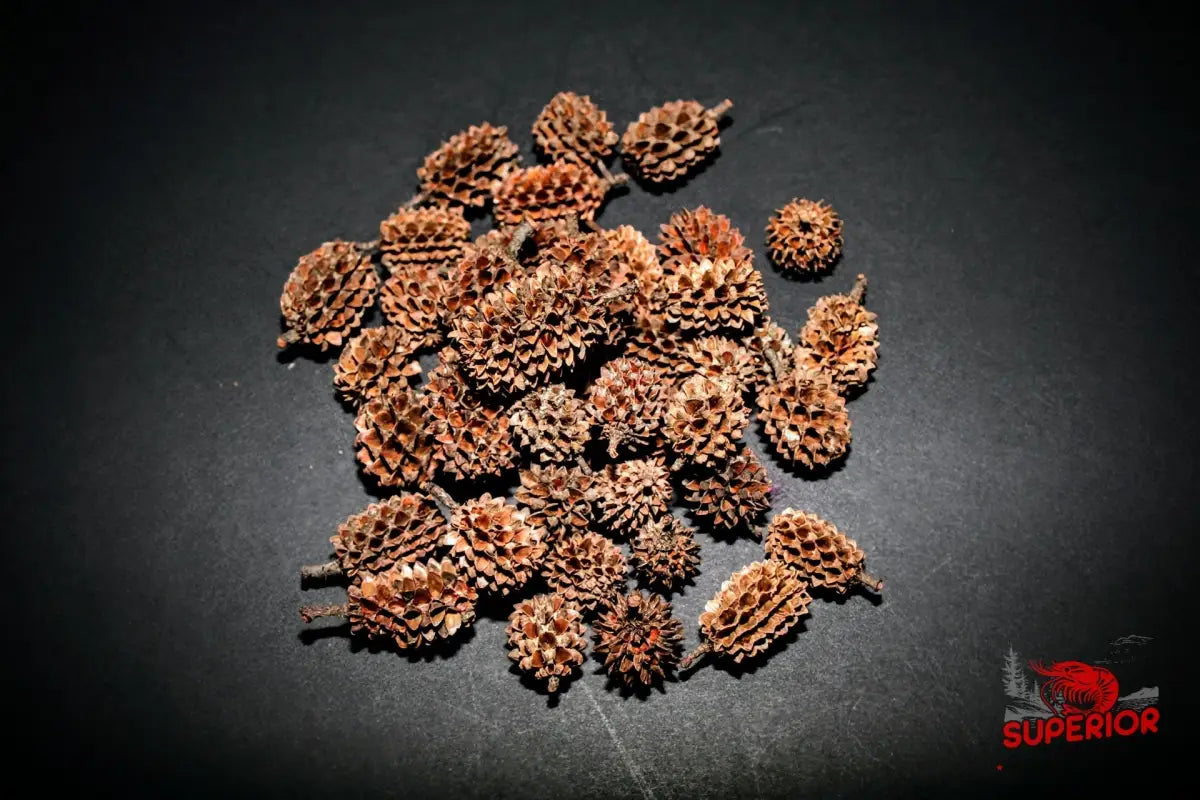
Casuarina Cones

Casuarina Cones

<p>Earn%20[points_amount]%20when%20completing%20this%20purchase.</p>
Amount: 10 Pieces

Sub total:

$5.00

Useful add-ons

Loading add-ons…

View full details
Description
Botanicals

Casuarina Cones

Small, dense seed cones that release tannins and humic acids slowly and gently — the most structurally compact botanical in the catalog and a long-lasting addition to any shrimp or blackwater setup.

Slow Tannin Release Humic Acids & Antibacterial Compounds Dense & Long-Lasting Shrimp & Snail Safe Blackwater Compatible Natural Hardscape Element

Casuarina cones are the small, woody seed cones of the Casuarina tree — a genus widespread across tropical and subtropical coastlines that produces dense, hard, intricately structured cones roughly 1–2cm in length. In the aquarium they function as a long-duration botanical: the dense woody structure breaks down far more slowly than leaf-based botanicals, releasing tannins, humic acids, and mild antibacterial compounds gradually over weeks and months rather than the faster release of catappa leaves or alder cones. The small scale and structural complexity of each cone makes them among the most naturalistic-looking botanicals available — they settle into substrate and accumulate against hardscape the way organic debris actually does in stream and forest floor environments, adding a layer of environmental authenticity that larger or more obviously decorative botanicals do not replicate as convincingly. Safe with all Neocaridina, Caridina shrimp, and snails.

Behavior & Benefits in the Tank

Slower, gentler tannin release than leaf botanicals — the dense, woody composition of Casuarina cones means they release tannins and humic acids at a slower and more measured rate than soft botanicals like catappa leaves or Indian almond leaf. Where a catappa leaf may produce noticeable tannin coloration within hours of introduction, a Casuarina cone releases its compounds progressively over days and weeks — a gentler conditioning curve that is easier to manage in sensitive Caridina setups or tanks where significant water discoloration is unwanted. Adding a few cones at a time rather than a large quantity at once makes the release even more gradual and predictable. Tannins and humic acids support the blackwater environment — like all tannin-releasing botanicals, Casuarina cones contribute humic acids and tannins to the water column that gently buffer pH downward, support the soft, acidic water chemistry that Caridina shrimp and many other dwarf invertebrates thrive in, and produce the amber-tinted water characteristic of natural blackwater environments. The mild antibacterial properties of tannins also contribute to a cleaner aquatic environment — suppressing certain bacterial and fungal activity in the water column and on surfaces in contact with the tannin-rich water. Dense woody structure lasts weeks to months in the tank — Casuarina cones break down significantly more slowly than leaf or pod botanicals, persisting in recognisable form for weeks to months depending on tank temperature, flow rate, and the activity of snails and shrimp grazing the surface. This longevity means fewer replacements and a more stable, sustained contribution to water chemistry compared to botanicals that soften and disintegrate within days. The cones gradually darken and soften at the outer scales while the dense core remains intact for an extended period. Shrimp and snails graze the surface actively — as Casuarina cones begin to soften and develop a biofilm coating on their outer surfaces, shrimp and snails graze them consistently — working across the intricately scaled surface and into the gaps between the cone scales where biofilm accumulates in sheltered pockets. The complex three-dimensional surface geometry of each cone provides significantly more grazing surface per unit of space than flat leaf botanicals of comparable footprint. Small scale reads as natural debris rather than decoration — at 1–2cm, Casuarina cones are small enough to sit convincingly among substrate particles, gather against the base of driftwood, and accumulate in the recesses of hardscape the way organic material actually collects in natural environments. Scattered across a substrate of dark sand or fine gravel, a handful of cones reads immediately as forest floor detritus — a level of environmental authenticity that larger botanical pieces require more deliberate arrangement to achieve. Initial tannin release may briefly cloud water — normal and temporary — particularly if cones are added without pre-soaking, the initial tannin release can produce brief mild cloudiness or a faster-than-usual amber tint in smaller tanks. This settles quickly as the initial surface tannins disperse and the slower steady-state release takes over. Pre-soaking eliminates most of the initial flush and produces a more controlled introduction — recommended for Caridina tanks and smaller setups where even brief parameter fluctuation is worth avoiding.

Preparation & Placement

1 Pre-soak before adding to the tank — place cones in a container of hot water and soak for 12–24 hours, discarding the water afterward. Pre-soaking serves two purposes: it removes the initial surface tannin flush that can cause sudden water discoloration, and it waterloads the dense woody structure so cones sink immediately and stay on the substrate rather than floating. Cones that have not been pre-soaked will often float for days before becoming waterlogged enough to sink — pre-soaking skips this entirely.
2 Add a few at a time rather than all at once — introduce three to five cones per initial addition in a standard nano or mid-size tank, then observe tannin contribution over the following week before adding more. The slow release rate of Casuarina cones makes it easy to dial in the level of tannin conditioning you want — adding incrementally gives you control over the amber tint and pH contribution in a way that adding a large quantity at once does not. This is particularly important in Caridina setups where pH stability is critical.
3 Scatter across substrate or place against hardscape — arrange cones naturally: scatter a few loosely across the substrate, nestle some against the base of driftwood, and allow others to settle into substrate crevices. Resist the urge to arrange them in a deliberate pattern — the naturalistic effect comes from the casual, random distribution that mimics how organic debris actually accumulates. A mix of loose cones on open substrate and cones gathered against hardscape produces the most convincing environmental result.
4 Replace gradually as cones break down — as individual cones soften and disintegrate over weeks to months, replace them a few at a time to maintain a consistent tannin contribution and substrate presence. Replacing all cones simultaneously produces the same initial tannin flush as adding them all at once — staggered replacement of individual cones as they break down maintains a steady state rather than cycling between periods of high and low tannin release.
💡 Bonus Tip

Casuarina cones and catappa leaves used together in the same tank create a complementary tannin-release pairing — the fast initial release of catappa leaf establishes the tannin environment quickly when setting up a new blackwater or Caridina tank, while the slow sustained release of Casuarina cones maintains it steadily over the weeks between leaf replacements. The two botanicals cover different timescales of the same conditioning function, and together produce a more stable and consistent tannin level than either does alone.

🍂
Browse more botanicals

Pair Casuarina Cones with catappa leaves, alder cones, or cholla wood for a complete blackwater setup. Browse our Botanicals collection.

→
Before placing your order, please review our 📋 DOA Policy 🚚 Shipping Info
Reviews
Policies & Disclaimers
Aquatic botanicals

Policies & Disclaimers

Natural materials, preparation, water effects and the existing terms that apply to your order.

Shipping schedule & processing time

We ship Monday–Wednesday only. We do not ship Thursday–Sunday. Orders placed after Wednesday 10 AM CT ship the following Monday. Live animals and plants ship on Wednesday only with 2-day or overnight shipping.

Processing can take up to 7 days before your order ships. Ship dates and delivery dates are estimates, not guarantees.

Natural variation & representative photos

Leaves, cones, pods, bark and cholla are natural materials. Pieces can vary in shape, color, thickness, texture and markings. Photographs show examples; they are not a promise of an identical piece or a matched set.

Use the listing and selected option for the quantity and any size range. A pack sold by count is not a standardized weight, and the same number of large pieces can add more material to an aquarium than smaller pieces. Wood, pods and bark also differ from one another in density and structure.

Dry leaves and other delicate materials can be brittle. Small edges, loose fragments or surface irregularities can occur, but this is not a blanket exclusion for damage. If an item appears substantially damaged, incorrect or short, document it and contact us.

Preparation: follow the particular listing

Review the preparation instructions for the exact botanical before adding it. Leaves, bark, cones, pods and wood do not all need the same treatment. Check for loose debris and rinse as appropriate; do not use soap, detergents or scented cleaning products.

Where the product calls for soaking or boiling, follow that guidance and allow material to cool fully before aquarium use. There is no universal boiling time or preparation recipe here. Do not assume preparation makes a natural item sterile or suitable for every species.

Prepare only what you intend to use and assess the material before introduction. If you are uncertain about a smell, coating or unexpected condition in the received package, ask before putting it in an established tank.

Floating, sinking & placement

Dry botanicals can float while they absorb water. Sinking time depends on the material, thickness and preparation; do not assume all pieces will sink immediately or on the same schedule.

Position pieces so they cannot block equipment, obstruct water movement or create an unsuitable tight space for your animals. A decorative shelter still needs to suit the size and behavior of the inhabitants. Check placement again as the material softens or moves.

Tannins, amber water & pH

Many botanicals release tannins and other dissolved organic compounds, which can tint water amber or brown. The amount and speed of release vary by material, preparation, quantity and aquarium maintenance. Color intensity is not a dosing measurement.

Do not use water color as a substitute for testing pH or carbonate hardness (KH). Your water’s buffering capacity affects how it responds. A botanical does not provide a predictable fixed pH reduction or replace appropriate water preparation.

Introduce changes cautiously, especially in low-KH systems. Choose botanicals to suit the inhabitants and monitor actual water conditions rather than adding more to chase a darker color or an advertised visual effect.

Biofilm, softening & decomposition

Once submerged, natural materials become surfaces for microorganisms and gradually break down. A film can develop on wet wood or other botanicals, and shrimp may graze these surfaces. Leaves can soften, develop holes and eventually fragment as part of that process.

The pace differs between leaves, cones, bark, pods and wood. A rapidly softening leaf and a slowly changing piece of cholla should not be expected to last equally long. There is no universal replacement interval for all botanicals.

A film that develops after aquarium introduction should not be confused with visible mold or suspicious contamination inside a dry package. If newly received material appears compromised, photograph it and contact us before use. Do not dismiss every unusual coating or odor as harmless biofilm.

Add gradually & observe the aquarium

Adding a large amount of organic material at once can increase microbial activity and oxygen demand. Start conservatively, maintain water circulation and monitor the aquarium’s response before adding more.

Check water quality and observe your animals. Unexpected cloudiness, odor or distressed behavior calls for investigation, not simply another addition of botanicals. Remove excess decomposing material when appropriate to your tank and maintenance routine.

Botanicals can provide structure and grazing surfaces, but they do not replace filtration, water changes or a suitable diet. They are not a guaranteed treatment for illness or a promise of improved breeding, survival or coloration.

Storage before use

Keep unused dry botanicals dry and protected from moisture and contamination. Avoid storing them where aquarium splashes or condensation can reach the package. Retain the product label and keep different materials identifiable.

Do not put soaked pieces back into the dry supply. Follow any product-specific storage guidance, and ask about newly received material that has unexpected dampness or visible contamination.

Package problems, incorrect items & questions

Inspect your botanicals and its packaging on arrival. If the package is torn, wet, leaking, incorrectly labeled or appears to contain the wrong item or quantity, contact support@superiorshrimpaquatics.com promptly with your order number and clear photos. Include the label, the affected product and packaging so we can understand the concern.

Keep the original packaging and avoid using a product that appears contaminated or compromised while you ask for advice. This is practical documentation guidance, not a new claim deadline or a promise of a particular resolution. A routine unopened return and a report that an item arrived damaged or incorrect are different concerns; tell us which applies.

Existing return terms & exchanges

Food and botanicals are dry goods under our Return Policy. Ordinary returns require prior written authorization and unused, unopened items in their original sealed packaging. Contact us from the email address on your order before sending anything back, and consult the linked policy for its request window and complete eligibility requirements.

The buyer pays return shipping and safe packaging costs. Original shipping charges are non-refundable, and there is no restocking fee. Returned items must arrive in their original condition for inspection.

Approved refunds are processed within 3 business days after receipt and inspection, to the original payment method for the eligible item value. In-store exchanges are available for eligible items with prior written authorization. Promotional, free and final-sale items are subject to the exclusions in the full policy.

Shipping & mixed orders

These products ship as dry goods under our existing shipping practices. Review the delivery address, selected quantity and variant before checkout. Dispatch and delivery timing depend on fulfillment, stock and the selected service; a carrier transit estimate is not a guaranteed ship date.

If your order also includes live animals or plants, review their shipping requirements separately. Adding food or botanicals does not remove the requirements that apply to the live items in that order.

Live Arrival Guarantee scope

The existing Live Arrival Guarantee covers live animals and aquatic plants. It excludes food, botanicals and other dry goods. The livestock reporting window and bonus-animal rules are not food or botanical product guarantees. For an issue with this item, contact us and refer to the Return Policy above.

Product-use guidance is separate from store policy. These explanations do not add return exclusions, claim deadlines or guaranteed outcomes. Read the linked policies for complete terms.

Home Shop
Wishlist
Log in

Add a heat or ice pack?

Your cart has live animals or plants and no temperature pack.

Heat pack $3.00

Recommended below 32°F at your address, or below 40°F for snails, Caridina shrimp, fish or crabs.

Ice pack $3.00

Recommended when highs at your address are above 85°F.

We ship Monday–Wednesday only. Orders placed after Wednesday 10 AM CT ship the following Monday. Processing can take up to 7 days, and ship dates are estimates, not guarantees. We check the weather at both ends before shipping and will contact you if we need to hold an order.

Picking up locally? You can skip this.