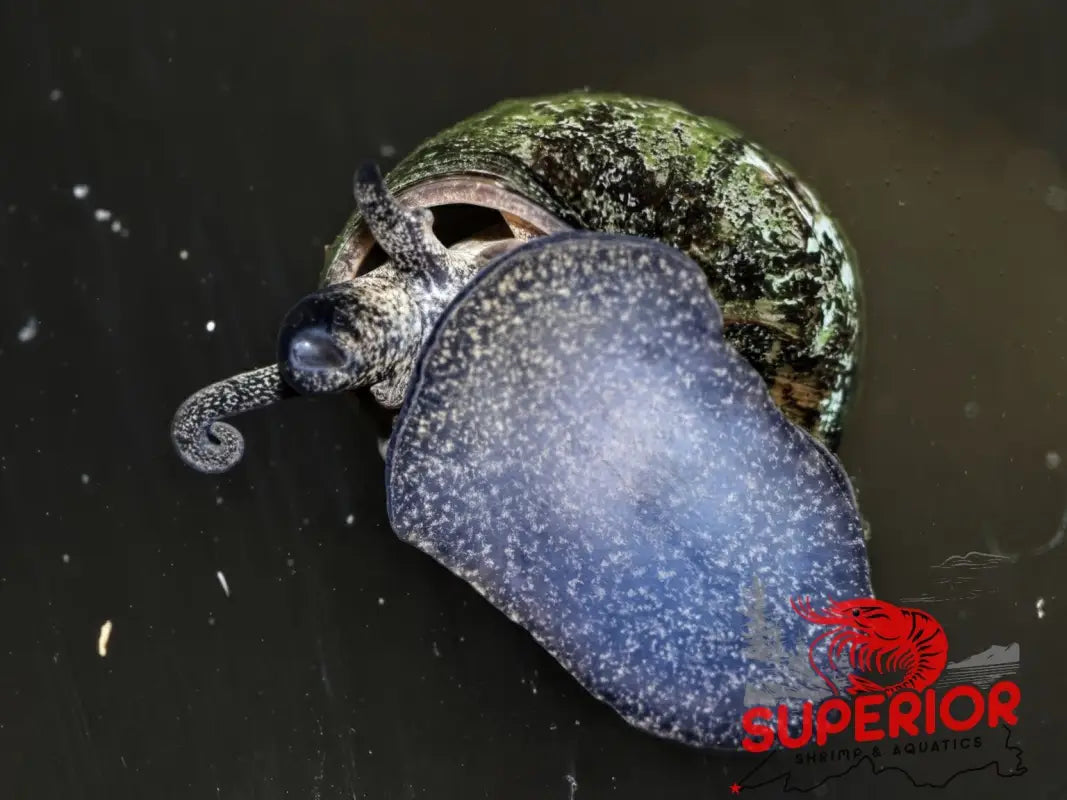
The Japanese Trapdoor Snail (Cipangopaludina japonica) is one of the most practical and resilient freshwater snails available. Named for the hard, hinged operculum — the "trapdoor" — that seals the shell opening when the snail retreats, this species combines genuine utility with a calm, unobtrusive presence. It grazes steadily on algae, biofilm, and organic debris across substrate and hardscape surfaces, tolerates a wide temperature range that few snails can match, and produces live young rather than laying eggs, keeping reproduction slow and manageable. A reliable long-term resident for community tanks, shrimp setups, and planted aquariums.
7.0–8.0
pH Range
GH 6–12
General Hardness
KH 3–8
Carbonate Hardness
50–75°F
Temperature
What to Expect
Appearance & Behavior Over Time
Rounded, olive to dark brown shell — the shell is smooth and globose with subtle spiral banding, ranging from olive green to dark brown or nearly black. Color and pattern vary naturally between individuals.
The trapdoor operculum is functional — when disturbed or stressed, the snail fully retreats and seals the shell opening with its hard operculum. This is a defense mechanism and a sign of a healthy, responsive snail.
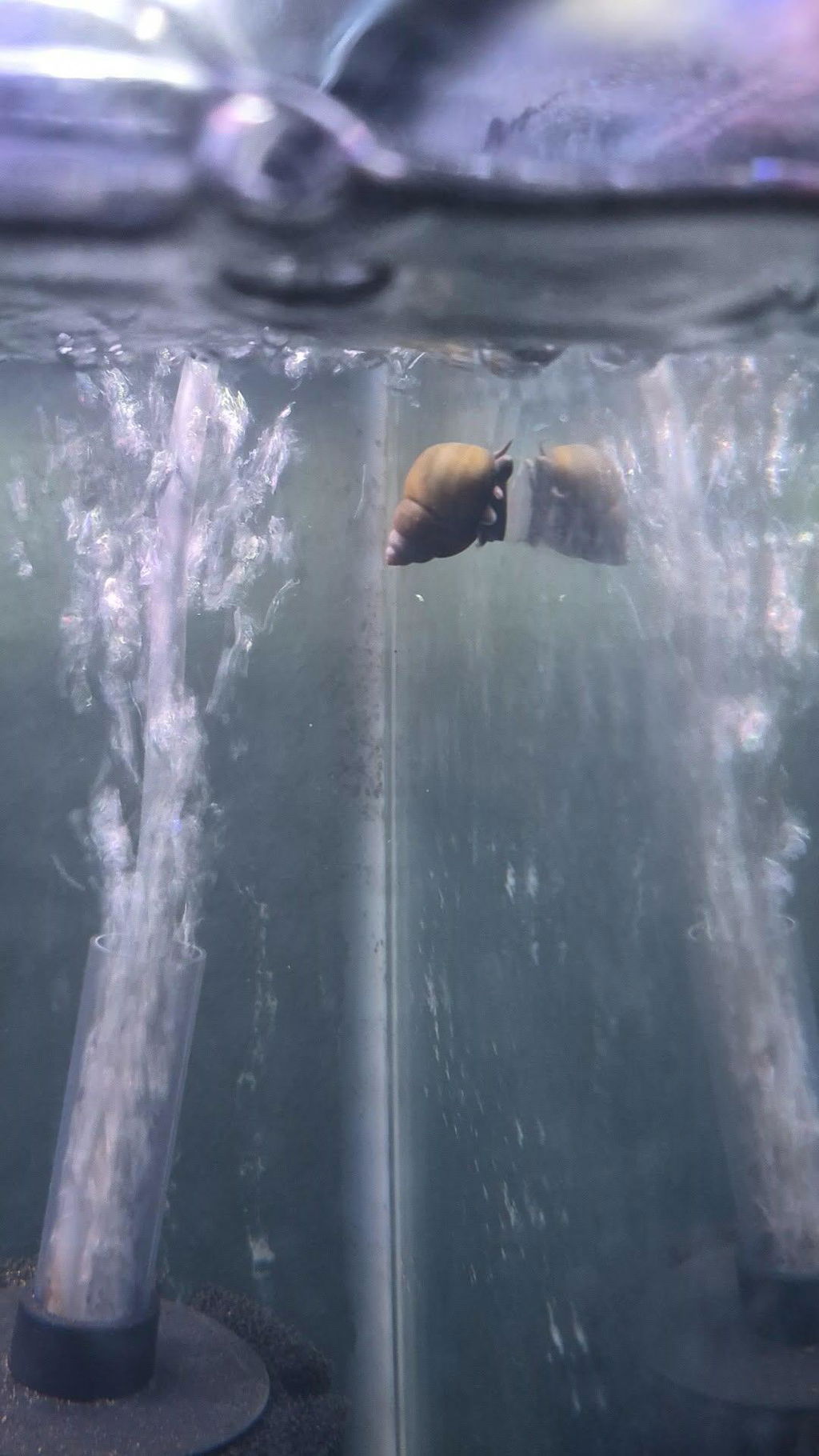
Slow, deliberate movement — Japanese Trapdoor Snails are unhurried grazers that move steadily across the substrate, glass, and hardscape, feeding on algae, biofilm, and settled organic matter as they go.
Live-bearing reproduction — unlike egg-laying snails, females give birth to fully formed juvenile snails. Population growth is slow and gradual, making this species one of the least likely to overpopulate a tank.
Cold tolerance is a genuine advantage — one of the few freshwater snails that thrives at temperatures as low as 50°F, making it suitable for unheated tanks, cold water setups, and seasonal outdoor ponds.
Consistent mineral levels support shell health — adequate KH and GH prevent shell pitting and erosion over time. Slightly harder water is preferable and supports the long lifespan this species is capable of.
How to Set It Up
Getting Started
1
Provide a mature, established tank — Japanese Trapdoor Snails thrive where biofilm and algae have developed naturally on substrate and hardscape. A cycled tank with stable parameters is the best starting environment.
2
Use sand or fine gravel substrate — a soft substrate allows natural burrowing behavior and makes it easier for the snails to move across the tank floor without shell wear. Add rocks and driftwood for additional grazing surfaces.
3
Maintain stable mineral levels — target pH 7.0–8.0, GH 6–12, and KH 3–8. Slightly alkaline, moderately hard water supports strong shell development and the long-term health this species is known for.
💡 Bonus Tip
If a Japanese Trapdoor Snail appears motionless for an extended period, check whether the operculum is sealed — if it is, the snail is alive and simply resting or sealed against a disturbance. A snail without a sealed operculum that doesn't respond to gentle movement is more likely to need attention.
🌿
Complete the setup with live plants
Plants provide essential hiding spots and enhance the natural look of your tank, creating a healthier, more enriching environment for your shrimp. Browse our Aquatic Plants collection.
→