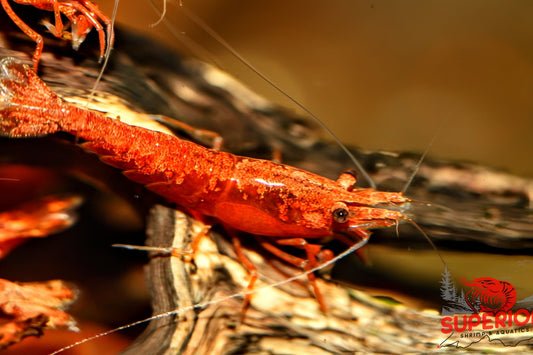
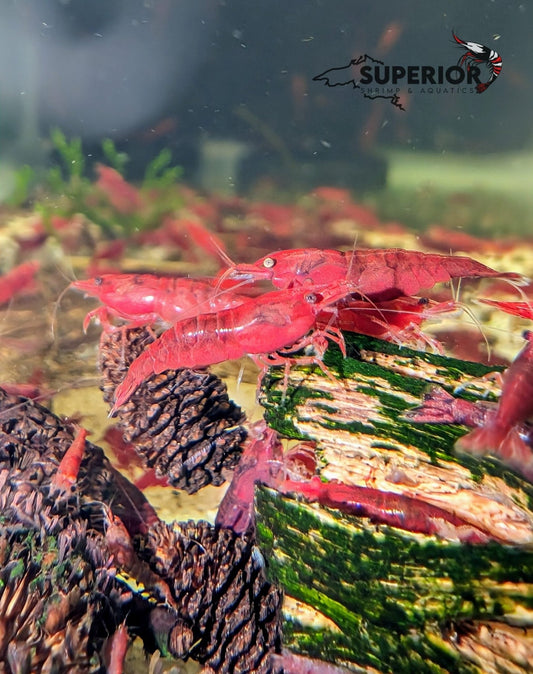
Cantaloupe Shrimp are a Neocaridina colour variant with a warm, soft orange-to-peach base body and irregular mottled or blotched patterning that gives each individual a slightly different colour distribution -- a more complex and varied appearance than the solid, even-toned colour morphs like Yellow or Blue Dream. The mottled pattern reflects both the base body colour and variation in pigment concentration across the body, producing a warm, melon-toned animal whose colour reads as nuanced and natural rather than uniformly saturated. The pattern intensity and orange depth improve with selective breeding across generations and with iron availability in the diet. Like all Neocaridina: hardy, beginner friendly, breeds freely in freshwater without intervention. Do not house with other Neocaridina colour variants to prevent colour reversion in offspring.
6.8-7.8pH
6-14GH
2-8KH
65-78FTemperature
What to Expect
Colour, Pattern and Behaviour
Soft orange to peach body with individual variation in mottling -- the base colour is a warm, muted orange in the cantaloupe-peach range -- softer and less saturated than vivid orange Neocaridina like Pumpkin shrimp, with the mottled patterning adding irregular variation in colour intensity across the body surface. Each individual carries a slightly different mottle distribution, making a colony of Cantaloupe Shrimp more visually varied and less uniform than solid-colour morphs at the colony level.
Colour deepens with successive generations in stable conditions -- the best colour expression develops progressively as each generation is produced under stable parameters and consistent nutrition. Selecting the most vividly coloured and most clearly patterned individuals as breeding stock across multiple generations moves the colony toward deeper orange tones and more defined mottling over time.
Iron-responsive colour -- dietary iron deepens the orange -- consistent liquid fertiliser with iron in planted tank setups, and iron-containing shrimp food, both contribute to the depth and saturation of the orange body colour. Cantaloupe Shrimp in iron-deficient environments tend toward paler, more washed-out peach tones rather than the warmer, deeper orange of well-nourished individuals.
Dark substrate for maximum colour contrast -- the soft warm orange reads most clearly against dark substrate. On pale or white substrate the peach-orange body blends with the background and the subtle mottled variation is less apparent.
Hardy and beginner friendly -- full Neocaridina tolerance range -- identical in hardiness and parameter tolerance to all Neocaridina. Appropriate for first shrimp setups and for experienced keepers looking to add warm-toned colour variety to an established Neocaridina tank.
How to Set It Up
Getting Started
1Dark substrate and stable parameters before introduction -- dark aquasoil or dark sand, pH 7.0-7.4, GH 6-8, KH 3-5, temperature 72-75F. Run for at least one week before introduction and test daily to confirm stability.
2Drip acclimate over 45-60 minutes -- float for 15 minutes, then drip at one drop per second for 45-60 minutes before release.
3Dense moss and established biofilm surfaces -- fine-structure moss and biofilm-producing surfaces in place before introduction support shrimplet survival from the first breeding cycle.
4Feed iron-containing food and dose liquid iron in planted setups -- vary the diet between comprehensive shrimp food and occasional iron-supplemented treats. In planted tank setups, regular liquid fertiliser with chelated iron supports the dietary iron availability that deepens the characteristic orange body colour.
Bonus TipCantaloupe Shrimp alongside Blue Velvet or Blue Dream Neocaridina in adjacent tanks -- kept separately to prevent cross-breeding -- creates a warm-cool display pairing where the soft orange-peach of Cantaloupe is viewed against or alongside the cool blue of the Blue line. The soft, naturalistic quality of the Cantaloupe mottling contrasts with the solid, even tone of the Blue morphs in a way that highlights both the warmth of the orange and the coolness of the blue more than either would reading in isolation.
🦐
Browse more Neocaridina shrimpPair Cantaloupe with Orange Rili, Pumpkin, or other warm-toned Neocaridina for a warm-spectrum display. Browse our Neocaridina Shrimp collection.
→