


You will not be allowed to compare more than 4 products at a time
View compareShipping Weather Check
Enter your ZIP for a 14-day forecast at your delivery address. We ship Monday–Wednesday. Wednesday livestock shipments require overnight or 2-day shipping. Live shrimp and aquatic livestock are sensitive to temperature extremes during transit.
Loading forecast...
View 14-day forecast
Safe
Caution
High risk
Transit window
Forecast data from Open-Meteo. Thresholds reflect typical livestock tolerances and are guidance only. We check conditions on both ends before every shipment and will reach out if a delay is warranted.
Blue Dwarf Crayfish (Cambarellus diminutus 'blue')
Blue Dwarf Crayfish (Cambarellus diminutus 'blue')
Regular price
$12.50
Regular price
Sale price
$12.50
Unit price
per
Shipping calculated at checkout.
Sub total:
$12.50<p>Earn%20[points_amount]%20when%20completing%20this%20purchase.</p>

Description
Reviews
Description
Dwarf Crayfish
Cambarellus diminutus
The smallest known crayfish species in the world -- rarely exceeding 1 inch, active, personable, and one of the most characterful invertebrates available for nano tanks.
World's Smallest Crayfish Species
Under 1 Inch at Maturity
Blue Colour Morph Available
Nocturnal & Active
Breeds Readily
Not Recommended with Shrimp
Cambarellus diminutus, commonly known as the Least Crayfish or Dwarf Cajun Crayfish, is the smallest described crayfish species in the world -- adults rarely exceed 1 inch (2.5cm) in total length, with males typically smaller than females. Native to the Gulf coastal plain of Mississippi and Alabama, they inhabit slow-moving streams, swamps, and marshes with soft substrates and dense vegetation. In the hobby the species is available in its natural tan-to-brown colouration and in a selectively bred blue colour morph. Despite their tiny size they are fully formed crayfish in every behavioural sense -- they forage actively, establish territories, display to one another, and carry themselves with the same confident curiosity as their much larger relatives. They breed readily in freshwater with no brackish requirement, females carrying 20--30 eggs under the abdomen until hatch. One important note for shrimp keepers: while C. diminutus is the most shrimp-compatible crayfish in the genus, individual behaviour varies and they are capable of opportunistically preying on shrimp -- particularly at night, and particularly on smaller or moulting individuals. They are not recommended for tanks where shrimp breeding is the primary goal.
6.5–7.5pH
6–15GH (dGH)
3–10KH (dKH)
68–78°FTemperature
The World's Smallest Crayfish
Rarely exceeds 1 inch -- genuinely nano-scale, smaller than many large female shrimp -- C. diminutus is not small for a dwarf crayfish; it is small in absolute terms. An adult male may be comparable in length to a large female Neocaridina shrimp, and a large female C. diminutus at full size is still under 1 inch in most cases. This scale makes them genuinely suitable for tanks as small as 5 gallons and gives them an endearing quality at close range -- all the features of a crayfish (claws, antennae, walking legs, fan tail) compressed into a package that fits on a fingertip.
Natural colour is tan to light brown -- blue morph available through selective breeding -- wild-type C. diminutus are a mottled tan to light brown with subtle patterning that provides natural camouflage against sandy and muddy substrates. The blue colour morph, produced through selective breeding, displays a vivid iridescent blue that is striking in contrast to green planting and dark substrate. Both colour forms are otherwise identical in care requirements and behaviour.
Fully formed crayfish body in miniature -- claws, antennae, rostrum, fan tail -- despite their size, C. diminutus have the full anatomical complement of a crayfish. The claws are functional and used for foraging, display, and occasional territorial interactions. The antennae are long relative to body size and constantly in motion. The fan tail flicks rapidly as a startle response. Observing them at close range in a well-planted nano tank reveals behaviour that is genuinely engaging and more complex than most invertebrates of comparable size.
Behaviour & Compatibility
Tankmates -- Read Before Purchasing
Not recommended for active shrimp breeding tanks -- individual behaviour varies and shrimp predation is possible -- this is the most important compatibility note for our customers. C. diminutus is the most shrimp-tolerant crayfish in the Cambarellus genus and many hobbyists keep them alongside Neocaridina without incident. However, individual personalities vary significantly -- some individuals are entirely indifferent to shrimp, while others actively hunt them, particularly at night when both shrimp and crayfish are most active. Moulting shrimp are especially vulnerable. If shrimp breeding and colony maintenance is the goal, keep C. diminutus in a separate dedicated tank. If the goal is a display tank with both species and some predation risk is acceptable, a large, heavily planted tank with abundant hiding cover reduces but does not eliminate the risk.
Nocturnal and most active after lights-out -- like all crayfish, C. diminutus is primarily nocturnal. During the day they spend time sheltering in hides and under hardscape, emerging more actively as the lights dim. In a well-structured tank with multiple hides they will become progressively bolder over time and visible during daylight hours, but the most active foraging and territorial display behaviour occurs at night.
Territorial towards conspecifics -- provide one hide per individual minimum -- C. diminutus establish and defend small territories centred around a preferred hide. In a tank with insufficient hiding spots dominant individuals will stress subordinates. Provide at least one dedicated hide -- a short section of PVC pipe, a small cave, a piece of hollow driftwood -- per crayfish. In a sufficiently large, well-structured tank a pair or trio can coexist with minimal conflict.
Omnivorous -- sinking pellets, algae wafers, blanched vegetables, frozen foods -- C. diminutus are opportunistic omnivores that will consume sinking crayfish or invertebrate pellets, algae wafers, blanched zucchini or spinach, and occasional frozen foods like daphnia or bloodworms. They also forage continuously on biofilm, detritus, and decaying plant matter in the tank. Feed small amounts every 1--2 days and remove uneaten food after a few hours to maintain water quality.
Breeds readily in freshwater -- female carries 20--30 eggs for approximately 4--5 weeks -- mating requires both male and female (sexing is possible -- females have wider abdomens and the underside pleopod structure differs from males). After mating the female carries fertilised eggs under her abdomen, fanning them regularly until hatch. Juveniles emerge as fully formed miniature crayfish and are immediately independent. Remove juveniles to a separate container if high survival rate is the goal, as adults may predate on juveniles.
Tank Setup
Environment & Care
Fine sand or soft substrate preferred -- mirrors natural Gulf coastal habitat -- in the wild C. diminutus inhabit muddy and sandy substrates. Fine sand allows natural foraging behaviour and is gentler on the underside during moulting. Coarse gravel is tolerated but not ideal. Dark fine-grain sand shows the blue morph's colouration most vividly.
Dense planting and multiple hides essential -- cover reduces stress and territorial conflict -- Java Moss, Subwassertang, and dense stem plant backgrounds provide cover and foraging surfaces. PVC pipe sections, Cholla Wood hollows, and small cave structures serve as dedicated territory anchors. A minimum of one hide per individual is non-negotiable for a stable group.
Sponge filter recommended -- no suction risk and gentle flow suits the species -- a sponge filter is the ideal filtration for a C. diminutus tank. There is no intake suction risk, the gentle flow matches the slow-water habitat preference of the species, and the sponge surface provides an additional biofilm foraging site. Sensitive to high ammonia and nitrates -- perform regular water changes and do not overstock.
Keeper's Note
A dedicated C. diminutus nano tank -- 10 gallons, black sand, dense moss carpet, a few pieces of Cholla Wood, and a pair or trio of the blue morph -- is one of the most entertaining and visually complete small tank setups available. The crayfish are visible and active enough to hold attention, the scale of everything is perfectly matched to the tank size, and the blue colour against black sand and green moss is immediately striking. Just keep it species-only or with snails only, and resist the temptation to add shrimp.
Browse more dwarf crayfish
→
Explore our full dwarf crayfish selection. Browse our Dwarf Crayfish collection.
Reviews
Customer Reviews
Based on 1 review
100%
(1)
0%
(0)
0%
(0)
0%
(0)
0%
(0)
A
My blue crayfish arrive in superb condition.
The packaging is superrb.
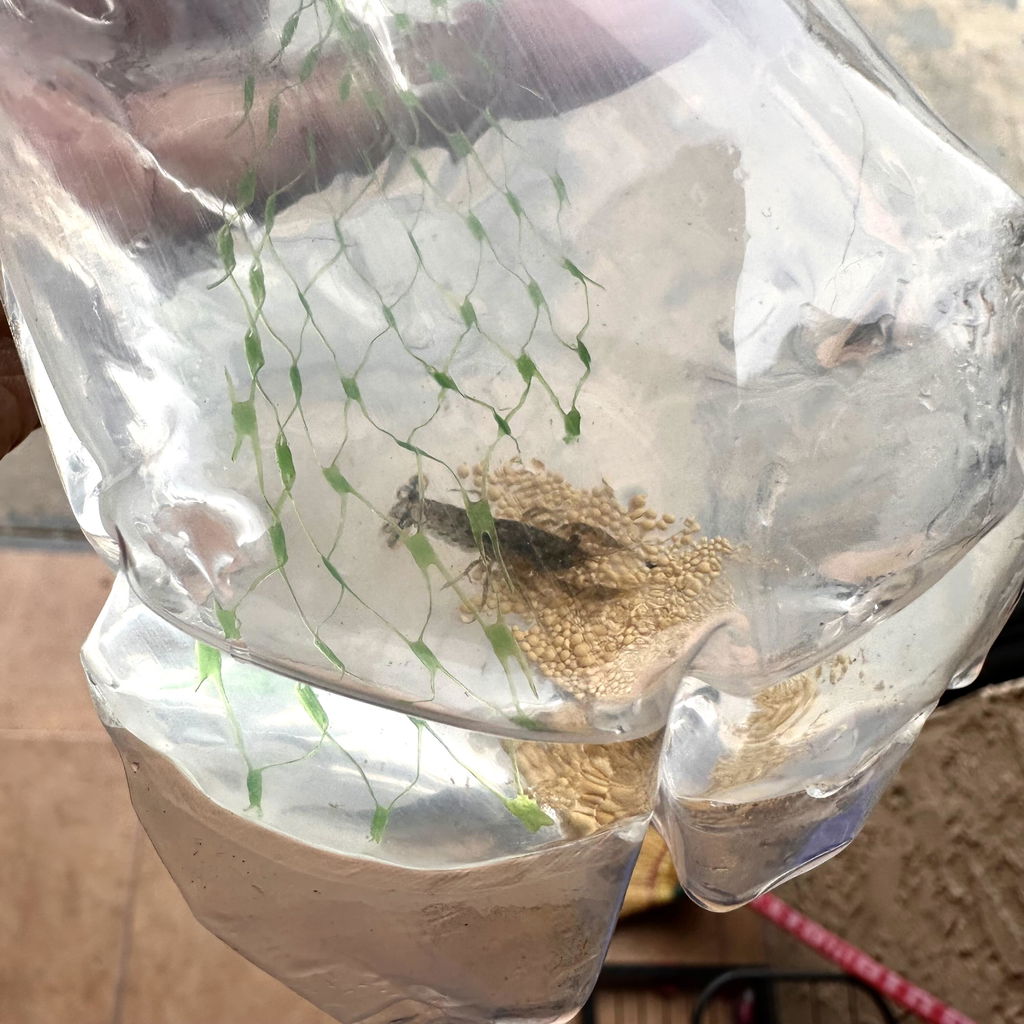
Thank you, Alexander! We’re glad your Blue Dwarf Crayfish arrived in superb condition and that the packaging made a great impression. We appreciate your support! If you have any issues, please email us at support@superiorshrimpaquatics.com.