Aquatic Plants
Asian Water Fern
A broad-leaved, slow-growing rhizome fern from Southeast Asia with elegant undivided green leaves on sturdy stalks. Attaches to driftwood and stone, thrives in low light and gentle flow, and rewards patience over months in stable conditions.
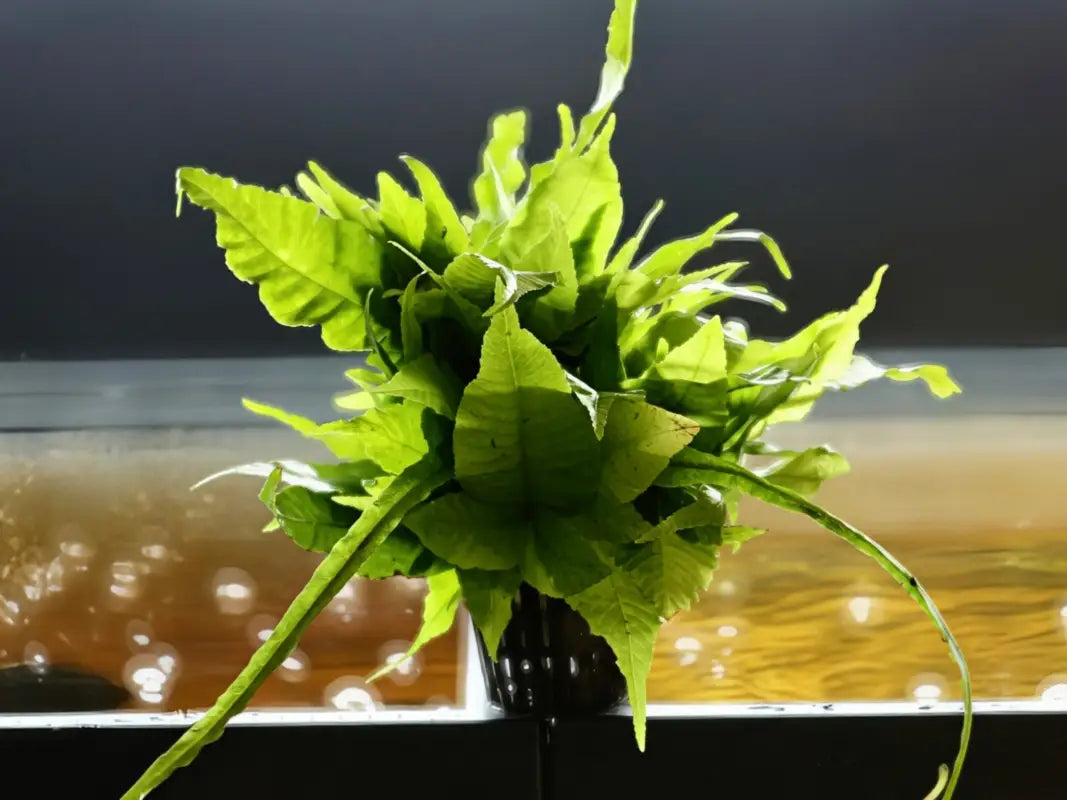
Asian Water Fern (Bolbitis heteroclita), also known as El Niño Fern and Broadleaf Bolbitis, is a rhizomatous fern native to shaded streambanks and understory habitats across tropical Southeast Asia. Unlike the deeply divided, pinnate fronds of Bolbitis heudelotii (African Water Fern), B. heteroclita produces broad, relatively undivided green leaves on sturdy stalks with a simple, elegant leaf form that reads as bold and clean at tank-viewing distance. It is naturally a semi-terrestrial plant and grows extremely slowly when fully submerged, typically producing only a few new leaves per month even under ideal conditions. This slow growth is a defining characteristic of the species rather than a sign of poor health, and a well-established specimen developing steadily over months produces a genuinely impressive and long-lived hardscape plant. It attaches its rhizome firmly to driftwood and stone over time, never requires substrate burial, and is safe with all Neocaridina and Caridina shrimp. Soft, slightly acidic water and stable parameters are essential for long-term health.
OptionalCO2
72–77°FTemperature
Low–MedLighting
Appearance & Growth
Broad Leaves, Slow Development
Broad, undivided to lightly lobed green leaves on sturdy stalks -- a simpler leaf form than other Bolbitis species. The leaf character of B. heteroclita is distinct from both B. heudelotii and the miniature B. difformis. Where heudelotii has deeply divided pinnate fronds and difformis has lace-like divided texture, heteroclita produces broader, more complete leaves with a relatively simple outline -- ovate to elongated with smooth or lightly wavy margins. The result is a more Java Fern-like leaf character in form, but distinctly different in the texture and thickness of the leaf tissue. Submerged leaves tend to be smaller and narrower than emersed growth, reaching up to around 4 inches in length in fully aquatic conditions.
Extremely slow growing -- a few leaves per month under optimal conditions is normal. This is the most important expectation to set when keeping B. heteroclita. The plant's naturally semi-terrestrial origin means its metabolic rate in fully submerged conditions is slow by design. New fronds emerge gradually from the growing tips of the rhizome and expand over several weeks. Increasing light intensity does not meaningfully increase the growth rate and often introduces algae and leaf burn. Patience, stable parameters, and consistent gentle flow produce the best outcomes over a multi-month timeline.
Initial leaf melt after introduction is normal and expected. B. heteroclita is typically grown emersed in nursery conditions. When introduced to a fully submerged aquarium the emersed leaves will often melt back as the plant transitions to producing true aquatic foliage. This is a normal acclimation process rather than a sign of poor health. Do not disturb the plant during this period. New submerged leaves will emerge from the rhizome growing tips as the plant establishes, and the transition is typically complete within four to eight weeks in stable conditions.
Rhizome attaches to driftwood and stone over time -- never bury in substrate. Like all Bolbitis species, B. heteroclita grows from a creeping rhizome that must remain fully exposed and in contact with open water. Burying the rhizome in substrate causes rapid rot. Attach the rhizome to rough-surfaced driftwood or stone using cotton thread or super glue gel and allow several weeks for the natural attachment to develop.
Water & Care
Parameters & Stability
Soft, slightly acidic water is strongly preferred -- hard water causes leaf dissolution. B. heteroclita is sensitive to water hardness. In hard water above approximately GH 10 the leaves become soft, translucent, and dissolve over time. Maintain soft to moderately soft water with GH below 10 and pH in the range of 6.0 to 7.0 for best results. This makes the plant well-suited to Caridina-parameter tanks and soft Neocaridina setups, but it is not appropriate for tanks with deliberately hard or alkaline water.
Temperature stability is critical -- 72 to 77°F with minimal fluctuation. This is a narrower and cooler temperature window than many commonly kept aquarium plants. Temperatures above 80°F cause stress and accelerated melt. Avoid tanks where temperature fluctuates significantly between day and night cycles. Stable temperature within the preferred range produces steady if slow growth; temperature instability is one of the most common causes of decline in this species.
Low to moderate light -- high intensity causes algae, leaf burn, and melt. B. heteroclita grows in shaded understory and streambank environments in the wild. Direct or high-intensity aquarium lighting causes algae accumulation on the delicate leaf surfaces and can trigger melting. Position the plant in a shaded area of the tank, under floating plant cover, or behind taller hardscape. A photoperiod of 8 to 10 hours at low to moderate intensity is ideal.
Gentle to moderate water flow encourages clean leaves and steady growth. Good water circulation prevents detritus settling on the leaf surfaces and provides consistent CO2 and nutrient delivery to the plant. Position the plant where it receives indirect flow rather than direct current blast. A sponge filter output or gentle circulation pump provides appropriate flow without disturbing the delicate fronds.
CO2 is beneficial but not required. CO2 supplementation modestly increases the growth rate of B. heteroclita in fully submerged conditions. Without CO2 the plant is viable and will grow, simply more slowly. Liquid carbon supplements can be used as an alternative. Avoid dosing fertilisers with high copper content in any setup housing shrimp.
Fully safe with all shrimp at every life stage. Compatible with all Neocaridina and Caridina shrimp. The broad leaf surfaces accumulate gentle biofilm over time that shrimp graze actively.
Keeper's NoteBolbitis heteroclita rewards aquarists who set appropriate expectations from the start. It will not transform a tank in a month. Over six months in stable soft water with low light and gentle flow, a well-attached rhizome develops a cluster of broad, elegant leaves that look as if they grew there naturally. It is one of the few aquatic plants that actually looks more at home on a piece of dark driftwood than it does in substrate, and its slow pace means it never needs trimming or repositioning once established. Pair it with Crystal Red Shrimp or Blue Dream Shrimp in a soft-water setup for a plant and livestock combination that shares the same parameter preferences.
🌿
Browse more aquatic plantsExplore our full selection of low-light hardscape plants and more. Browse our Aquatic Plants collection.
→