


You will not be allowed to compare more than 4 products at a time
View compareShipping Weather Check
Enter your ZIP for a 14-day forecast at your delivery address. We ship Monday–Wednesday. Wednesday livestock shipments require overnight or 2-day shipping. Live shrimp and aquatic livestock are sensitive to temperature extremes during transit.
Loading forecast...
View 14-day forecast
Safe
Caution
High risk
Transit window
Forecast data from Open-Meteo. Thresholds reflect typical livestock tolerances and are guidance only. We check conditions on both ends before every shipment and will reach out if a delay is warranted.
Amano Shrimp
Amano Shrimp
<p>Earn%20[points_amount]%20when%20completing%20this%20purchase.</p>
Sub total:
$3.30Useful add-ons
Loading add-ons…


Description
Care & Compatibility
Reviews
Description
Freshwater Shrimp
Amano Shrimp
The most effective algae-eating shrimp available -- a larger, faster-moving freshwater shrimp with an unmatched capacity for consuming filamentous algae, hair algae, and thread algae that dwarf shrimp cannot control.
Most Effective Algae Eater Available
Targets Hair and Filamentous Algae
Significantly Larger than Neocaridina
Cannot Breed in Freshwater
Safe with Plants and Shrimp
Active and Visible
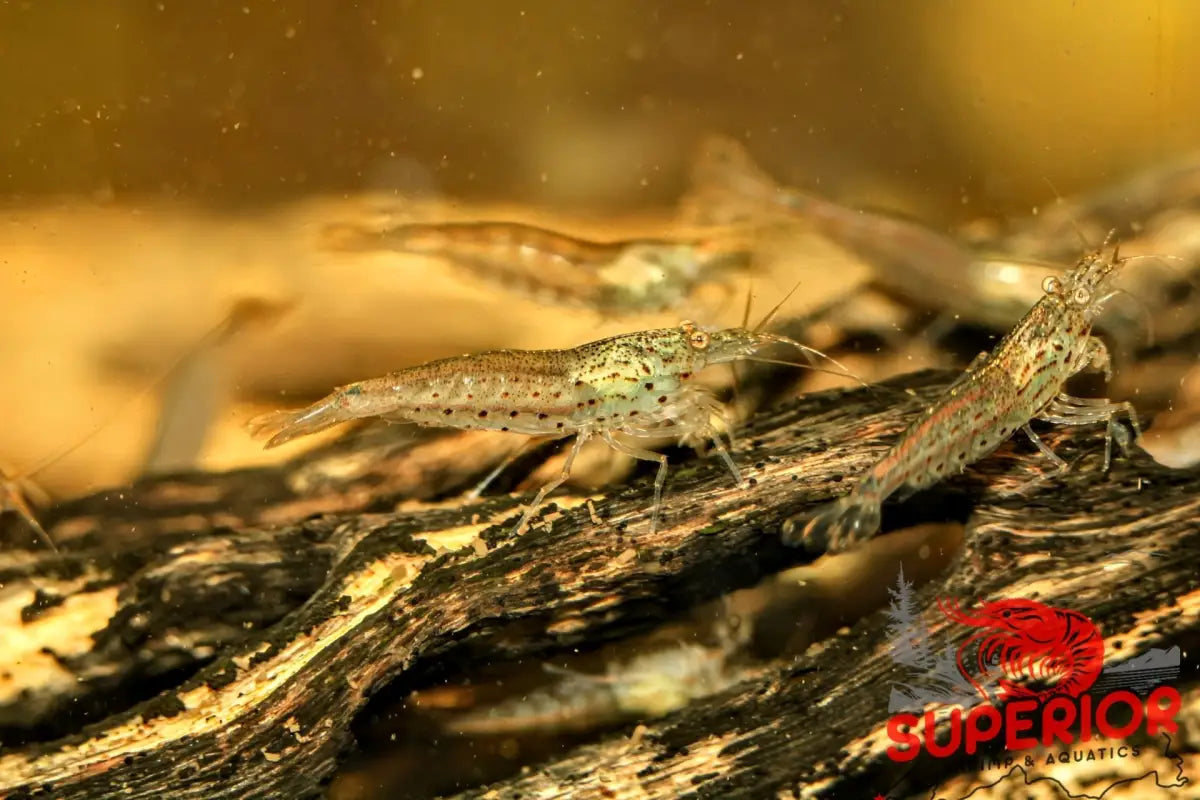
Amano Shrimp (Caridina multidentata) are the most effective algae-eating shrimp available in the freshwater hobby -- a larger, more active freshwater shrimp with an unmatched capacity for consuming the types of algae that dwarf shrimp cannot control: filamentous algae, hair algae, thread algae, and staghorn algae that grow in dense mats on plants, hardscape, and substrate. Named for the legendary aquascaper Takashi Amano who popularised their use in planted tanks, Amano Shrimp are a standard recommendation in virtually every planted tank algae control approach precisely because they actively pursue and consume algae types that accumulate in planted tanks with high light and moderate nutrients -- the conditions that also produce the most growth from fast-growing plants. They are significantly larger than Neocaridina and Caridina dwarf shrimp -- reaching 4-5cm -- highly active throughout the day, and cannot breed in freshwater, which makes population management straightforward: the number you introduce is the number you have, with no risk of uncontrolled population growth. Safe with all Neocaridina and Caridina dwarf shrimp. Do not house with fish large enough to eat them.
6.5-7.5pH
6-15GH
1-8KH
65-78FTemperature
Algae Control, Size and Behaviour
Unmatched capacity for filamentous, hair, and thread algae -- the primary reason Amano Shrimp are recommended specifically -- rather than Neocaridina or other shrimp -- is their effectiveness against filamentous algae types. Hair algae, thread algae, and staghorn algae grow in dense, interlocked mats that Neocaridina graze on the surface of but cannot penetrate or clear. Amano Shrimp actively pull filaments from surfaces, carry and consume entire strands, and work persistently on dense algae patches that smaller shrimp ignore. In tanks with established hair algae problems, a group of well-fed Amano Shrimp visibly reduces the algae mass within a week.
Significantly larger and more active than dwarf shrimp -- clearly visible at all times -- at 4-5cm, Amano Shrimp are two to three times larger than adult Neocaridina and are among the most visibly active shrimp available. They move rapidly across the tank floor, climb plant stems, and work across hardscape surfaces continuously throughout the day -- their activity level and size make them clearly visible from across the room in a way that dwarf shrimp browsing substrate often are not.
Cannot breed in freshwater -- population stays fixed at introduction number -- Amano Shrimp larvae require brackish water to develop -- they cannot complete their lifecycle in freshwater and no breeding occurs in a standard freshwater tank. This makes Amano Shrimp unique among the shrimp in the catalog in that the number you introduce is precisely the number you will have indefinitely, with no risk of population expansion or any need for population management.
Safe with Neocaridina and Caridina dwarf shrimp -- no predation -- Amano Shrimp do not prey on dwarf shrimp at any life stage and coexist without conflict. In a tank with both species, Amano Shrimp work on filamentous algae and larger food items while dwarf shrimp graze biofilm and finer substrate material -- complementary rather than competing foraging niches.
Feed on algae and supplemental food -- do not over-rely on tank algae alone -- in tanks with little or no algae -- a healthy, well-balanced planted tank -- Amano Shrimp require supplemental feeding to remain healthy. They consume standard shrimp sinking foods, blanched vegetables, and biofilm from plant and hardscape surfaces. A tank with no supplemental food and no algae cannot support Amano Shrimp long-term regardless of how well other parameters are maintained.
Stock at one per 10-15 litres for effective algae management -- a single Amano Shrimp in a 100-litre tank provides minimal algae control; a group of six to ten in the same tank provides measurable, visible impact on algae accumulation rates. Stock at the higher end of the density range for tanks with established algae problems and at the lower end for maintenance-level prevention.
How to Set It Up
Getting Started
1Confirm tank parameters and absence of shrimp-predatory fish before introduction -- Amano Shrimp are safe with all dwarf shrimp but are eaten readily by fish large enough to take them -- guppies and small tetras are safe tankmates, but most fish 6cm and above should be considered a risk. Confirm no predatory tankmates before introduction.
2Drip acclimate over 30-45 minutes -- Amano Shrimp are hardier than dwarf Caridina but still benefit from gradual acclimation. Float the bag for 15 minutes, then drip at one drop per second for 30-45 minutes before release.
3Introduce a group of at least six for effective algae control -- algae control effectiveness scales with group size. A minimum of six Amano Shrimp in tanks up to 80 litres provides meaningful algae pressure; larger tanks benefit from proportionally larger groups.
4Supplement with sinking food in low-algae tanks -- in a healthy planted tank with minimal algae, provide sinking pellets or blanched vegetables two to three times per week to sustain Amano Shrimp in good condition between algae-grazing opportunities.
Bonus Tip
Amano Shrimp introduced to a tank with an established hair algae or thread algae problem should be added alongside a concurrent reduction in photoperiod duration and light intensity -- not as the sole intervention. Amano Shrimp consume algae most effectively when the algae growth rate is simultaneously being reduced by addressing the conditions that caused it. Shrimp alone cannot outpace rapidly growing algae in high-nutrient, high-light conditions; shrimp plus reduced light and photoperiod produces visible clearing within one to two weeks in most cases.
Browse Caridina shrimp
→
Explore our Caridina Shrimp collection.
Care & Compatibility
Amano shrimp
Caridina multidentata
Published care guidance. Recommendations can vary between sources; these are not measurements of our current stock or survival limits. Avoid rapid changes to an established aquarium.
Provide an established freshwater aquarium, stable water quality, sheltered grazing surfaces and a protected filter intake. Supplement grazing with suitable shrimp foods. Choose peaceful tankmates and provide cover during molts. Published adult guidance: 20–27°C, pH 6.5–7.5 and approximately 40 L or more. Confirm your measured water before purchasing; these references are not the holding conditions of our current stock.
Fluval lists a maximum adult length of 5 cm (about 2 inches). Its care sheet gives hardness as 3–18 dH without distinguishing GH from KH; confirm both measurements for your setup rather than treating that figure as a separate GH or KH target.
- Feeding
- Omnivorous grazer
- Breeding
- Larvae require saline water; not a self-sustaining freshwater colony.
Care references