Casuarina Cones | Aquatic Botanicals – Superior Shrimp & Aquatics
Skip to content

15% OFF STORE WIDE! ENDS MARCH 15TH

Sign In

Casuarina Cones

Casuarina Cones

Regular price $5.00
Regular price Sale price $5.00
Sold out
Shipping calculated at checkout.
Amount: 10 Pieces

Sub total:

$5.00
View full details
Description
Casuarina Cones – Superior Shrimp & Aquatics
Botanicals

Casuarina Cones

Small, dense seed cones that release tannins and humic acids slowly and gently — the most structurally compact botanical in the catalog and a long-lasting addition to any shrimp or blackwater setup.

Slow Tannin Release Humic Acids & Antibacterial Compounds Dense & Long-Lasting Shrimp & Snail Safe Blackwater Compatible Natural Hardscape Element

Casuarina cones are the small, woody seed cones of the Casuarina tree — a genus widespread across tropical and subtropical coastlines that produces dense, hard, intricately structured cones roughly 1–2cm in length. In the aquarium they function as a long-duration botanical: the dense woody structure breaks down far more slowly than leaf-based botanicals, releasing tannins, humic acids, and mild antibacterial compounds gradually over weeks and months rather than the faster release of catappa leaves or alder cones. The small scale and structural complexity of each cone makes them among the most naturalistic-looking botanicals available — they settle into substrate and accumulate against hardscape the way organic debris actually does in stream and forest floor environments, adding a layer of environmental authenticity that larger or more obviously decorative botanicals do not replicate as convincingly. Safe with all Neocaridina, Caridina shrimp, and snails.

Behavior & Benefits in the Tank

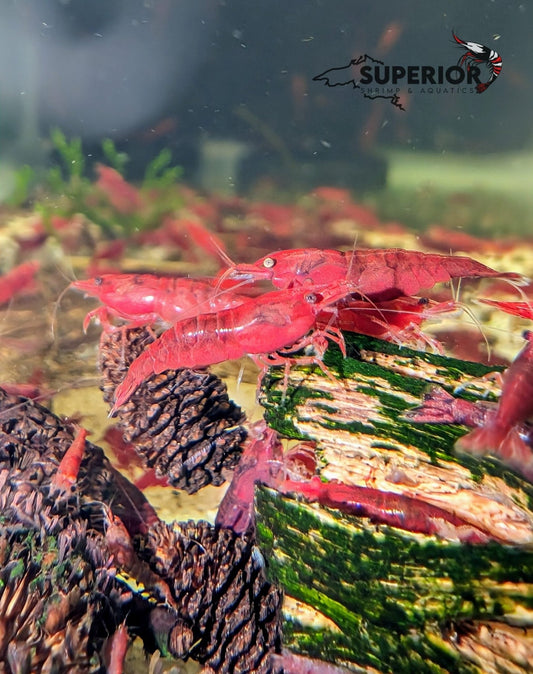
Slower, gentler tannin release than leaf botanicals — the dense, woody composition of Casuarina cones means they release tannins and humic acids at a slower and more measured rate than soft botanicals like catappa leaves or Indian almond leaf. Where a catappa leaf may produce noticeable tannin coloration within hours of introduction, a Casuarina cone releases its compounds progressively over days and weeks — a gentler conditioning curve that is easier to manage in sensitive Caridina setups or tanks where significant water discoloration is unwanted. Adding a few cones at a time rather than a large quantity at once makes the release even more gradual and predictable. Tannins and humic acids support the blackwater environment — like all tannin-releasing botanicals, Casuarina cones contribute humic acids and tannins to the water column that gently buffer pH downward, support the soft, acidic water chemistry that Caridina shrimp and many other dwarf invertebrates thrive in, and produce the amber-tinted water characteristic of natural blackwater environments. The mild antibacterial properties of tannins also contribute to a cleaner aquatic environment — suppressing certain bacterial and fungal activity in the water column and on surfaces in contact with the tannin-rich water. Dense woody structure lasts weeks to months in the tank — Casuarina cones break down significantly more slowly than leaf or pod botanicals, persisting in recognisable form for weeks to months depending on tank temperature, flow rate, and the activity of snails and shrimp grazing the surface. This longevity means fewer replacements and a more stable, sustained contribution to water chemistry compared to botanicals that soften and disintegrate within days. The cones gradually darken and soften at the outer scales while the dense core remains intact for an extended period. Shrimp and snails graze the surface actively — as Casuarina cones begin to soften and develop a biofilm coating on their outer surfaces, shrimp and snails graze them consistently — working across the intricately scaled surface and into the gaps between the cone scales where biofilm accumulates in sheltered pockets. The complex three-dimensional surface geometry of each cone provides significantly more grazing surface per unit of space than flat leaf botanicals of comparable footprint. Small scale reads as natural debris rather than decoration — at 1–2cm, Casuarina cones are small enough to sit convincingly among substrate particles, gather against the base of driftwood, and accumulate in the recesses of hardscape the way organic material actually collects in natural environments. Scattered across a substrate of dark sand or fine gravel, a handful of cones reads immediately as forest floor detritus — a level of environmental authenticity that larger botanical pieces require more deliberate arrangement to achieve. Initial tannin release may briefly cloud water — normal and temporary — particularly if cones are added without pre-soaking, the initial tannin release can produce brief mild cloudiness or a faster-than-usual amber tint in smaller tanks. This settles quickly as the initial surface tannins disperse and the slower steady-state release takes over. Pre-soaking eliminates most of the initial flush and produces a more controlled introduction — recommended for Caridina tanks and smaller setups where even brief parameter fluctuation is worth avoiding.

Preparation & Placement

1 Pre-soak before adding to the tank — place cones in a container of hot water and soak for 12–24 hours, discarding the water afterward. Pre-soaking serves two purposes: it removes the initial surface tannin flush that can cause sudden water discoloration, and it waterloads the dense woody structure so cones sink immediately and stay on the substrate rather than floating. Cones that have not been pre-soaked will often float for days before becoming waterlogged enough to sink — pre-soaking skips this entirely.
2 Add a few at a time rather than all at once — introduce three to five cones per initial addition in a standard nano or mid-size tank, then observe tannin contribution over the following week before adding more. The slow release rate of Casuarina cones makes it easy to dial in the level of tannin conditioning you want — adding incrementally gives you control over the amber tint and pH contribution in a way that adding a large quantity at once does not. This is particularly important in Caridina setups where pH stability is critical.
3 Scatter across substrate or place against hardscape — arrange cones naturally: scatter a few loosely across the substrate, nestle some against the base of driftwood, and allow others to settle into substrate crevices. Resist the urge to arrange them in a deliberate pattern — the naturalistic effect comes from the casual, random distribution that mimics how organic debris actually accumulates. A mix of loose cones on open substrate and cones gathered against hardscape produces the most convincing environmental result.
4 Replace gradually as cones break down — as individual cones soften and disintegrate over weeks to months, replace them a few at a time to maintain a consistent tannin contribution and substrate presence. Replacing all cones simultaneously produces the same initial tannin flush as adding them all at once — staggered replacement of individual cones as they break down maintains a steady state rather than cycling between periods of high and low tannin release.
💡 Bonus Tip

Casuarina cones and catappa leaves used together in the same tank create a complementary tannin-release pairing — the fast initial release of catappa leaf establishes the tannin environment quickly when setting up a new blackwater or Caridina tank, while the slow sustained release of Casuarina cones maintains it steadily over the weeks between leaf replacements. The two botanicals cover different timescales of the same conditioning function, and together produce a more stable and consistent tannin level than either does alone.

🍂
Browse more botanicals

Pair Casuarina Cones with catappa leaves, alder cones, or cholla wood for a complete blackwater setup. Browse our Botanicals collection.

Before placing your order, please review our 📋 DOA Policy 🚚 Shipping Info
Reviews

Customer Reviews

Based on 1 review
100%
(1)
0%
(0)
0%
(0)
0%
(0)
0%
(0)
R
Ricardo Cruz
As Described

Great product!

Home Shop
Wishlist
Log in