Harlequin Rasbora (Trigonostigma heteromorpha) | Superior Shrimp & Aquatics
Ir directamente al contenido

Inicio de sesión

Harlequin Rasbora (Trigonostigma heteromorpha)

Harlequin Rasbora (Trigonostigma heteromorpha)

Precio habitual $4.00
Precio habitual Precio de oferta $4.00
Agotado
Los gastos de envío se calculan en la pantalla de pago.
Pack Size: 1

Subtotal:

$4.00
Ver todos los detalles
<p>Ganas%20[points_amount]%20cuando%20compras%20este%20art%C3%ADculo.</p>
Descripción
Harlequin Rasbora - Superior Shrimp and Aquatics
Freshwater Fish

Harlequin Rasbora

One of the most enduringly popular schooling fish in the hobby. A copper-red metallic body carrying a bold black triangular wedge, kept in aquariums worldwide for over a century.

Copper-Red Body with Black Triangle Trigonostigma heteromorpha Peaceful Schooling Fish pH 5.0–7.5 5 to 8 Year Lifespan Shrimp Compatible with Caution

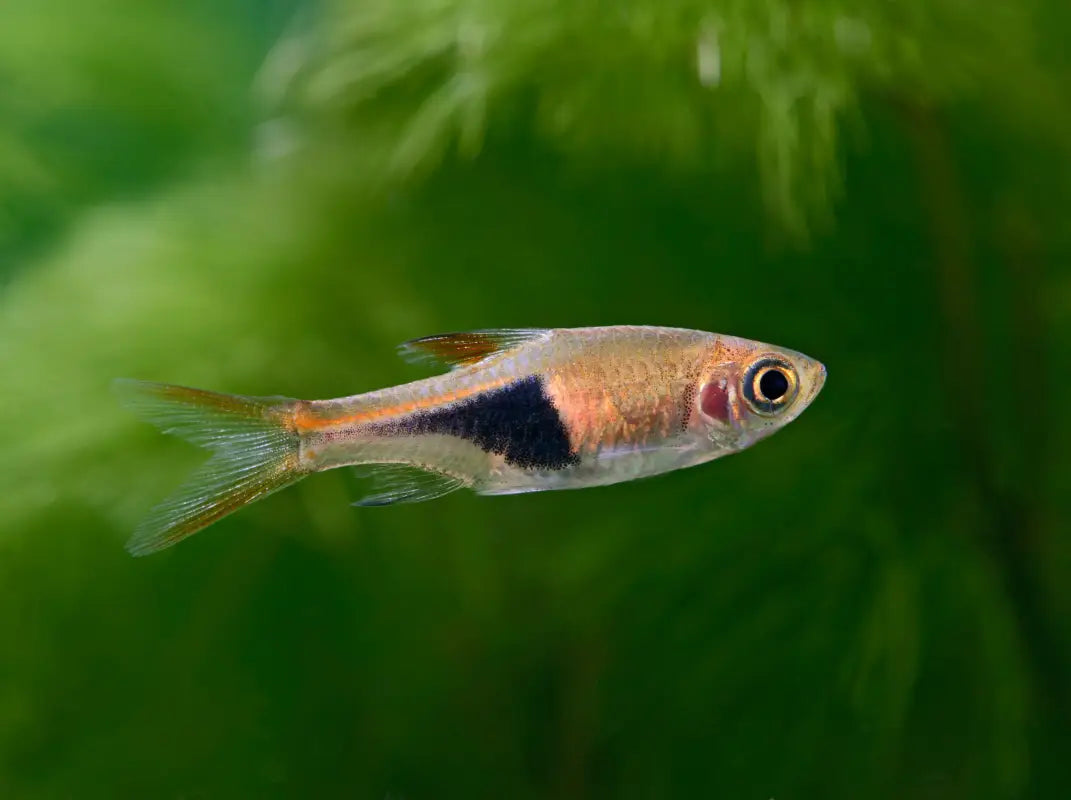
Harlequin Rasboras (Trigonostigma heteromorpha) have been a cornerstone of the aquarium hobby since they were introduced in the early 1900s, and they have held that position for good reason. The body is a warm copper-red with a metallic sheen, carrying a bold black triangular wedge that begins at the dorsal fin and tapers to the base of the tail. The genus name derives from the Greek word for "differently shaped," referencing this distinctive body marking, and the common name comes from the resemblance of the black patch to the patterning on a harlequin's costume. Native to the blackwater streams and ponds of Thailand, Malaysia, Sumatra, and Singapore, they are hardy, adaptable, and long-lived at 5 to 8 years. In the wild they school in groups of over a hundred; in the aquarium a school of 8 to 10 is the practical minimum for natural behaviour. Note that the invoice designation Rasbora heteromorpha is an older name; the current accepted classification is Trigonostigma heteromorpha.

5.0–7.5pH
2–12GH (dGH)
72–80°FTemperature
2 inMax Size

The Black Triangle

Copper-red metallic body with a bold black triangular wedge from dorsal fin to tail base. The black marking is the species' signature and is larger and more sharply triangular than the similar markings on the related Lambchop Rasbora (Trigonostigma espei) and Hengel's Rasbora (T. hengeli). The copper-red base has a genuine metallic quality that catches light as the school moves. The fins carry subtle red lining that adds warmth to the overall colouration. Colour is most vivid in soft, acidic, tannin-stained water with dim lighting. Harlequin Rasboras come from blackwater environments and show their best colour in conditions that replicate them. Soft acidic water with Almond Leaves or driftwood tannins, dark substrate, and subdued or plant-diffused lighting produces noticeably richer copper-red colouration than bright, hard, alkaline conditions. School of 8 to 10 minimum, larger groups strongly preferred. In the wild this species moves in groups exceeding a hundred individuals. In the aquarium, groups below 8 result in nervous, scattered behaviour and faded colour. A school of 12 or more produces confident, cohesive schooling in the upper and middle water column and is where the species genuinely shines. Long-lived at 5 to 8 years with good care. Harlequin Rasboras are notably long-lived for a small schooling fish, with most individuals reaching about 6 years and well-cared-for specimens hitting the upper end of that range. This makes a school a genuine multi-year investment rather than a short-term addition. Requires a fully cycled, stable tank. Sensitive to water chemistry changes. While hardy once established, Harlequin Rasboras should only be added to tanks that have completed the nitrogen cycle. They are sensitive to ammonia, nitrite, and sudden parameter swings, and require adequate dissolved oxygen and consistent water quality.

Larger Than the Nano Species

Adult Neocaridina shrimp are generally safe. Shrimplets are at meaningful risk. At 2 inches, Harlequin Rasboras are noticeably larger than the nano species like Chili Rasboras and Blue-Eyes, with a correspondingly larger mouth. Adult shrimp at full size are safe, but shrimplets and small juveniles will be consumed opportunistically. Dense planting with Java Moss and Subwassertang is necessary to maintain a breeding shrimp colony alongside a Harlequin school, and colony growth will be slower than in a fish-free tank. Parameter overlap works well with soft-water Neocaridina and Caridina setups. At pH 5.0 to 7.5 and soft to moderately soft water, Harlequin Rasboras suit both soft Neocaridina tanks and Caridina blackwater setups. The blackwater aesthetic that brings out their best colour is the same aesthetic that suits Caridina shrimp. Upper and mid-water schooling reduces substrate-level interaction with shrimp. Harlequins occupy the top and middle of the water column, leaving the substrate and hardscape to the shrimp. The vertical separation reduces but does not eliminate predation pressure on shrimplets.
Keeper's Note

A school of 12 Harlequin Rasboras in a blackwater planted tank with Almond Leaves, dark substrate, and dim plant-diffused lighting is one of the most classically beautiful freshwater displays in the hobby, and it has been for a hundred years. The copper-red bodies with their black wedges moving in formation through tannin-stained water is the kind of tank that made people fall in love with the hobby in the first place. If you are keeping shrimp alongside them, plant heavily and expect a slower-growing colony in exchange for the display.

🐠
Browse more freshwater fish

Browse our full Freshwater Fish collection.

Before placing your order, please review our DOA Policy Shipping Info
Reseñas

Customer Reviews

Be the first to write a review
0%
(0)
0%
(0)
0%
(0)
0%
(0)
0%
(0)
Home Shop
Lista de deseos
Iniciar sesión