Ir directamente al contenido

Inicio de sesión

Frogbit (Limnobium laevigatum)

Frogbit (Limnobium laevigatum)

<p>Ganas%20[points_amount]%20cuando%20compras%20este%20art%C3%ADculo.</p>
Amount: 10 - 15 Leaves

Subtotal:

$6.00

Productos complementarios

Cargando complementos…

Ver todos los detalles
Descripción


Aquatic Plants

Frogbit

Round, buoyant leaves on a open rosette — a larger-leafed floating plant that casts a dappled canopy, trails long decorative roots, and spreads at a manageable pace.

Round Buoyant Leaves Long Trailing Roots Dappled Light Canopy Calm Surface Required No CO₂ Required Shrimp & Fry Shelter

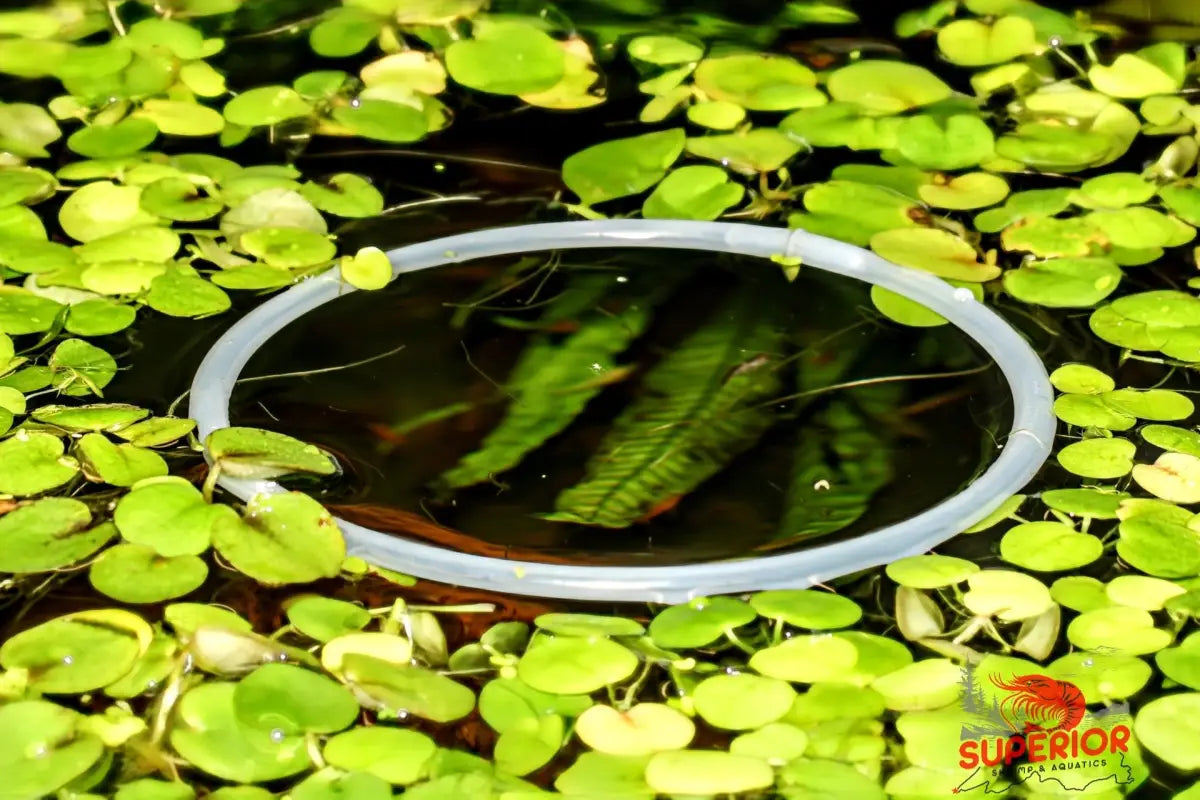
Frogbit (Limnobium laevigatum) is a South American floating plant with small, round, slightly cupped leaves carried on a open rosette that sits buoyantly at the surface — a leaf form and growth habit distinct from every other floating plant in the catalog. Where Water Lettuce produces large ribbed rosettes with broad canopy drama, Salvinia produces dense interlocking mats, and Water Spangles produces a fine seamless tile, Frogbit produces an open, spaced arrangement of small individual round leaves that creates a dappled rather than solid light canopy — patches of shade and light shifting as the plant drifts. The roots hang freely below each plant in long, fine, decorative curtains that provide excellent shrimplet refuge and biofilm surface, visible from the side of the tank when the plant is positioned near the glass. It spreads at a moderate pace by producing daughter plantlets on short stolons, easier to manage than the fastest-spreading floating plants. Requires calm surface water. Fully safe with all Neocaridina, Caridina shrimp, and snails.

Not RequiredCO₂
64–82°FTemperature
Low–HighLighting

Growth & Behavior at the Surface

Round, slightly cupped leaves on an open rosette — Frogbit leaves are small and nearly circular with a slight cupping that catches and holds a thin film of air on the upper surface — the source of its buoyancy and the characteristic that gives individual leaves a slightly silvery sheen when viewed from above. The open rosette habit means individual plants are clearly distinguishable from one another at the surface rather than merging into a continuous mat — the plant maintains individual identity even at high colony density. Dappled canopy rather than solid shade — the open spacing between leaves within and between rosettes allows light to pass through in patches — creating a shifting, dappled light pattern on the substrate below that mimics natural surface cover more closely than any other floating plant in the catalog. For submerged plants that require some light, Frogbit provides shade without blackout — a more forgiving overhead presence than dense mat-forming floaters. The dappled light pattern is particularly visible and attractive in tanks with strong overhead lighting. Long, fine roots trail visibly below each plant — Frogbit produces long, unbranched white roots that hang freely below each rosette in a fine curtain extending several centimetres into the water column. The roots are decorative — visible from the side of the tank when plants are positioned near the glass — and functional, accumulating biofilm across their length and providing physical refuge that shrimplets navigate into readily. The root curtain is more open and less tangled than Water Lettuce and more visually elegant than the short modified roots of Salvinia. Moderate spread via daughter plantlets on stolons — Frogbit propagates by extending short stolons from the parent rosette and producing daughter plantlets at their tips, which develop their own root system and eventually detach as independent plants. The spread rate is moderate — faster than Water Lettuce but significantly slower than Water Spangles or Salvinia natans — making Frogbit one of the more manageable floating plants in terms of coverage control. A small initial planting builds to meaningful surface coverage over weeks without requiring aggressive thinning from day one. Sensitive to surface agitation — calm water essential — like all floating plants in the catalog, Frogbit requires calm surface conditions. Strong surface agitation from spray bars, powerheads, or aggressive filter outlets wets the leaves, disrupts the air film on their upper surface, and causes the plant to decline. Redirect filter outputs below the surface and away from the floating colony. A floating airline tubing ring can corral the colony into the calmest surface zone if full flow redirection is not possible. Nutrient uptake and light diffusion complement submerged plants — Frogbit absorbs nitrates and phosphates from the water column through its root system at a moderate rate — a useful contribution to water quality in shrimp tanks between water changes, though less aggressive than the fastest-growing floaters. The dappled canopy it creates suppresses surface algae without eliminating light to submerged plants below — a more balanced overhead arrangement than opaque mat-forming floaters that can shade out midground and background plants entirely.

Getting Started

1 Redirect surface agitation before introducing plants — reposition filter outlets, spray bars, and powerheads so water movement does not disturb the surface where Frogbit will float. This is the single most important environmental condition for long-term success with any floating plant. Once flow is redirected, place Frogbit on the calm surface zone and leave it to settle — the roots will extend downward within the first day and the plant will orient itself naturally.
2 Start with a small colony and allow it to spread naturally — introduce four to six rosettes initially and allow the colony to expand by natural stolon propagation. Frogbit's moderate spread rate makes it well-suited to this approach — coverage builds steadily without immediately overwhelming the surface, giving you time to observe and decide how much coverage you want before the plant reaches that point. Thin to 50–60% surface coverage once the colony expands sufficiently.
3 Position near the glass for maximum root visibility — if the long, trailing root curtains are part of why you chose Frogbit, position the colony in the front portion of the tank near the viewing glass. The roots are visible from the side of the tank when the plant floats close to the glass — a delicate, curtain-like visual that is one of the most distinctive features of this plant and entirely invisible when the plant sits in the middle or back of the surface.
4 Thin regularly once established — remove whole rosettes — when thinning, remove complete rosettes rather than trimming individual leaves. Frogbit does not respond to leaf trimming the way stem plants do — removing leaves damages individual plants without reducing colony density. Remove whole plants at the stolon connection point, keeping the remaining colony at the coverage level you want. Removed plants can be added to breeding setups, refugiums, or shared with other hobbyists.
💡 Bonus Tip

Frogbit and Water Lettuce used together in the same tank create the most complete floating plant pairing in the catalog — Frogbit's small open rosettes and fine hanging roots filling the lighter, more open areas of the surface while Water Lettuce's large dramatic rosettes and dense root curtains anchor the corners and edges. The two plants occupy slightly different surface niches — Water Lettuce tends to drift toward edges and corners while Frogbit distributes more freely across open surface — and together produce a varied, naturalistic surface canopy that neither achieves alone at the same visual depth.

🌿
Browse more aquatic plants

Pair Frogbit with Water Lettuce, Salvinia, or submerged plants for a complete shrimp setup. Browse our Aquatic Plants collection.

→
Before placing your order, please review our 📋 DOA Policy 🚚 Shipping Info
Reseñas
Policies & Disclaimers
Aquatic plants

Policies & Disclaimers

Choosing your portions, using the plant promotion, and knowing what to expect when your plants arrive.

Shipping schedule & processing time

We ship Monday–Wednesday only. We do not ship Thursday–Sunday. Orders placed after Wednesday 10 AM CT ship the following Monday. Live animals and plants ship on Wednesday only with 2-day or overnight shipping.

Processing can take up to 7 days before your order ships. Ship dates and delivery dates are estimates, not guarantees.

Buy 2 Get 1 Free: add all three

Choose three eligible plant items and add all three to your cart, including the plant you want free. The discount applies automatically at checkout; no code is needed. Adding only two items does not add a third plant for you.

Mix and match eligible varieties or choose multiple quantities of the same eligible plant. The least expensive eligible item is free. For example, with eligible items priced at $5, $8 and $10, the $5 item is discounted and the plant subtotal is $18 before shipping and tax.

The offer repeats for complete qualifying groups: three eligible items give one free, six give two free, and nine give three free. The current offer has no per-order use limit. Items must be included in the promotion; Plant Weights and other non-plant accessories do not qualify.

An item means the sale unit in your cart. One bunch, cup, portion or multipack counts as one item when purchased at quantity one, not one item for every stem, leaf or bulb inside it. Check the listing and selected option for what each unit contains.

Check the discount and quantities in your order summary before paying. Other promotions can affect the final discount; multiple product discounts do not stack on the same item. This is an online checkout offer, not an automatic in-store POS discount.

Portions, sizes & what you receive

Read this plant’s description and selected option for its sale format, portion size and any stated stem or plant count. A bunch, loose portion, rooted plant, bulb, cup and mounted plant are different products; there is no single size or count that applies to every plant we sell.

A mature height or spread describes potential growth in an aquarium, not the size shipped. Use the advertised purchase portion to plan your order. A full carpet, dense moss-covered surface or established group in a photograph may require several portions and time to grow.

Do not assume that a pot, planting weight, rock, wood, substrate or other display accessory is included unless the listing explicitly says it is. If the received portion appears different from the selected listing, photograph it with its packaging and contact us promptly.

Photos, color & natural variation

Photos illustrate the named plant or variety and its appearance. Living plants vary in leaf size, shape, root development, branching and fullness; a photo of an established specimen is not a measurement of each portion shipped. The product description and selected option remain the reference for your purchase.

Aquarium lighting, camera settings and the growing environment affect perceived color. Red or pink varieties can look different under different lighting and growing conditions. Do not use a photograph alone to select a plant’s care requirements or expect immediate mature coloration.

Above-water growth & the transition underwater

Some aquarium plants can grow with their leaves above water as well as submerged. These growth forms can have different leaf shapes and appearances. New underwater growth may look different from older leaves as the plant adjusts. This explanation does not mean every plant is supplied in the same growth form; follow any specific information in the listing.

Leaf loss or softening after a change of environment is often called melt. Look at the plant as a whole and its growing points rather than judging only one older leaf. Do not assume that a damaged plant is simply transitioning or wait for new growth before reporting an arrival problem.

This is background care information, not a new exclusion from the Live Arrival Guarantee. Arrival damage is assessed under the existing policy.

Planting: match the method to the plant

For stem plants, separate the stems and plant with room between them. For rosette plants, position the roots in the substrate without burying the crown. Remove transport bindings and growing material carefully where appropriate.

For Anubias and Java fern, keep the rhizome exposed rather than burying it. Moss can be divided into smaller portions and attached to suitable hardscape. Floating plants belong at the surface. Bulbs and tubers need species-specific planting depth; do not assume every type should be fully buried.

Keep plants damp while working. Follow the individual listing for placement and care, especially when a plant has unusual requirements. These are planting tips, not additional conditions for a claim.

Growth, tank conditions & choosing companions

Plan for the plant’s mature size, available light and the space it will occupy. A background stem plant, slow-growing rhizome plant and floating plant serve different roles; a purchase portion does not instantly create a finished aquascape.

Use the listing’s guidance on light, nutrients and carbon dioxide rather than assuming every plant needs the same setup. Growth rate and final appearance depend on aquarium conditions and maintenance. More light alone is not a substitute for a balanced setup.

Consider animals that dig, uproot or eat plants before choosing placement. Floating growth can shade plants below it, and fast-growing plants may need thinning. Observe new growth and make gradual, species-appropriate adjustments.

Hitchhikers & introducing plants

Our existing policy does not guarantee pest-free arrival. Plants can carry tiny organisms or eggs, including snail eggs, despite inspection. Inspect new plants before introduction, and consider separate observation or quarantine to protect an established aquarium.

Do not assume a plant is sterile, pesticide-free or safe for a particular treatment unless the listing explicitly provides that information. Sensitive leaves, mosses and roots can respond differently to dips. Research the exact plant and any treatment before using it; do not apply an animal medication or a strong dip by default.

Arrival problems: document and contact us promptly

For damaged or dead plants, email support@superiorshrimpaquatics.com within two hours of the carrier’s recorded delivery time. Use the email address on the order and include all arrival concerns in your first message.

Send clear photographs of the affected plants and their packaging, with the shipping label or invoice visible for identification. Photograph packaging damage before unpacking or discarding materials, and consult the full guarantee’s documentation instructions. Keep the original photos.

The current guarantee covers aquatic plants but excludes promotional or free items. That existing exclusion also matters when ordering a free promotional plant. Claims and available resolutions are assessed under the full policy; this tab does not expand or reduce coverage.

Shipping your plants

Plants ship Monday and Tuesday, with Wednesday shipping available for 2-day or overnight services. Orders remain subject to stock, fulfillment timing and weather holds under our shipping policy. A shipping-service estimate is not a guaranteed dispatch date.

Plan to receive the package promptly and inspect it on arrival. Review the full shipping information for weather precautions, transit expectations and delivery issues. If your cart also contains live animals, review the shipping requirements for those animals as well.

Returns & order questions

Check the plant name, portion, quantity and selected option before completing checkout. Contact us before sending anything back; returns require prior written authorization under our existing policy. The full return policy explains the applicable conditions.

This tab explains the existing offer and policies alongside plant-care guidance. Care tips do not create new claim requirements or exclusions. Refer to the linked policies for complete terms.

Inicio Tienda
Lista de deseos
Iniciar sesión

Add a heat or ice pack?

Your cart has live animals or plants and no temperature pack.

Heat pack $3.00

Recommended below 32°F at your address, or below 40°F for snails, Caridina shrimp, fish or crabs.

Ice pack $3.00

Recommended when highs at your address are above 85°F.

We ship Monday–Wednesday only. Orders placed after Wednesday 10 AM CT ship the following Monday. Processing can take up to 7 days, and ship dates are estimates, not guarantees. We check the weather at both ends before shipping and will contact you if we need to hold an order.

Picking up locally? You can skip this.