


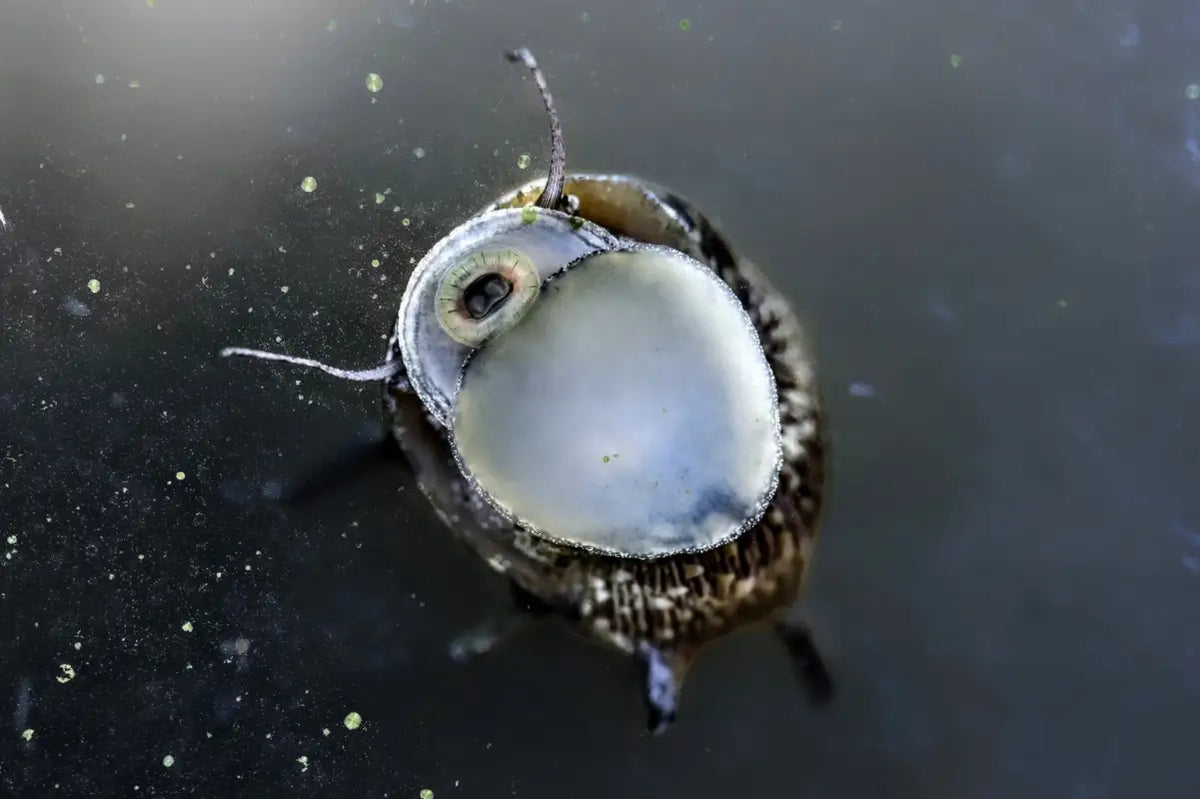
Size & appearance
Snail size varies by species and individual. Refer to the listing and selected option for any stated purchase size. Adult or maximum sizes in care information describe growth potential, not a guaranteed size on arrival. Photos represent the species or color variety rather than the exact animals you will receive.
Shells, colors & markings
Shell shape, color, pattern and body coloration vary between individuals and with age. Lighting and aquarium conditions can affect how colors appear. Follow the mineral and water requirements in the species listing to support shell health. Photograph any concerning shell damage on arrival and report it promptly under the Live Arrival Guarantee.
Inactivity after shipping
Snails may remain withdrawn or inactive after shipping and can take several days to settle. Lack of movement alone does not confirm that a snail has died. Do not force a snail out of its shell. If you are concerned about its condition, photograph the unopened packaging and email us within two hours of the carrier’s recorded delivery time. Report the concern promptly even if the snail may simply be inactive; waiting several days does not extend the claim window.
Reproduction & eggs
Reproductive behavior differs by species. Some snails can reproduce readily in freshwater; others have different requirements for successful reproduction. Egg laying is not the same as successful hatching. Read the species listing before purchase rather than assuming all snails will, or will not, reproduce in your aquarium. We do not sex snails. No particular sex, male-to-female ratio or breeding pair is guaranteed.
Feeding & compatibility
Snails have different diets and habitat requirements. Do not assume every species eats algae or can live on algae alone. Assassin snails prey on other snails and are not suitable companions for a collection of ornamental snails. Use the care and compatibility information for the specific species, and check that tankmates will not injure or eat it.
Recognizing activity without forcing a response
A snail may stay retracted after shipping or become active when you are not watching. Some species have a shell door, called an operculum, while others do not; a closed shell or an unfamiliar resting position is not enough by itself to identify a loss.
Do not pull on the body, pry a shell door open or repeatedly handle a snail to make it move. If its condition concerns you, document the unopened bag and contact us within the two-hour window. The possibility of delayed activity does not change the policy’s deadline or turn an unconfirmed loss into an approved claim.
Shell appearance & damage documentation
Shell patterns, growth lines, surface texture and body colors vary with species and age. A photograph of one individual cannot show every pattern you might receive. Natural variation and a concern about physical damage are different questions.
Photograph cracks, chips, erosion or other areas that worry you, together with a wider view and the shipping label. Do not scrape, polish or alter the shell to improve the photo. Report concerning arrival damage promptly rather than assuming it must be accepted or automatically qualifies for a particular resolution.
For ongoing shell health, follow the species’ water and mineral requirements. Measure your water before adding supplements, and avoid treating all snail species as having identical needs.
Eggs, young & population expectations
We do not sex snails, and packs are not assembled to a male-to-female ratio. Snail reproductive biology varies: some species have separate sexes, while others have both reproductive functions. Do not interpret an unsexed pack as a promise that breeding cannot occur.
Ramshorn and bladder snail populations can grow in freshwater, particularly when food is plentiful. Nerites may leave eggs on hard surfaces even though successful development has different requirements from the adults’ freshwater habitat. Check the individual species rather than assuming every egg will hatch or that every snail reproduces in the same way.
A group is not a guaranteed breeding colony. The number and appearance of offspring, or the absence of eggs, cannot be predicted from representative product photos.
Feeding, predators & acclimation
Match the diet to the species. Grazing snails still need an adequate food supply, and an apparently clean aquarium may not provide enough natural grazing. Predatory species such as assassin snails have different feeding and compatibility needs from algae grazers.
Keep ornamental snails away from animals likely to bite their exposed bodies or damage their shells. Follow the specific species’ habitat and acclimation guidance, and check that any treatment used in the aquarium is appropriate for snails.
Quarantine or separate observation can help you inspect new arrivals and their behavior before adding them to an established aquarium. It is care guidance, not an extra claim requirement; follow the arrival documentation rules before transferring animals.
Bonus animals & your paid count
When inventory allows, our policy provides one bonus animal for every five ordered of the same species. Bonuses are discretionary and are not separately covered for refund or replacement. They count toward the total arriving alive when assessing whether your paid quantity was fulfilled.
For example, if you order 10 snails and receive 12, receiving 11 alive fulfills the paid count. If fewer than 10 arrive alive, the shortfall is assessed under the guarantee. Expected bonuses that were not included are not a paid-item shortage.
Checking quantities & reporting a short count
Check the actual animals received against your paid order quantity. For a suspected short count, the full policy calls for a clear counting photo showing all animals, the empty bag and the shipping label before they are introduced into an aquarium. Follow its counting instructions and contact us if you cannot document the count clearly.
Verified miscount claims are resolved with a refund for the missing paid animals under the current policy. A count made after release can be unreliable when animals hide among plants or hardscape.
Before opening: photographs & your first report
Use the email address on the original order and include all arrival concerns in the initial message to support@superiorshrimpaquatics.com within two hours of the carrier’s recorded delivery time. Photograph the sealed bag, visible and countable animals, shipping label, box and packing materials.
If the bag is leaking or damaged, photograph the leak or damage and wet packing before opening. Keep the original photographs and packaging. For cloudy water that prevents counting, take the original cloudy-water photo first and follow the full policy’s specific additional clear-container documentation instructions.
The guarantee contains restrictions on opening bags, acclimation and transfers. Review those instructions before taking action so the evidence needed to assess the claim is preserved.
Arrival problem? Document it promptly.
Email support@superiorshrimpaquatics.com within two hours of the carrier’s recorded delivery time, using the email address on your order.
- Photograph the original sealed bag with the animals visible and countable.
- Include the shipping label, outer box and packing materials.
- Document any bag damage or leakage before opening.
- Report all arrival losses in your initial message.
Read the full guarantee for photo requirements, cloudy-water documentation and claim eligibility before opening or transferring animals. Approved claims are resolved under the options and conditions stated there.
Shipping & coverage limits
Ground shipping carries increased risk for live animals, and the policy reserves the right to refuse guarantee claims on ground shipments. Choose your shipping method carefully.
The guarantee applies to the first delivery attempt. Redirection, pickup holds and carrier delays can affect eligibility under the full policy. Any product-specific coverage restrictions stated in a listing also apply.
Hitchhikers & quarantine
Live aquatic products can carry tiny hitchhikers or eggs despite inspection. Pest-free arrival is not guaranteed. We recommend quarantining new arrivals before introducing them into an established aquarium.
Returns
Care guidance in this tab does not create additional guarantee requirements or exclusions. Please read the full policies for complete eligibility, documentation, resolution and return requirements.