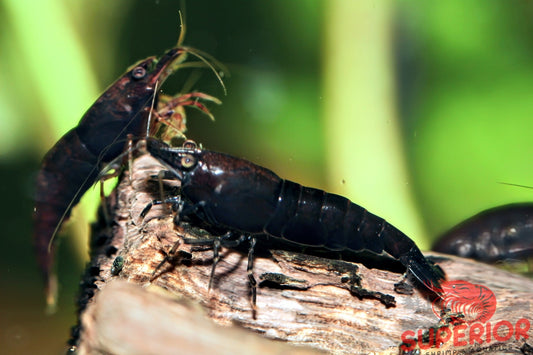
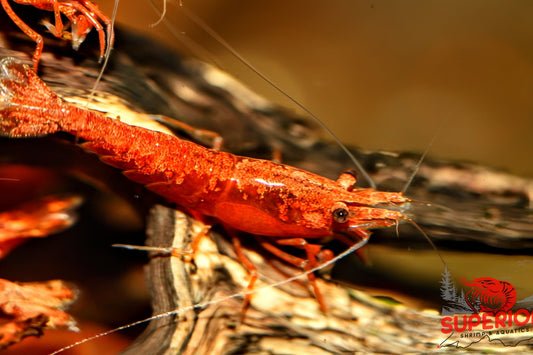
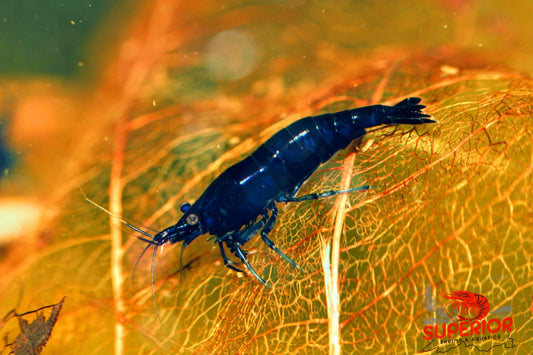
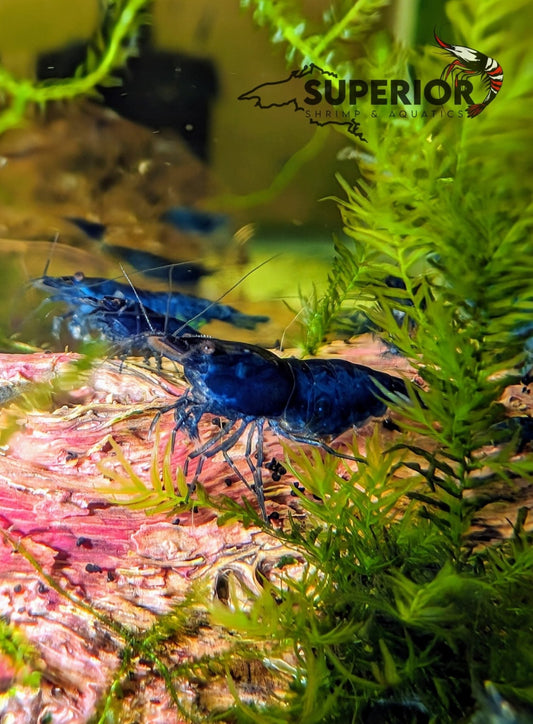
Dried Banana Leaves are large tropical botanical leaves that function in the aquarium as a slow-release tannin and humic acid source, a rich biofilm substrate, and a gradual food source as the leaf tissue softens and becomes available to shrimp, shrimplets, and the microfauna that support them. Like all leaf botanicals, banana leaves decompose naturally over weeks in the aquarium -- the decomposition process is the mechanism through which they deliver their primary benefits: the breakdown of leaf tissue releases tannins and humic acids that gently acidify soft water and produce the amber water chemistry of blackwater environments, while simultaneously developing progressively richer biofilm on the decomposing leaf surface that shrimp graze on continuously. Banana leaves are among the larger leaf botanicals available -- their size means each leaf provides a substantial biofilm and grazing surface that multiple shrimp can work simultaneously, and the large surface area visible in the tank reads as a natural, leaf-litter style hardscape element rather than a small addition. Safe for all Neocaridina, Caridina, and snails.
What to Expect
Benefits, Decomposition and Use
Slow, gradual tannin release over weeks of decomposition -- banana leaves release tannins and humic acids progressively as the leaf tissue breaks down rather than all at once on introduction. The release rate is gentler and more sustained than faster-decomposing botanicals, producing a gradual amber tint in the water that builds slowly over the first week and sustains for the leaf's remaining decomposition period. Pre-soaking reduces the initial tannin release and makes the leaf sink immediately without floating.
Rich biofilm develops across the leaf surface as decomposition progresses -- the decomposing leaf surface develops a progressively richer biofilm coating as microbial communities establish across it. Newly introduced leaves carry relatively sparse biofilm; leaves that have been in the tank for one to two weeks carry dense biofilm visible as a whitish, slightly fuzzy coating that shrimp graze on actively and continuously. The richest biofilm develops in the week before the leaf structure begins to fragment -- the most actively grazed period of the leaf lifecycle in the tank.
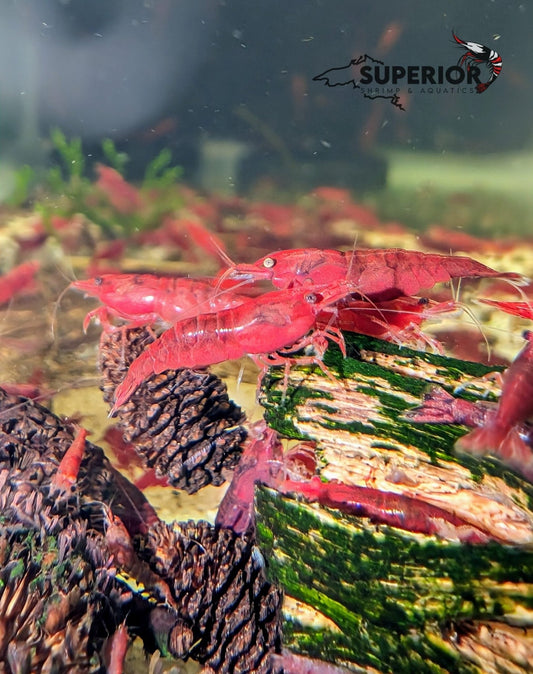
Large surface area provides simultaneous grazing for multiple shrimp -- the size of banana leaves -- substantially larger than Indian Almond Leaves or most other leaf botanicals -- means a single leaf provides enough grazing surface for multiple shrimp to work simultaneously without competition. In tanks with established colonies, five or more shrimp may be visible on a single leaf at the peak biofilm period.
Shrimplets actively use decomposing leaves for cover and foraging -- as the leaf begins to soften and fragment, shrimplets use the curling leaf edges, the underside of the leaf, and the small gaps between decomposing sections as both foraging zones and physical cover from the open tank. A decomposing banana leaf in active fragmentation is one of the most reliably active shrimplet concentration points in the tank.
Fully decomposes without residue -- replace as needed -- the leaf decomposes completely over four to eight weeks depending on tank temperature, microbial load, and shrimp grazing intensity. The only residue is the vascular skeleton of the leaf, which may persist slightly longer than the leaf tissue. Remove the skeleton or leave it to continue providing minimal biofilm surface until it also fully breaks down.
Pre-soak to sink and moderate initial tannin release -- soak in hot water for 30-60 minutes before introduction to waterlog the leaf and eliminate the floating period. The pre-soak also reduces the initial tannin pulse that occurs when dry leaf material is first submerged, which is particularly useful in tanks with livestock already present.
How to Use Them
Getting Started
1Pre-soak in hot water for 30-60 minutes before introduction -- submerge the leaf in a separate container of hot water for 30-60 minutes. The leaf will sink within minutes once waterlogged and the initial tannin flush is reduced. Discard the pre-soak water rather than adding it to the tank.
2Place flat on the substrate in a visible, open position -- position the leaf flat on the substrate or weighted down with a small piece of hardscape so it remains in an accessible position for shrimp grazing. Leaves curled or wedged in corners are less accessible and provide less continuous grazing surface than flat, open-water-column-accessible leaves.
3Allow full decomposition -- do not remove prematurely -- the most biofilm-rich and most actively grazed period of the leaf lifecycle is the middle and late decomposition phase when the leaf surface is soft and fragmented. Removing the leaf before this phase ends removes the highest-value grazing period from the tank. Replace with a new leaf when the current one has fully decomposed.
4Stock two to three leaves at staggered decomposition stages -- introducing a new leaf every two to three weeks ensures the tank always has at least one leaf at a rich biofilm stage -- one freshly introduced, one at peak biofilm, and one in late decomposition. This maintains continuous biofilm grazing availability across the full colony rather than a feast-then-gap cycle.
Bonus TipBanana Leaves in a breeding setup -- particularly a dedicated shrimplet rearing tank or a berried female isolation tank -- provide the richest and most consistently productive natural food source for newborn shrimplets available in the botanical catalog. A single decomposing banana leaf placed in a 10-litre breeding setup before shrimplets are released provides enough biofilm food for dozens of shrimplets for the first two to three weeks of their lives without any targeted feeding required, dramatically simplifying the feeding management of a breeding setup during the period when shrimplets are most vulnerable and most difficult to feed precisely.
🍁
Browse more botanicalsPair Banana Leaves with Indian Almond Leaves, Alder Cones, or other botanicals for a complete blackwater setup. Browse our Botanicals collection.
→