King Koopa Nerite Snails (Neritina juttingae) | Algae-Eating Freshwater Snail – Superior Shrimp & Aquatics
Ir directamente al contenido

Inicio de sesión

Shipping Weather Check

Enter your ZIP for a 14-day forecast at your delivery address. We ship Tuesdays (orders by 1 PM) and Wednesdays (dry goods + 2-day or overnight only). Live shrimp and aquatic livestock are sensitive to temperature extremes during transit.

King Koopa Nerite Snail (Neritina juttingae)

King Koopa Nerite Snail (Neritina juttingae)

Precio habitual $5.00
Precio habitual Precio de oferta $5.00
Agotado
Los gastos de envío se calculan en la pantalla de pago.

Subtotal:

$5.00
Ver todos los detalles
Descripción
King Koopa Nerite Snail - Superior Shrimp and Aquatics
Freshwater Snails

King Koopa Nerite Snail

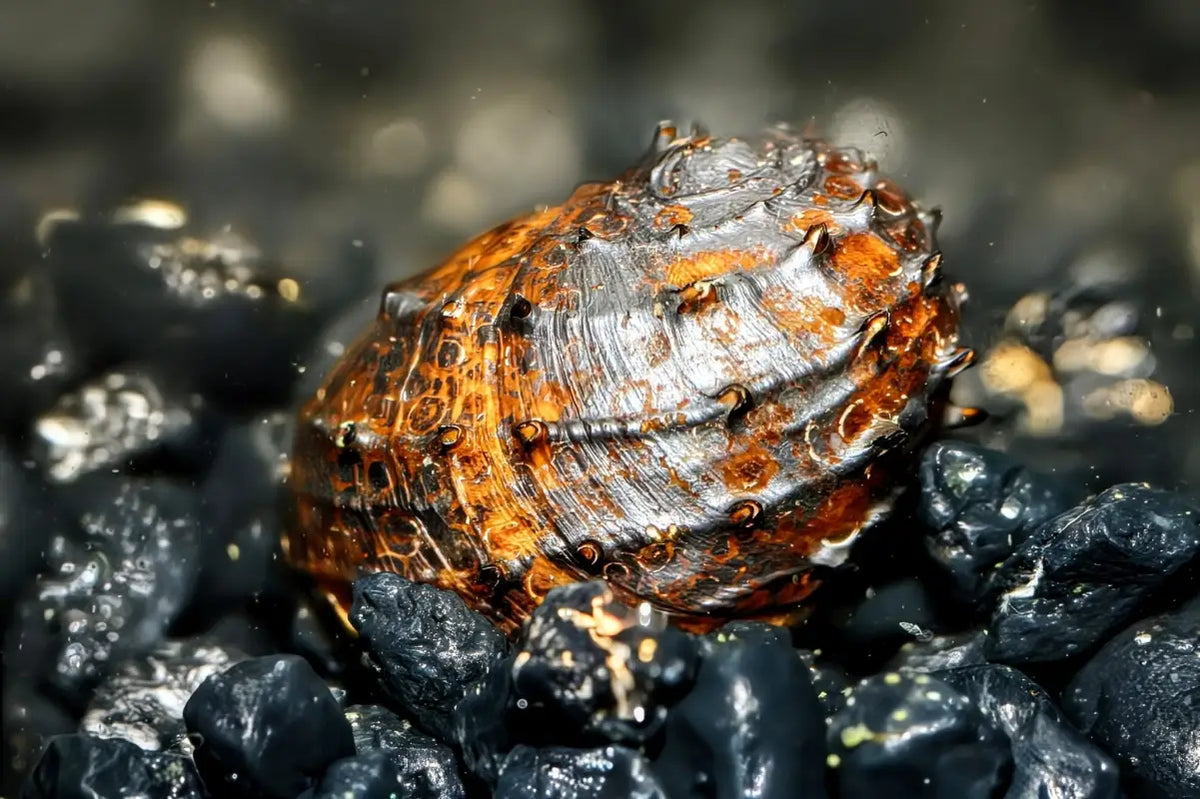
An uncommon Nerite species with rounded horn-like protrusions distributed across a dark olive-to-gold shell -- one of the most visually distinctive freshwater snails in the hobby, and an exceptional algae grazer.

Rounded Horn-Like Shell Protrusions Dark Olive-to-Gold with Black Markings Cannot Breed in Freshwater Uncommon Species Continuous Algae Grazer Shrimp Safe

King Koopa Nerite Snails (Neritina juttingae) are an uncommon Southeast Asian Nerite species named for the rounded, horn-like protrusions distributed across the shell surface -- an arrangement that gives the snail a silhouette resembling a sea mine and earns its nickname from the spiky-shelled video game villain. The shell base colour ranges from dark olive and brown to warmer gold tones, overlaid with black markings and banding that vary in pattern between every individual. No two King Koopa Nerites look exactly alike -- the number, size, and arrangement of the horn protrusions, combined with the unique black marking pattern on each snail, makes every specimen genuinely individual. They are less commonly available than Zebra or Olive Nerites, and their unusual appearance makes them one of the most conversation-worthy invertebrates in the freshwater hobby. Algae-grazing performance is consistent with other Nerite species -- continuous, broad-spectrum, and highly effective. Cannot breed in freshwater. Fully safe with all shrimp. Shell requires GH 6+ and a pH above 7.0 for best long-term shell health.

Horns, Shell & Colour

Rounded horn-like protrusions across the shell surface -- the defining feature of the species -- the horns of the King Koopa Nerite are rounded and blunt-tipped rather than the sharp, spine-like projections of the Sun Thorn Nerite. They are distributed irregularly across the shell surface in varying numbers and sizes, giving each snail its characteristic sea-mine silhouette. The horns are a natural structural feature of the shell and are prone to occasional minor breakage during normal activity, which does not harm the snail. The rounded horn profile gives the King Koopa a more armoured, prehistoric appearance than the sharper-spiked thorn Nerites. Dark olive-to-gold base with variable black markings -- unique pattern on every individual -- the shell base colour ranges from dark olive-green and brown in some individuals to warmer golden-tan tones in others. Across this base runs a pattern of black markings, banding, and blotching that is entirely unique to each snail -- no two King Koopa Nerites share the same distribution of black against the base colour. This individual variation makes each snail a genuinely one-of-a-kind specimen, and a group of three to five in the same tank will display noticeably different patterning from one to the next. Up to 1 inch at maturity -- larger and more visible than many Nerite species -- King Koopa Nerites reach approximately ¾ to 1 inch in shell diameter at maturity, making them clearly visible at normal tank-viewing distance. The combination of size, horn structure, and individual patterning gives them a presence in the tank that smaller or smoother Nerite species do not achieve. Uncommon in the hobby -- less frequently available than Zebra, Olive, or Tiger Nerites -- King Koopa Nerites are not as widely bred or distributed as the most common Nerite species and are less reliably available from general aquatic retailers. When available they are among the most sought-after Nerite variants for aquarists who want both effective algae control and a genuinely unusual display invertebrate.

Grazing & Husbandry

Exceptional broad-spectrum algae grazer -- consistent with other Nerite species -- King Koopa Nerites graze continuously across glass, hardscape, driftwood, plant leaves, and substrate, consuming algae films, biofilm, cyanobacteria, and fine organic deposits. They are particularly effective on glass surfaces and smooth hardscape. In a well-established tank with adequate algae and biofilm growth they require no supplemental feeding; in newer or heavily stocked tanks supplement with algae wafers or blanched vegetables. Cannot breed in freshwater -- population is completely stable -- like all Nerite species, King Koopa Nerites require brackish or marine water for their larvae to develop. Egg capsules -- small, hard, white oval dots -- may be deposited on hardscape, glass, and plant surfaces but will not hatch in freshwater. You will never have more King Koopa Nerites than you introduce. Prefers alkaline water -- pH above 7.0 for best long-term shell health -- King Koopa Nerites are more sensitive to acidic water than some other Nerite species. In water below pH 7.0 the shell is prone to erosion over time, gradually thinning the base shell and degrading the horn structure. Maintain pH above 7.0 and GH 6+ consistently. Standard Neocaridina parameters are ideal. Not recommended for Caridina tanks with low pH and soft water. Keep water line low or cover the tank -- Nerites climb readily -- King Koopa Nerites climb above the waterline and will exit the tank through any gap. Keep the water line at least 5–7cm below the rim or use a fitted lid. A snail found outside and returned promptly recovers; one left out for more than a few hours will not. Fully safe with all shrimp at every life stage -- peaceful and non-predatory. Compatible with all Neocaridina and other shrimp species without concern.
Keeper's Note

A single King Koopa Nerite foraging slowly across the front glass or foreground hardscape of a shrimp tank consistently draws more attention and comment than almost any other invertebrate in the tank -- the horn structure, the individual patterning, and the sheer unusualness of the snail's silhouette make it one of those tank inhabitants that visitors always ask about first. If the goal is a shrimp tank that functions well and also generates genuine interest, a small group of two to three King Koopa Nerites achieves both without competing visually with the shrimp themselves.

🐌
Browse more freshwater snails

Explore Sun Thorn Nerites, Mystery Snails, and more. Browse our full Freshwater Snails collection.

Before placing your order, please review our DOA Policy Shipping Info
Reseñas

Customer Reviews

Based on 3 reviews
67%
(2)
0%
(0)
0%
(0)
33%
(1)
0%
(0)
W
WolfArcanist
It doesn't smell but it also hasn't move at all since it came in last week

It doesn't smell but it also hasn't move at all since it came in last week.

Hi,

A couple things worth noting for anyone reading.

First, we never received any contact about this. Issues like this are addressed through our Live Arrival Guarantee process by emailing support@superiorshrimpaquatics.com, not through reviews. We can only help with what we know about.

Second, on the snail itself: if there's no foul odor, the snail is almost certainly alive. Snails frequently enter a state of hibernation or aestivation (dormancy) during shipping as a natural survival response. This is well-documented behavior and is covered in the acclimation sheet included with every order. Some species can stay closed up for days to over a week before fully emerging in a new tank. A dead snail emits a strong, unmistakable foul odor within a day or two and the body becomes loose or absent from the shell. No smell after a week means the snail is alive and in dormancy.

Give it more time in stable water and it will emerge on its own.

DOA Policy: https://superiorshrimpaquatics.com/pages/doa-policy

John
Superior Shrimp & Aquatics

J
Jason
Arrived in time and alive!

Love the little spikes on the shell! Looks great and does a good job cleaning the tank!

L
Leethan

Very active and healthy, would order again!

Home Shop
Lista de deseos
Iniciar sesión