


Amano Shrimp (Caridina multidentata): Complete Care Guide
The most effective algae-eating shrimp in freshwater — named after the aquascaper who made them famous, and still unmatched for their work ethic, size, and peaceful temperament in a planted tank.
Origin & Natural History
Caridina multidentata is native to Japan, Taiwan, and parts of coastal China, where it inhabits clear, fast-moving streams and rivers with rocky substrates, abundant vegetation, and very clean water. Unlike many aquarium shrimp, it is amphidromous — adults live in freshwater, but larvae are swept downstream to brackish or marine environments where they develop before migrating back upstream as juveniles. This life cycle is why breeding in captivity is so rarely achieved.
The species was championed by Takashi Amano, whose aquascaping philosophy centered on creating natural freshwater ecosystems. He used these shrimp extensively in his layouts, both for their algae control and their natural, active behavior, and their appearance in his widely published work drove global demand through the 1990s and 2000s. The name "Amano Shrimp" became unofficial but universal.
In the wild, Amano shrimp play an important ecological role consuming algae, biofilm, and organic detritus — the same role they fulfill in aquariums. Their larger size (up to 2.5 inches compared to under 1.5 inches for most dwarf shrimp) allows them to process significantly more algae per individual.
Selectively Bred Variations
While wild-type Amano Shrimp are translucent grey-brown with a distinctive row of dashes and dots along each side, selective breeding has produced a small number of color variants now available in the hobby.
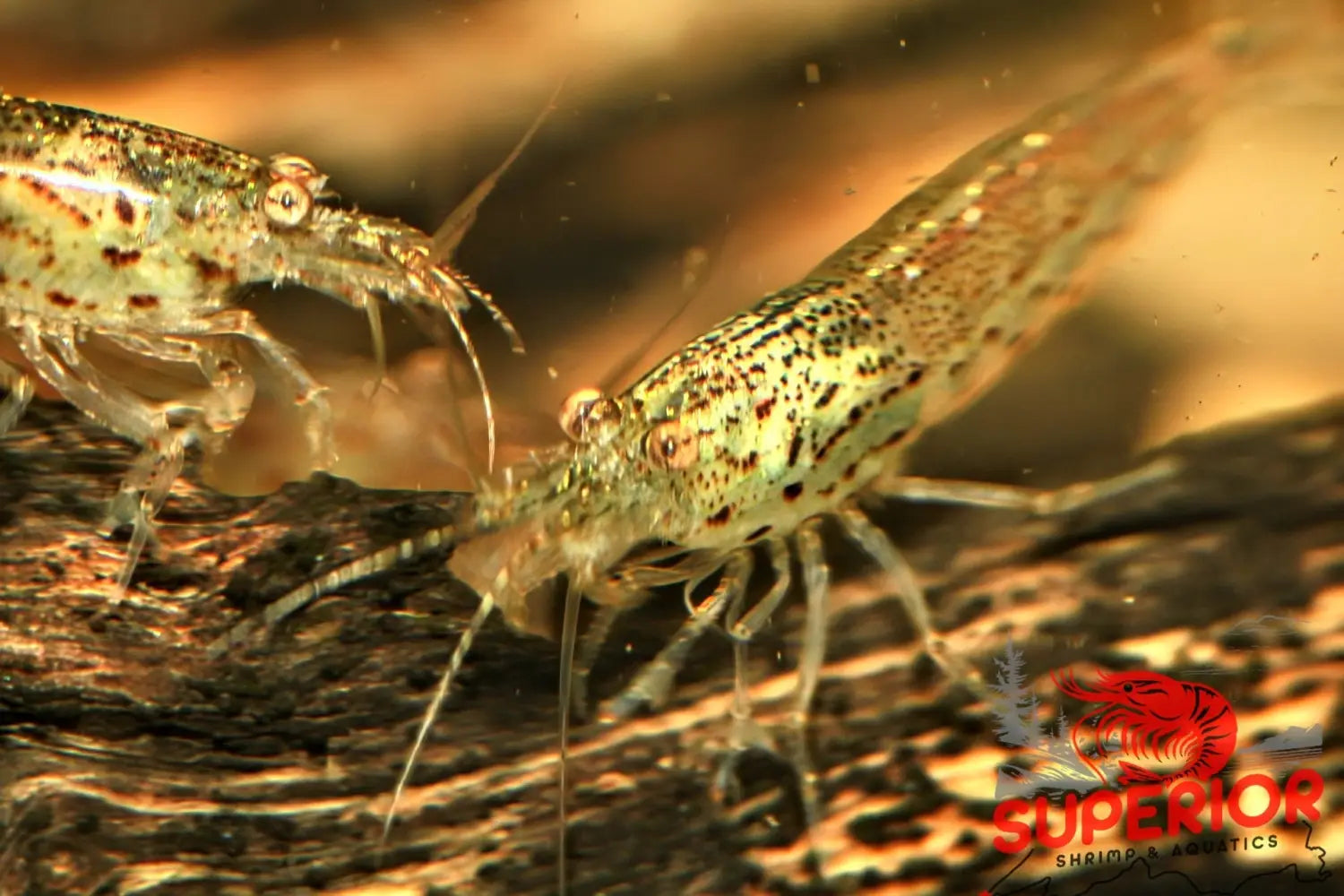
Standard Amano
Translucent grey-brown with a row of dashes (females) or dots (males) along each flank. The original and still most widely available form.
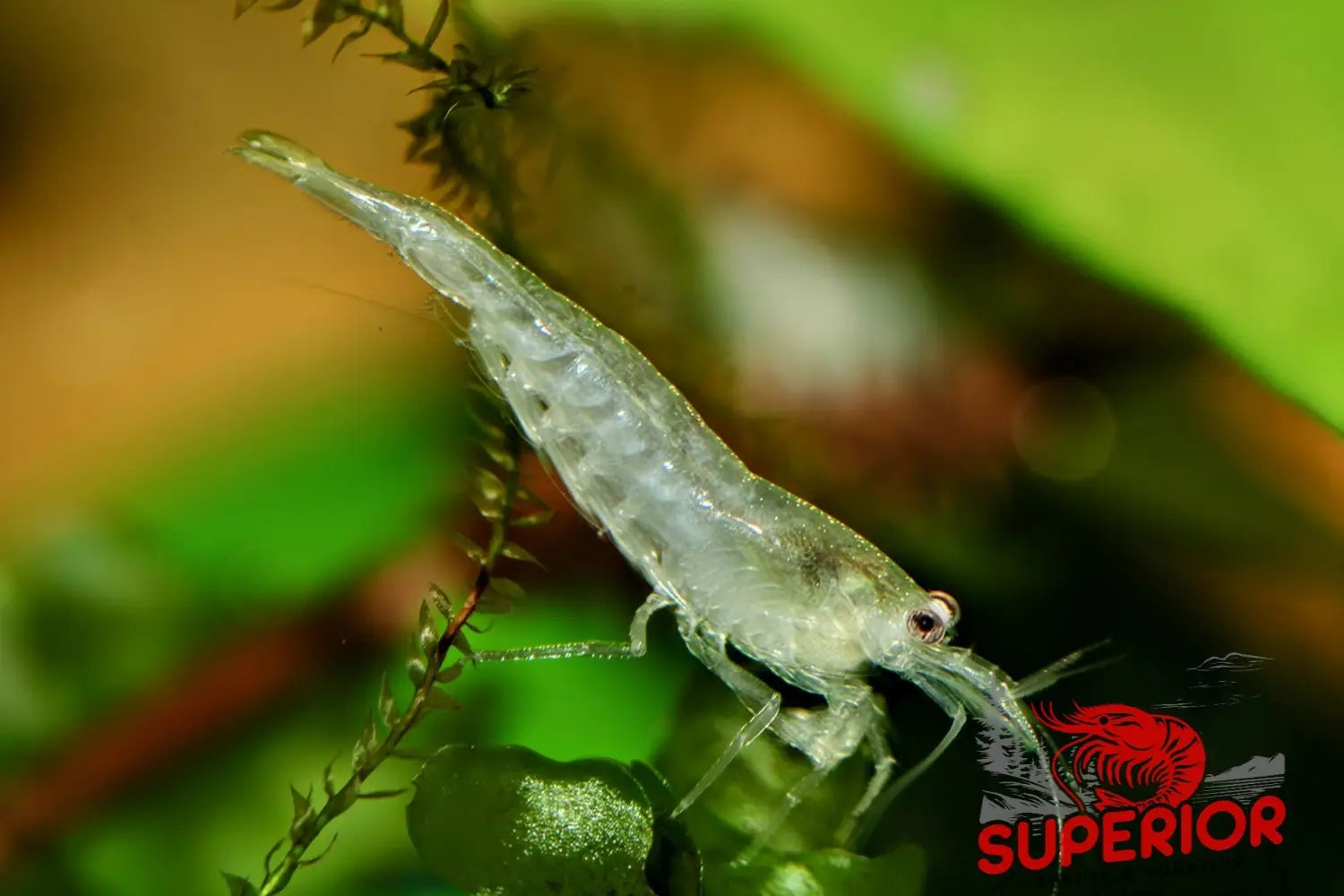
Snow White Amano
Selectively bred for near-opaque white coloration. Rarer than standard; same care requirements. Striking in planted tanks against dark substrate.
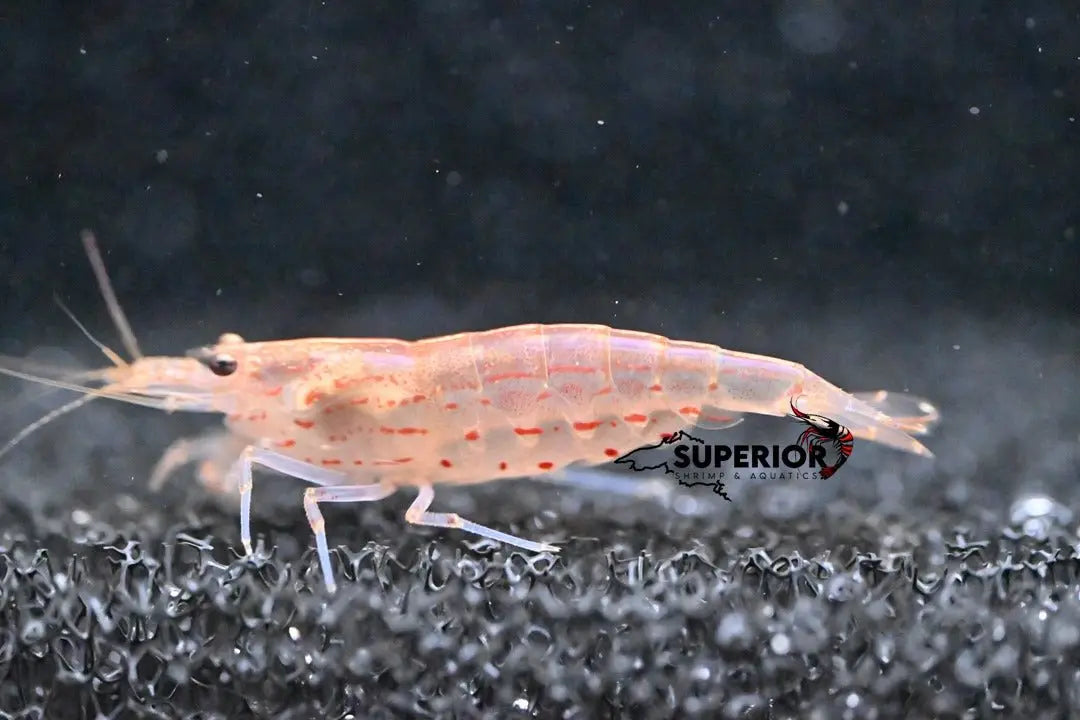
Red Amano
Selectively bred for vibrant red coloration across the body. Still translucent — the red tint is visible through the shell rather than fully opaque.
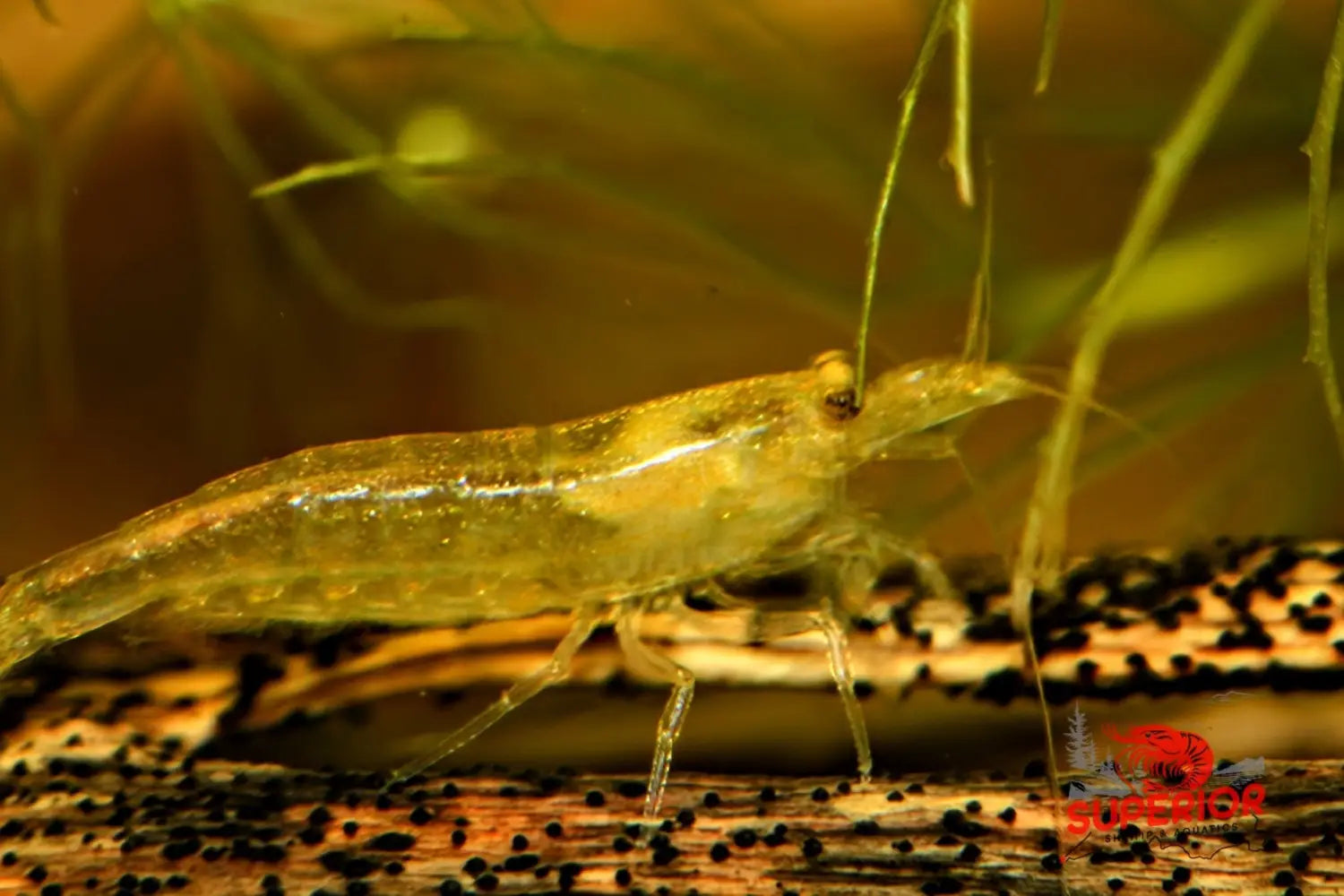
Lemon Yellow Amano
Yellowish-golden tint visible through a translucent body. A rarer selectively bred variant with the same care needs as standard Amano.
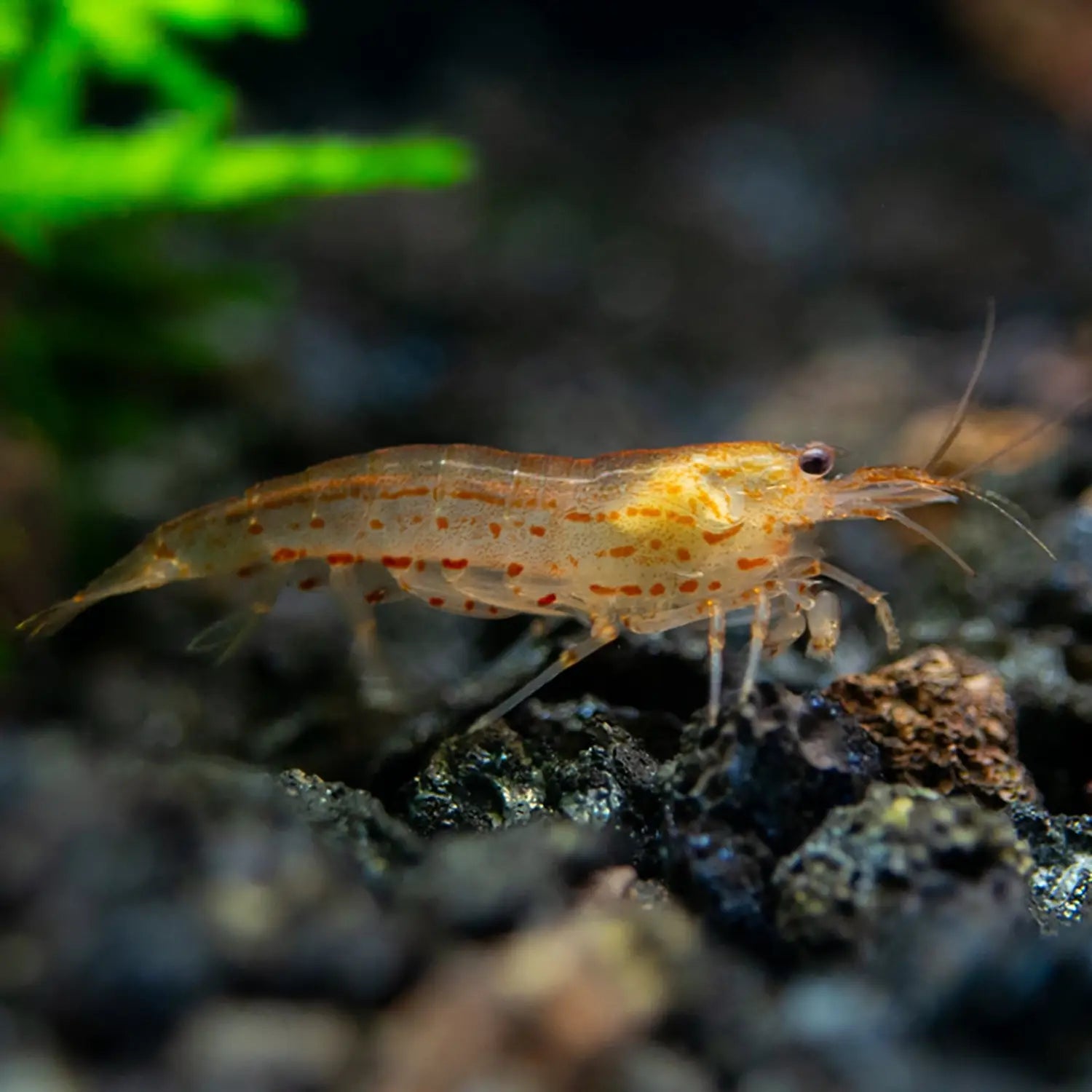
Sun Orange Amano
Warm orange tint through a translucent body — distinct from the deeper, opaque orange of Neocaridina morphs. A selectively bred rarity in the Amano line.
Photo © Aquatic ArtsSexing Amano Shrimp
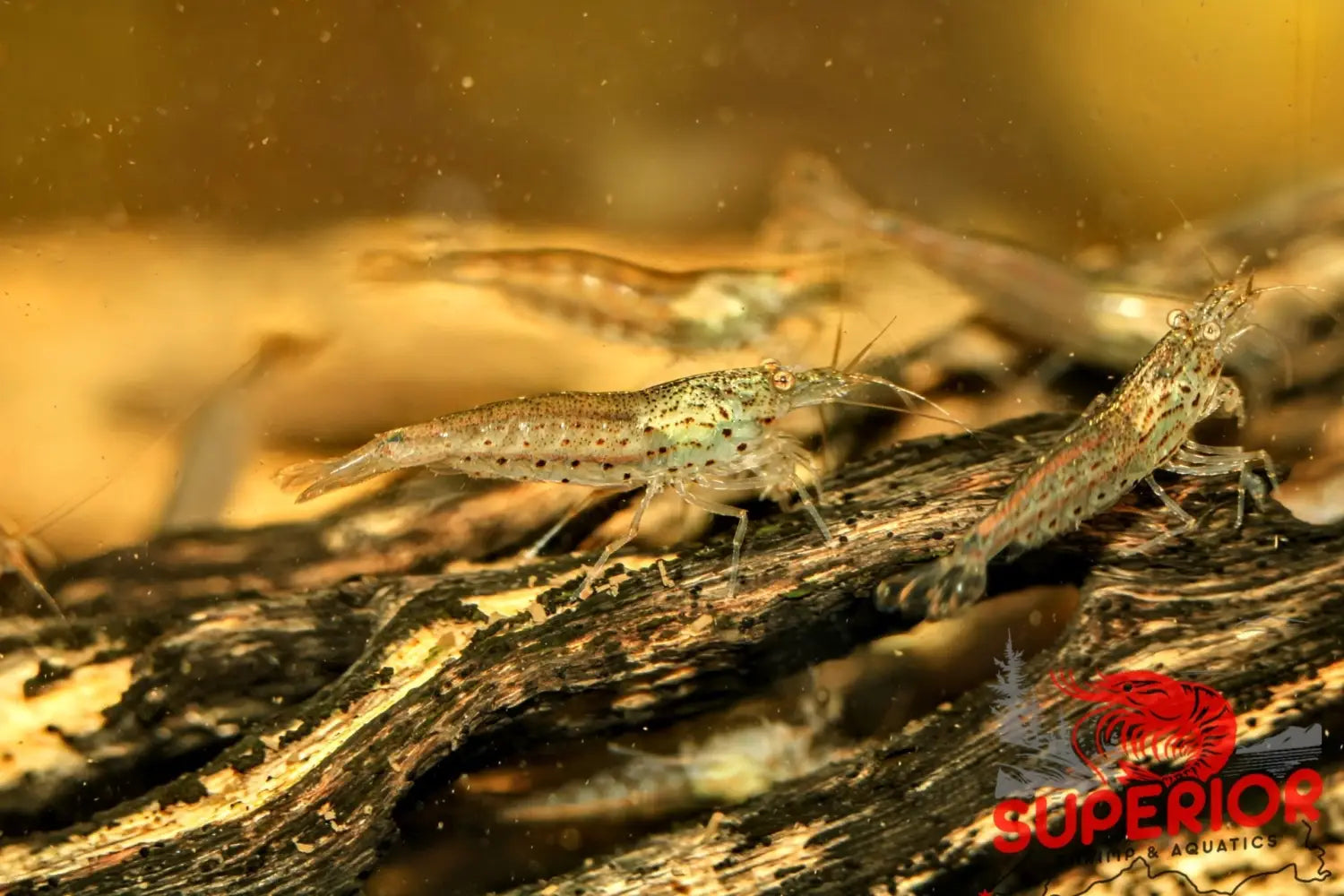
Amano Shrimp are one of the more reliably sexed freshwater shrimp species once you know what to look for. The most distinctive marker is the pattern of markings along the flanks.
Male vs. female Amano Shrimp at a glance
| Feature | Female | Male |
|---|---|---|
| Flank markings | Elongated dashes — longer, running together | Distinct dots — shorter, more separated |
| Size | Larger — up to 2.5 in (6.5 cm) | Smaller — typically 1.5–2 in (4–5 cm) |
| Abdomen shape | Broader, more rounded — especially when berried | Slimmer, more streamlined |
| Eggs (when present) | Green or brown cluster visible under abdomen | Never carries eggs |
| Behavior | Generally less active outside breeding season | More active; frantic swimming when female molts |
Breeding: Why It's So Difficult
Amano Shrimp are one of the very few freshwater aquarium shrimp that cannot be bred in standard freshwater conditions. Females do carry eggs and the shrimp will mate in freshwater, but the larvae that hatch are zoea — tiny, planktonic forms that require brackish to marine water (salinity of 30–35 ppt) to develop. In freshwater, larvae die within hours of hatching.
Successful breeding requires a dedicated brackish rearing tank, the ability to feed live phytoplankton and zooplankton to larvae over a development period of 3–6 weeks, and the gradual transition of juvenile shrimp back to freshwater once they have metamorphosed. It is achievable but demands significant effort, equipment, and experience — it is not a beginner project.
🥚 Berried females are common; successful larvae are not. It is normal for female Amano Shrimp in a freshwater tank to carry eggs — but those eggs will not produce surviving offspring in freshwater. If breeding is a goal, a separate brackish rearing setup is required. Most aquarists simply purchase new shrimp when colony numbers decline.
Algae Control: What They Eat and What They Don't
Amano Shrimp are the most effective algae-eating invertebrate available for freshwater aquariums, but their effectiveness varies significantly by algae type. Understanding what they will and won't eat prevents disappointment.
Green Hair Algae
✅ Highly effectiveTheir primary target. Amano shrimp methodically graze filamentous hair algae off plants, rocks, and substrate — often visibly reducing growth within days in a well-stocked group.
Brown Diatoms
✅ Highly effectiveThe dusty brown film common in new tanks. Amano shrimp graze it readily from glass, substrate, and plant surfaces. Diatoms rarely persist long in a tank with an active Amano colony.
Soft Green Algae
✅ EffectiveSoft, filmy green algae on plant leaves and hardscape. Amano shrimp keep plant leaves noticeably cleaner than tanks without them.
Green Spot Algae
⚠️ PartialHard green spots on glass and slow-growing leaves. Amano shrimp may nibble at small or young spots but cannot scrape off established green spot algae — a razor blade or Nerite snails work better for this.
Black Beard Algae (BBA)
❌ Not effectiveDense, brush-like tufts of Audouinella. Amano shrimp will occasionally pick at BBA weakened by CO₂ or Excel treatment, but they cannot eliminate it. Address the root cause (CO₂ fluctuation, excess phosphate) first.
Staghorn Algae
❌ Not effectiveTough, branching grey-green algae. Too dense and fibrous for Amano shrimp to consume. Requires root cause correction and spot treatment.
🌿 Amano shrimp work best in groups. A single shrimp makes a visible dent; a group of 5–10 in a 20-gallon planted tank can genuinely keep algae under control between water changes. Understocking is the most common reason they "don't work" — one or two shrimp in a heavily algaed tank will never keep up.
Water Parameters
Amano Shrimp are more tolerant than the sensitive bee and tiger Caridina species but still require clean, stable water. Their native streams are well-oxygenated with moderate hardness and near-neutral pH — parameters easy to achieve with dechlorinated tap water in most areas.
Water parameters for Caridina multidentata
| Parameter | Ideal Range | Notes |
|---|---|---|
| Temperature | 68–78°F (20–26°C) | Can be kept heater-less in temperate rooms; avoid above 82°F |
| pH | 6.5–7.5 | Stable pH more important than exact value |
| GH | 4–8 °dGH | Moderate hardness supports molting; too soft causes failed molts |
| KH | 2–8 °dKH | Wider tolerance than Caridina bee species; buffers pH stability |
| Ammonia / Nitrite | 0 ppm | Zero tolerance; acutely toxic even at very low concentrations |
| Nitrate | <20 ppm | Regular water changes; live plants significantly help |
| Dissolved oxygen | High | Native to fast streams; ensure good surface agitation |
⚠️ Copper is lethal to all shrimp. Never use copper-based medications (common for fish parasites) in a tank with Amano Shrimp. Even trace concentrations are acutely toxic. Check medication ingredients before dosing and remove shrimp to a quarantine tank if treatment is necessary.
Tank Setup
Amano Shrimp do well in tanks from 10 gallons up, but larger volumes are preferable for the stability they provide. A well-established, planted tank is their ideal environment — live plants provide grazing surfaces, shelter, biofilm habitat, and contribute to nitrate control. They are not destructive to plants and will not uproot or damage healthy vegetation.
Feeding
In a mature planted tank with algae present, Amano Shrimp largely feed themselves. They graze almost continuously — on algae, biofilm, detritus, and any organic material settling on surfaces. Supplemental feeding is still worthwhile, particularly in cleaner tanks where algae is well-controlled, or when keeping a larger group.
Feed once daily or every other day — small portions only. Remove uneaten food within 2–4 hours. Overfeeding is one of the most common causes of water quality decline in shrimp tanks, and Amano Shrimp generate more waste than dwarf species due to their larger size.
Tank Mates
✅ Ideal companions
Small peaceful fish (ember tetras, chili rasboras, neon tetras, otocinclus), freshwater snails including Ramshorn Snails and nerites, dwarf Neocaridina shrimp (Amano Shrimp will not predate them).
⚠️ Use caution
Guppies and livebearers — generally fine with adults but may harass during molting. Larger tetras and barbs are usually peaceful but individual fish vary. Monitor for the first week after introduction.
❌ Avoid
Cichlids, bettas (most will attack), goldfish, large loaches, pufferfish, and any fish with a mouth large enough to fit a 2-inch shrimp. Amano Shrimp are large but not invulnerable — a hungry oscar or Jack Dempsey will eat them.
🦐 Amano Shrimp with Neocaridina or Caridina bee species: Amano Shrimp are peaceful toward smaller shrimp and will not predate them. They make excellent colony mates for Cherry Shrimp, Blue Dream Shrimp, and Caridina bee species — the size difference causes no aggression, and each species occupies a slightly different foraging niche in the tank. Amano Shrimp focus on open algae grazing while dwarf shrimp concentrate on biofilm in tighter spaces.
Molting
Amano Shrimp molt every few weeks to months depending on age, growth rate, and water conditions. Juveniles molt more frequently; mature adults less so. The molted exoskeleton should be left in the tank — it decomposes and provides minerals back to the water, and shrimp will often consume it directly for its calcium content.
The post-molt window of 12–24 hours, while the new shell hardens, is the most vulnerable period. During this time shrimp hide and should not be disturbed. Ensure adequate calcium (GH 4–8 °dGH) and stable water parameters — inadequate GH is the primary cause of failed molts where shrimp become trapped in their old shell.
Troubleshooting & Common Health Issues
Acclimation & Quarantine
Amano Shrimp are sensitive to sudden parameter changes — particularly when transitioning from a bag or cup of shipping water to a new tank. Drip acclimation is strongly recommended: place shrimp in a container with their shipping water, then slowly drip tank water in using airline tubing with a knot to regulate flow, targeting a full water replacement over 45–60 minutes before transferring shrimp to the tank.
New shrimp should ideally be quarantined for 1–2 weeks in a separate tank before introduction to a main display. This prevents potential introduction of parasites, bacteria, or pathogens to an established tank and gives you time to observe new arrivals before they interact with existing livestock. A simple sponge-filtered quarantine tank with a few hiding spots is sufficient.
Shop Amano & Related
The Gold Standard for Algae Control
Nothing in freshwater matches what a group of Amano Shrimp does for a planted tank — and they look incredible doing it.
Sources & Citations
- [1]Klotz, W. et al. (2013). Life history of the amphidromous shrimp Caridina multidentata (Decapoda: Atyidae) — larval development, juvenile migration, and freshwater establishment in East Asian streams.
- [2]Amano, T. (1994). Nature Aquarium World. TFH Publications. Original documentation of Caridina multidentata use in planted aquarium systems for algae management.
- [3]Santana, F. et al. (2023). Shelter preference and daily activity patterns in Neocaridina davidi: effects of sex and reproductive status. Shelter behavior and biofilm grazing applicable to Caridina species husbandry.
1 comentario
This guide states that female Amanos are often more transparent than males. But, then it states that males are slightly more transparent than females. Is one incorrect?
The guide also says to leave shed exoskeleton as they will dissolve and add nutrients (Ca) to tank. Yet it later says to remove these sheds to prevent fouling tank water (found under Plants heading). Again, is one preferable?
Thank you!