


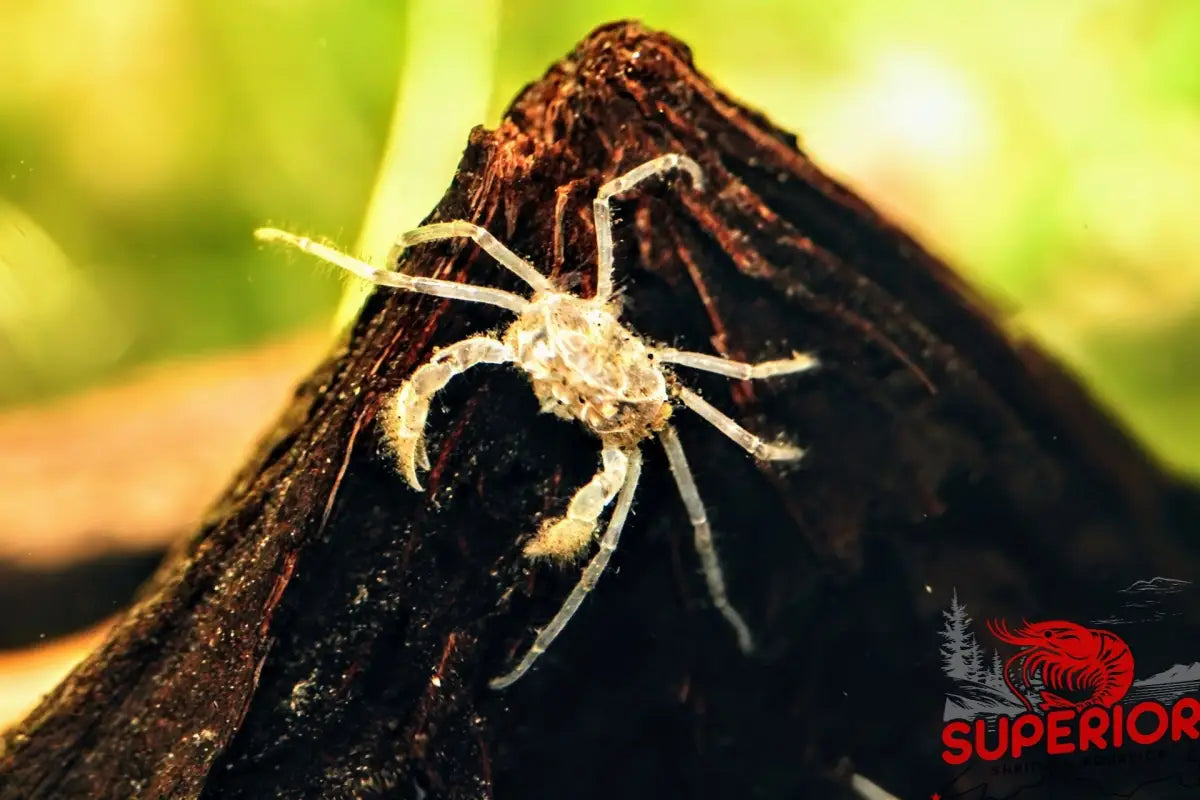
Size & representative photos
Crab size and appearance vary by species and individual. Refer to the listing and selected option for any stated purchase size. Adult or maximum sizes describe growth potential, not a guaranteed size on arrival. Product photos represent the species rather than the exact animals you will receive; color and markings may vary.
Habitat & species requirements
Check the specific crab’s habitat requirements before purchase. Thai Micro Crabs are fully aquatic and remain submerged. Do not apply land-area or brackish-water instructions for other crab species to Thai Micro Crabs. Likewise, do not assume every crab species can live permanently underwater. Follow the care information in the particular listing.
Molting & shelter
Crabs molt as they grow and are vulnerable while their new shell hardens. Provide suitable shelter and avoid handling or disturbing a freshly molted animal. A shed shell is not by itself evidence of a dead crab. If you are concerned about an animal’s condition on arrival, photograph the unopened packaging and contact us within the guarantee window.
Behavior, feeding & tankmates
Thai Micro Crabs are tiny and can be difficult to spot among plants and hiding places. Provide appropriate food and cover, and avoid tankmates that could eat or injure them. Compatibility and feeding requirements differ between crab species, so use the specific listing rather than general assumptions about freshwater crabs.
Pack contents & breeding
The selected pack quantity identifies the number ordered, not a promised breeding pair or sex ratio unless the listing explicitly states otherwise. Purchasing a group does not guarantee breeding, eggs or successful offspring.
Tiny size, hiding & visibility
Thai Micro Crabs are extremely small. Carapace width refers to the body shell, not the full spread of the legs, so measurements and photographs can give very different impressions of scale. Adult-size information is not a promised shipping measurement.
Their subdued coloration and tendency to shelter among plants can make them difficult to see. Hiding after introduction does not prove an animal was missing from the shipment. Count and document the received animals before release, following the policy, rather than trying to reconstruct the count in a planted aquarium.
Delicate legs, claws & molts
Inspect arrival condition through the unopened bag. If a crab appears to have a damaged or missing appendage, photograph the area clearly and include a wider image, the label and packaging. Do not lift it by a leg or claw or pull on an appendage to test it.
A shed exoskeleton can look surprisingly complete. Look carefully before treating an empty molt as a deceased crab, but report any genuine arrival concern promptly. Do not wait for another molt to resolve an injury concern or attempt to pull an animal free from its old shell.
Suitable shelter lets freshly molted crabs remain undisturbed while their shell hardens. Neither molting nor potential regeneration creates an automatic exception to, or approval under, the guarantee.
Feeding access, safe housing & compatibility
Thai Micro Crabs feed on very small food particles and material available on established surfaces. Make sure appropriate food reaches their sheltered positions rather than assuming food eaten by larger tankmates is also feeding the crabs. Avoid adding excessive food that degrades water quality.
Protect small animals from strong exposed filter intakes and check openings around equipment and the tank cover. A fully aquatic species still needs a secure, suitable aquarium.
Choose tankmates that will not eat, harass or outcompete these tiny crabs. Species-specific behavior matters: the housing and feeding advice for Thai Micro Crabs should not be treated as a universal setup for larger or semi-terrestrial crabs.
Breeding & acclimation expectations
A purchased group is a quantity selection, not a promise of paired sexes, eggs or successful reproduction. Seeing eggs does not guarantee that young will survive or that a self-sustaining colony will develop.
Prepare stable water and suitable cover before delivery and follow the species’ acclimation guidance. Complete arrival inspection and any required photographs before transfer. Avoid chasing or repeatedly handling newly introduced crabs simply to make them visible.
Bonus animals & your paid count
When inventory allows, our policy provides one bonus animal for every five ordered of the same species. Bonuses are discretionary and are not separately covered for refund or replacement. They count toward the total arriving alive when assessing whether your paid quantity was fulfilled.
For example, if you order 10 crabs and receive 12, receiving 11 alive fulfills the paid count. If fewer than 10 arrive alive, the shortfall is assessed under the guarantee. Expected bonuses that were not included are not a paid-item shortage.
Checking quantities & reporting a short count
Check the actual animals received against your paid order quantity. For a suspected short count, the full policy calls for a clear counting photo showing all animals, the empty bag and the shipping label before they are introduced into an aquarium. Follow its counting instructions and contact us if you cannot document the count clearly.
Verified miscount claims are resolved with a refund for the missing paid animals under the current policy. A count made after release can be unreliable when animals hide among plants or hardscape.
Before opening: photographs & your first report
Use the email address on the original order and include all arrival concerns in the initial message to support@superiorshrimpaquatics.com within two hours of the carrier’s recorded delivery time. Photograph the sealed bag, visible and countable animals, shipping label, box and packing materials.
If the bag is leaking or damaged, photograph the leak or damage and wet packing before opening. Keep the original photographs and packaging. For cloudy water that prevents counting, take the original cloudy-water photo first and follow the full policy’s specific additional clear-container documentation instructions.
The guarantee contains restrictions on opening bags, acclimation and transfers. Review those instructions before taking action so the evidence needed to assess the claim is preserved.
Arrival problem? Document it promptly.
Email support@superiorshrimpaquatics.com within two hours of the carrier’s recorded delivery time, using the email address on your order.
- Photograph the original sealed bag with the animals visible and countable.
- Include the shipping label, outer box and packing materials.
- Document any bag damage or leakage before opening.
- Report all arrival losses in your initial message.
Read the full guarantee for photo requirements, cloudy-water documentation and claim eligibility before opening or transferring animals. Approved claims are resolved under the options and conditions stated there.
Shipping & coverage limits
Ground shipping carries increased risk for live animals, and the policy reserves the right to refuse guarantee claims on ground shipments. Choose your shipping method carefully.
The guarantee applies to the first delivery attempt. Redirection, pickup holds and carrier delays can affect eligibility under the full policy. Any product-specific coverage restrictions stated in a listing also apply.
Hitchhikers & quarantine
Live aquatic products can carry tiny hitchhikers or eggs despite inspection. Pest-free arrival is not guaranteed. We recommend quarantining new arrivals before introducing them into an established aquarium.
Returns
Care guidance in this tab does not create additional guarantee requirements or exclusions. Please read the full policies for complete eligibility, documentation, resolution and return requirements.