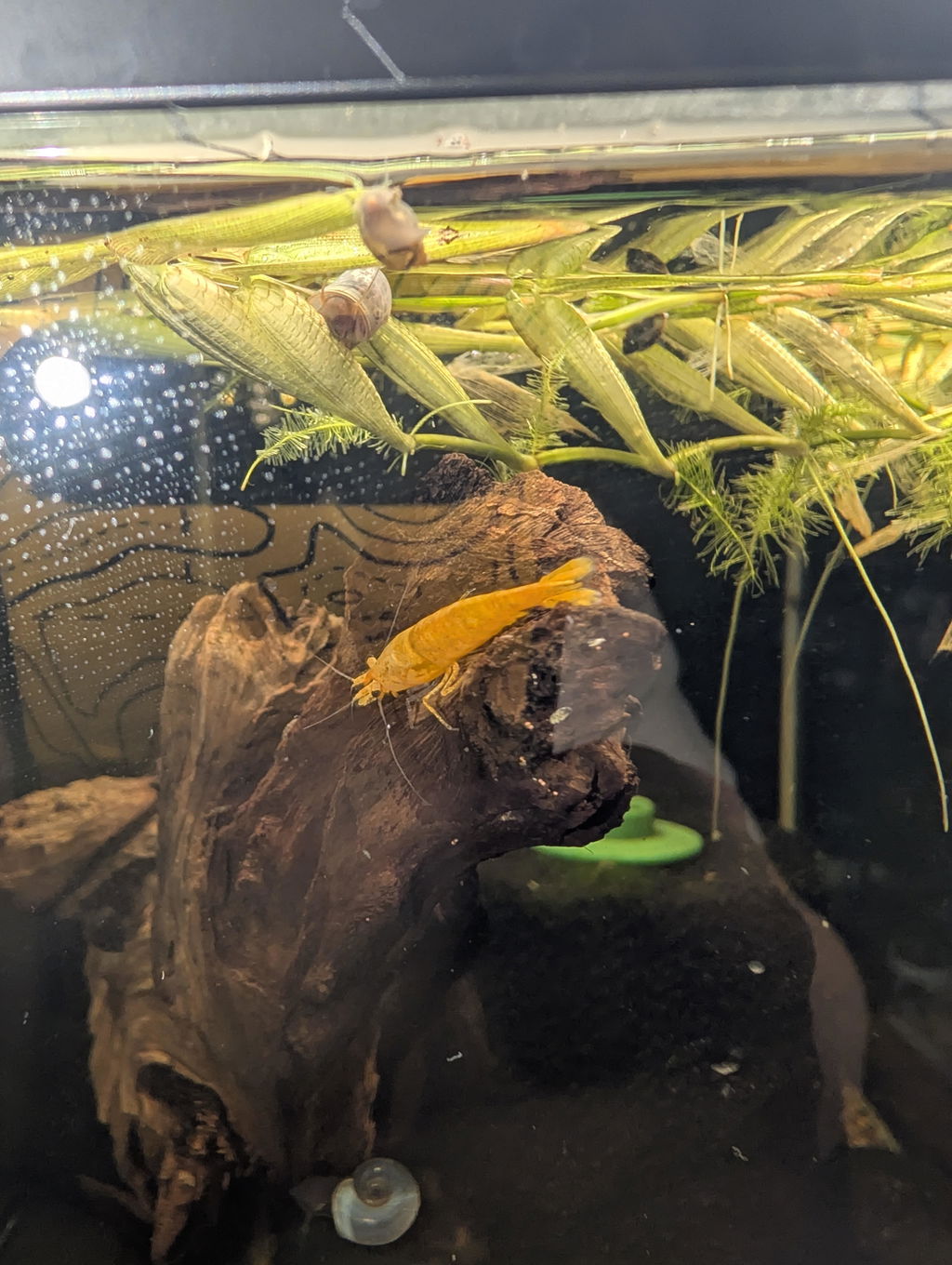
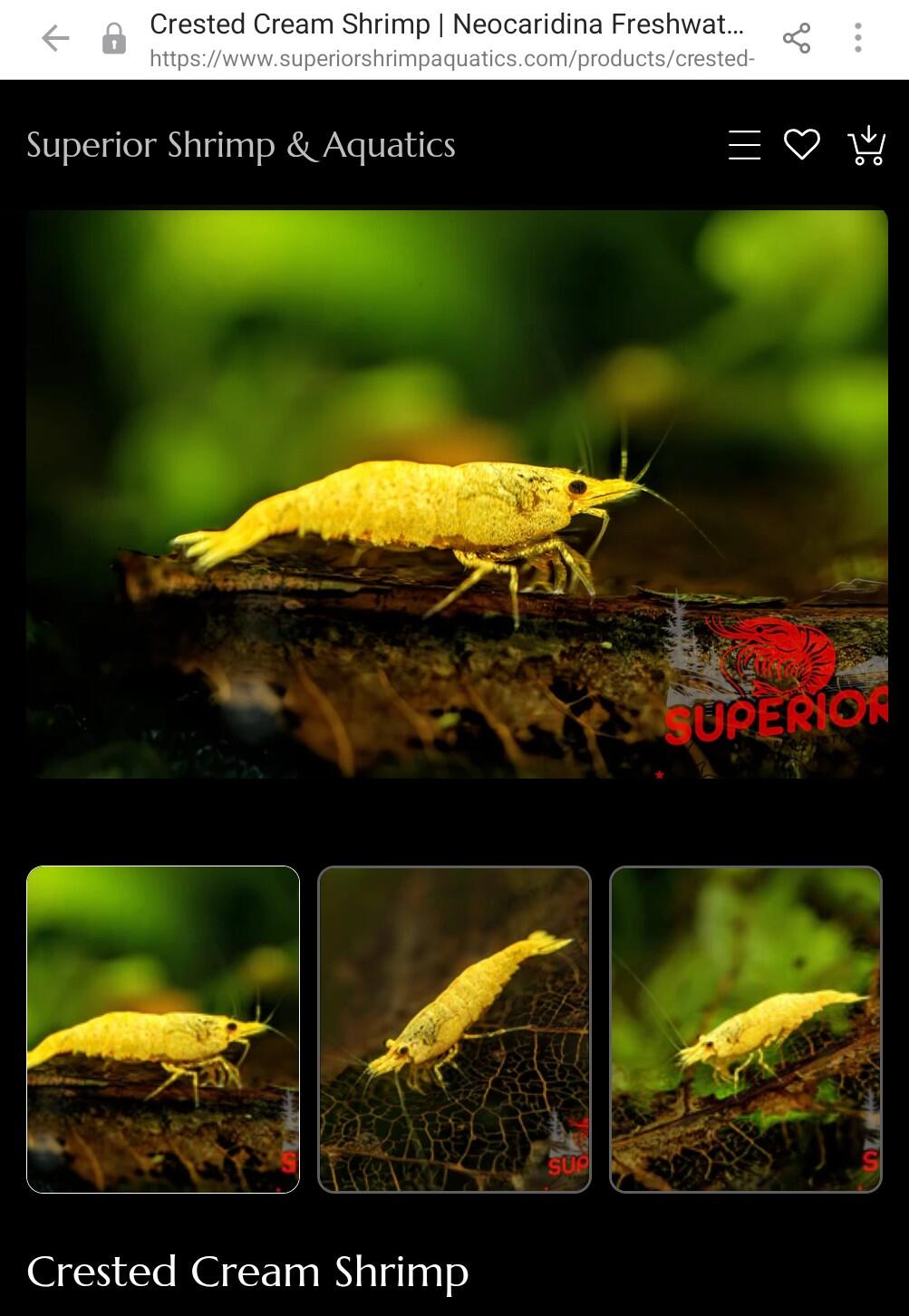
Crested Cream Shrimp are a selectively bred Neocaridina davidi line developed for their warm cream to ivory body colouration combined with a visible darker dorsal stripe or crest running along the back — a colour combination that reads as elegant and understated rather than vivid, and that produces a particularly striking effect against dark substrate where the pale body colour contrasts cleanly against the background. The cream body and darker crest distinguish individual shrimp from each other in a colony, making it easier to observe and identify individuals than in solid-colour morphs. Like all Neocaridina, they breed readily in freshwater without special preparation, are highly tolerant of the broad range of water parameters available from most tap water sources, and coexist peacefully with all other Neocaridina morphs, snails, and non-aggressive tankmates. Fully compatible with all aquatic plants and snails in the catalog.
6.8–7.8pH
6–14GH (dGH)
2–8KH (dKH)
68–78°FTemperature
What to Expect
Colour, Behaviour & Breeding
Warm cream to ivory body with a visible darker dorsal stripe — the cream body colouration is warm rather than cool — closer to ivory or off-white than a stark pure white — and the darker dorsal stripe or crest running along the back varies in intensity between individuals, from a subtle shadow to a clearly defined darker band. The contrast between body and crest is most visible under direct overhead lighting and against dark substrate, where the pale body reads clearly and the crest adds definition and visual interest that solid-colour morphs lack.
Dark substrate enhances the contrast between cream body and dorsal crest — dark aquasoil, black sand, or dark hardscape provides the highest contrast background for the cream-and-crest colouration — the pale body and the darker stripe are both more readable against dark backgrounds than against light or natural-coloured substrate. Positioned against a piece of dark driftwood or Java moss the colouration is at its most visible and most refined-looking.
Colony behaviour — most active and visible in groups of ten or more — like all Neocaridina, Crested Cream shrimp are more active, more visible, and more confident in groups. A colony of ten or more establishes a clear social dynamic with the most confident individuals foraging openly while the colony as a whole becomes progressively less shy over weeks in a stable, well-planted tank. Smaller groups of fewer than six tend to remain more hidden and less visually rewarding.
Females carry cream-coloured eggs in a visible saddle and brood cluster — females develop a visible cream-coloured egg saddle behind the head before mating and subsequently carry a brood of eggs beneath the tail fanned by regular pleopod movement. The cream eggs are visible against the body and add a secondary colour and texture element to the appearance of brooding females. Shrimplets are released as miniature versions of adults after three to five weeks of brooding.
Standard Neocaridina care — highly tolerant and beginner accessible — Crested Cream Shrimp require the same care as any Neocaridina — stable parameters within the broad acceptable range, a cycled tank, regular feeding, and consistent water changes. They are not more demanding than Cherry Red or other common Neocaridina morphs and suit the same beginner-friendly setups.
How to Set It Up
Getting Started
1Cycle the tank fully before introduction — ensure ammonia and nitrite are at zero and the tank has been running stably for at least two to four weeks before introducing shrimp. Neocaridina tolerate a wide parameter range but not an uncycled tank — ammonia and nitrite are lethal at any concentration.
2Acclimate slowly — drip or gradual bag acclimation over 30–45 minutes — float the bag for 15 minutes to equalise temperature, then add small amounts of tank water to the bag every five minutes over 30–45 minutes before releasing. The slower the parameter transition, the less acclimation stress.
3Use dark substrate and provide plenty of plant cover — dark substrate maximises the visual impact of the cream-and-crest colouration. Dense plant coverage — mosses, Anubias, floating plants — provides the security that allows shrimp to forage openly and behave naturally rather than remaining hidden.
4Feed small amounts of high-quality shrimp food every one to two days — offer a small amount of dedicated shrimp food — biofilm powder, granules, or wafers — every one to two days, varying the diet with occasional blanched vegetables. Remove uneaten food after two to three hours to protect water quality.
💡 Bonus Tip
Crested Cream Shrimp in a tank with dark substrate and a generous floating plant canopy of Red Root Floaters creates a warm-toned pairing that works particularly well — the cream and coppery-ivory of the shrimp bodies picking up the warm red-orange tones of the plant roots and leaf undersides visible above them. The dappled light through the floating plant canopy also produces the most dynamic lighting conditions for observing the dorsal crest detail on individual shrimp as they move through patches of direct and diffused light.
🦐
Browse more Neocaridina shrimpPair Crested Cream Shrimp with complementary Neocaridina morphs, snails, or aquatic plants for a complete shrimp tank. Browse our Neocaridina Shrimp collection.
→