Bladder Snail | Freshwater Aquarium Algae Eater – Superior Shrimp & Aquatics
Ir directamente al contenido

15% OFF STORE WIDE! ENDS MARCH 15TH

Inicio de sesión

Bladder Snail

Bladder Snail

Precio habitual $0.50
Precio habitual Precio de oferta $0.50
Agotado
Los gastos de envío se calculan en la pantalla de pago.
Pack Size: 1

Subtotal:

$0.50
Ver todos los detalles
Descripción
Bladder Snail – Superior Shrimp & Aquatics
Freshwater Snails

Bladder Snail

A self-regulating, food-limited cleaner snail that eats algae, biofilm, and decaying matter around the clock — the most useful and misunderstood snail in the freshwater hobby.

Algae & Detritus Cleaner Self-Regulating Population Shrimp Safe Does Not Eat Healthy Plants Hardy & Adaptable Beneficial Substrate Activity

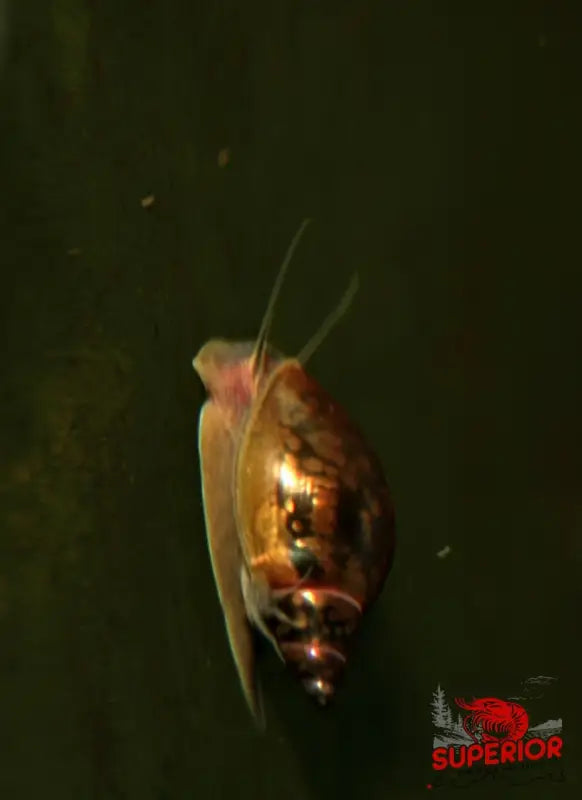
Bladder Snails (Physella acuta) are the most unfairly maligned snail in the freshwater hobby — a species that arrived in most aquarists' tanks uninvited and earned a reputation for being a pest, when in practice they are one of the most effective and genuinely beneficial cleanup crew members available. They eat algae, biofilm, decaying plant matter, uneaten food, and fish or shrimp waste continuously — the exact organic material that accumulates in planted shrimp tanks and drives water quality decline between water changes. Their population is directly self-regulating: in a well-managed tank with appropriate feeding they maintain a stable, modest population; in an overfed tank they multiply to reflect the excess organic load. The snail population is not the problem — it is a visible indicator of the feeding regime. Fully safe with all Neocaridina and Caridina shrimp. Does not eat healthy plant tissue.

6.5–8.0pH
4–15GH (dGH)
2–10KH (dKH)
65–82°FTemperature

Behavior & Benefits in the Tank

Continuous algae, biofilm, and detritus consumption — Bladder Snails are active cleaners around the clock, grazing algae from glass surfaces, plant leaves, hardscape, and substrate; consuming biofilm from every surface they can reach; and processing decaying plant material and uneaten food before it breaks down and degrades water quality. The cleaning contribution of even a modest population of 20–30 snails in a nano tank is measurable — the surfaces they regularly access remain visibly cleaner than surfaces outside their reach. Population is directly food-limited and self-regulating — the most important thing to understand about Bladder Snail populations is that they are controlled by available food rather than by deliberate management. In a tank with appropriate feeding and good plant coverage the population stabilises at a modest level — typically 20–50 snails in a standard nano setup — and holds there without intervention. A sudden population explosion is a reliable signal that the tank is receiving more organic material than the bacterial and plant systems can process — reduce feeding, increase water change frequency, or add more plants rather than removing snails. Does not eat healthy plant tissue — a persistent myth about Bladder Snails is that they damage live plants. In practice, Bladder Snails consume dead and decaying plant tissue — leaves that are already dying, damaged, or decomposing — and leave healthy plant tissue intact. They are frequently observed on plant leaves grazing algae and biofilm from the leaf surface, which is beneficial rather than harmful. If a plant is being visibly consumed by Bladder Snails it was already failing — the snails are cleaning up rather than causing the damage. Beneficial substrate and substrate-surface activity — Bladder Snails move through and across the substrate surface continuously, turning and aerating the uppermost substrate layer as they forage. This activity reduces the accumulation of anaerobic pockets in fine substrates and disturbs detritus that would otherwise compact and create hydrogen sulphide buildup. In planted shrimp tanks with fine sand or aquasoil substrates, the substrate activity of a healthy snail population is a genuine maintenance benefit. Fully compatible with shrimp — no predation at any life stage — Bladder Snails do not prey on shrimp at any life stage, including eggs and shrimplets. They coexist peacefully with all Neocaridina and Caridina in the same tank without competition or conflict. Both species occupy the same cleaning niche and the overlap is complementary rather than competitive — snails clean surfaces shrimp do not prioritise and vice versa. Hardy across a wide parameter range — Bladder Snails tolerate a broader range of water parameters than most snails in the catalog, surviving and reproducing across a wide pH, GH, KH, and temperature range. They are among the first inhabitants to show stress in deteriorating water conditions — unusual mortality or shell damage is an early indicator of parameter instability that warrants investigation before it affects more sensitive inhabitants.

Setup & Management

1Introduce a small starter population and let them establish — start with 10–20 snails in a standard nano tank and allow the population to reach its own stable level based on available food in your specific setup. Resist the urge to intervene immediately if numbers increase during the first few weeks — the population is finding its equilibrium. A stable population at a level you find acceptable is the normal end state in a well-managed tank.
2Use population size as a feeding guide — treat the Bladder Snail population as a living indicator of your feeding regime. If numbers are consistently increasing, reduce feeding slightly — remove uneaten food after two hours and dose shrimp food more sparingly. If numbers are declining, the tank may be under-resourced or parameters may be drifting. A stable population is the goal and a reliable signal that the organic budget of the tank is in balance.
3Manage numbers manually if desired — not chemically — if the population exceeds a level you find visually acceptable, remove individuals manually during water changes or use a vegetable trap — a piece of blanched zucchini or cucumber placed on the substrate overnight will attract dozens of snails by morning for easy removal. Never use copper-based snail treatments in shrimp tanks — copper is lethal to shrimp at the concentrations required to affect snails.
4Ensure adequate mineral content for shell health — Bladder Snails require dissolved calcium and minerals for shell formation. In very soft water (GH below 4) shells become thin, pitted, and fragile — a condition called pitting that indicates insufficient mineral content. Ensure GH is maintained at 6 or above for healthy shell development. Crushed coral, cuttlebone, or a GH/KH+ supplement added to water changes maintains adequate mineral levels for both snails and shrimp simultaneously.
💡 Bonus Tip

Bladder Snails are among the most valuable live food sources for pea puffers, loaches, and other snail-eating species — a healthy breeding colony in a dedicated planted tank produces a continuous supply of appropriately-sized snails that can be harvested regularly as a live protein feed. If you keep snail-eating fish in another tank, a Bladder Snail colony maintained separately in even a small planted container provides a permanent, self-sustaining live food source that costs nothing to run beyond basic maintenance.

🐌
Browse more freshwater snails

Pair Bladder Snails with Nerite Snails, Ramshorns, or Mystery Snails for a complete cleanup crew. Browse our Freshwater Snails collection.

Before placing your order, please review our 📋 DOA Policy 🚚 Shipping Info
Reseñas

Customer Reviews

Based on 4 reviews
75%
(3)
0%
(0)
0%
(0)
0%
(0)
25%
(1)
A
Amber watts
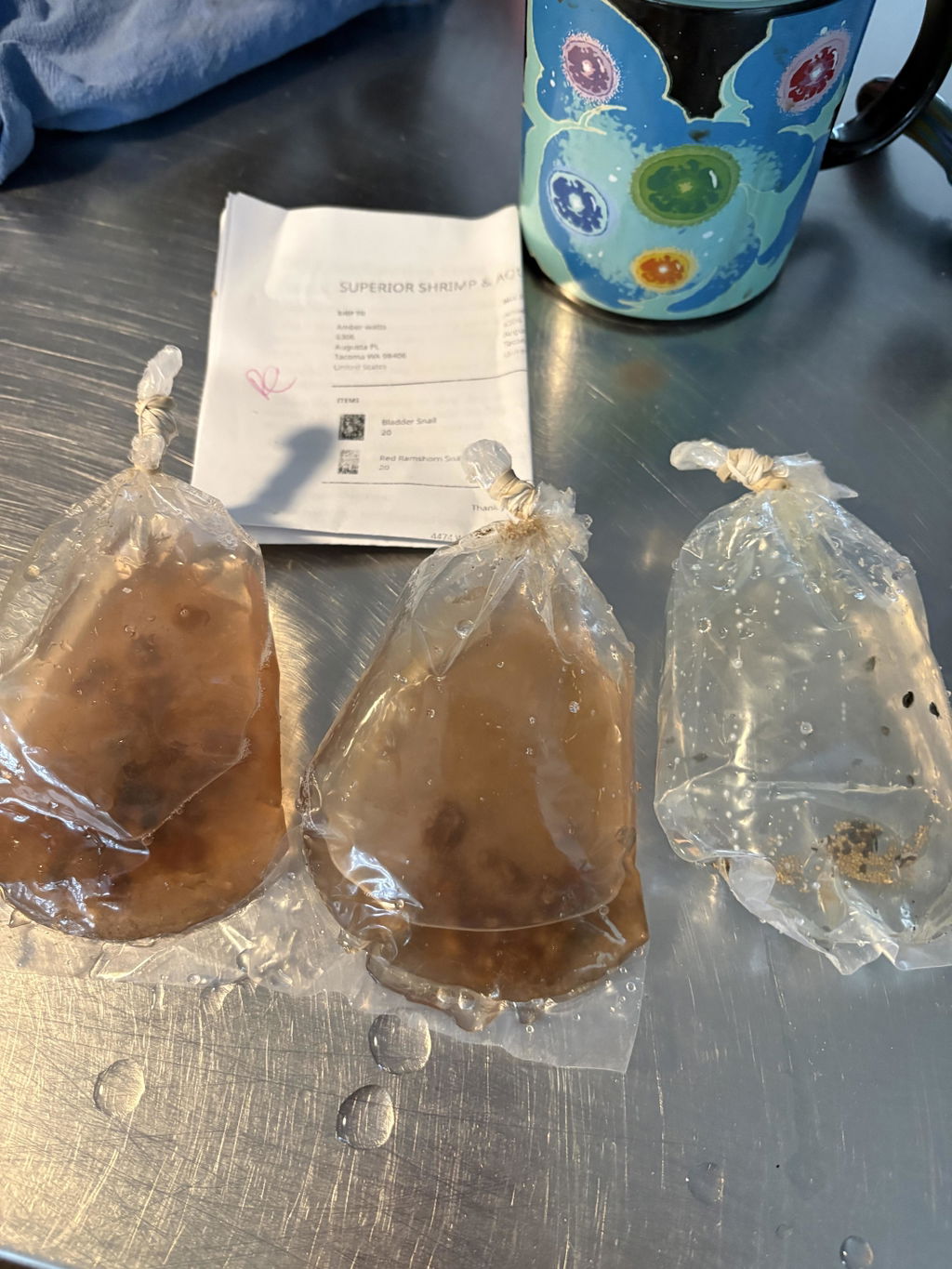
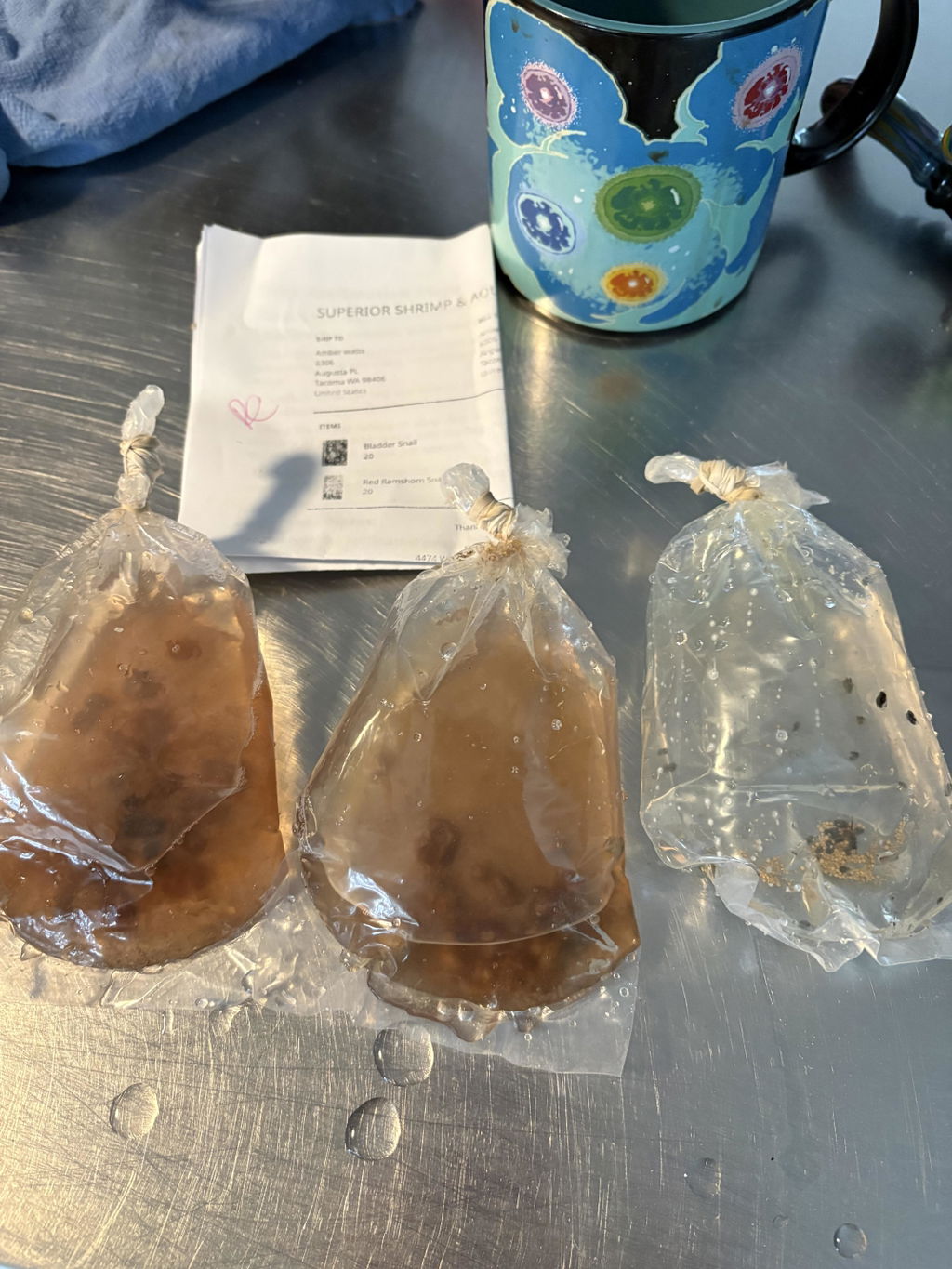
Majority were DOA

Majority were DOA Water was nasty completely disappointed

Hi, we’re very sorry to hear about your experience. Receiving snails in poor condition is frustrating and disappointing.

Your order was shipped via ground service to Washington during winter conditions. Transit times to that region can be long, and delays are common this time of year. Heat packs typically provide warmth for about 72 hours, after that temperatures inside the box can drop quickly if the package is still in transit. When snails pass during shipping, the water quality deteriorates quickly, which is why it may appear cloudy or foul on arrival.

For long distance winter shipments, we strongly recommend expedited shipping such as 2 Day or Overnight to reduce time in transit and improve survival rates.

Please contact us with your order number and photos so we can review the situation and assist you according to our DOA policy.

C
Chukuemeka

Good amount doing exactly what they’re supposed to do

K
Kita
All doing

All doing good

J
Jim

Already at work. Great specimens.

Home Shop
Lista de deseos
Iniciar sesión